

Geneva – Sudan Now | 9 February 2026
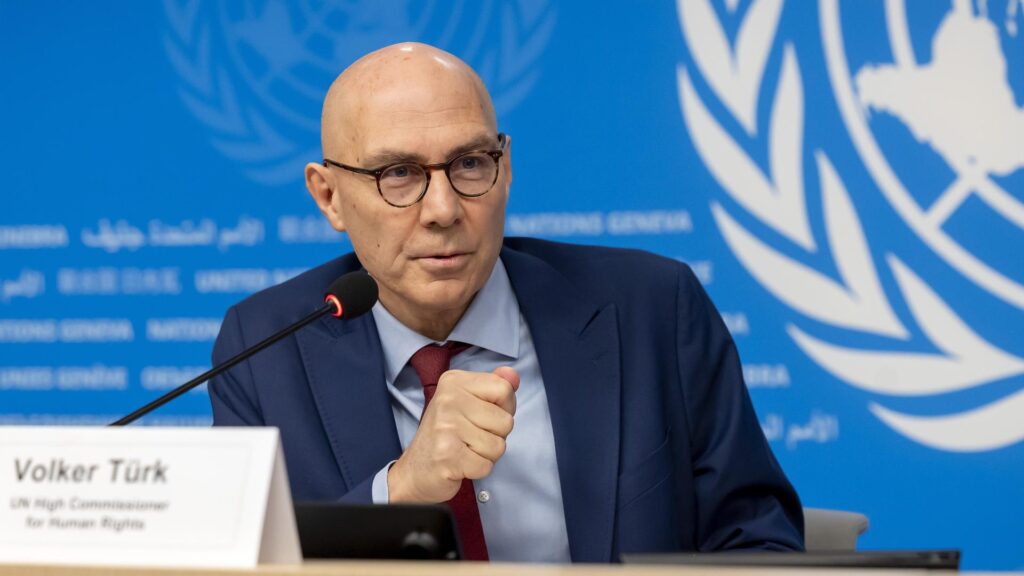
The United Nations High Commissioner for Human Rights, Volker Türk, described the events that took place in the city of Al Fashir last October as “a horrifying humanitarian catastrophe that could have been avoided.”
Türk said, during a briefing before the Human Rights Council in Geneva, that the RSF launched a widespread wave of violence that resulted in the killing of thousands of civilians and the displacement of tens of thousands, following a siege that lasted for about 18 months.
He revealed that his team had collected testimonies from around 140 victims and witnesses, who spoke of mass executions and systematic rapes, which he said were used as “a weapon of war.”
The High Commissioner said survivors reported seeing piles of bodies along the roads, in scenes one described as resembling “Judgment Day,” warning that such atrocities could be repeated in the Kordofan states, where military escalation is ongoing.
Türk stressed that responsibility for these “atrocious crimes” lies with the RSF, along with their allies and supporters, and called on states to exert pressure to expand the arms embargo to cover the whole of Sudan.
He also called for an end to the targeting of civilians, unhindered access for humanitarian aid, and an end to arbitrary detention and enforced disappearances, expressing deep concern over the rise in hate speech inciting ethnic violence.
Türk concluded his briefing by stressing that “the spirit of the struggle for peace and justice remains alive among Sudanese people,” despite the deep psychological trauma that he said survivors continue to suffer from.
He also noted that the events of last October followed an 18-month siege, amid accusations that the RSF carried out executions, sexual assaults, and violence against civilians, allegations that form part of a broader pattern of violations linked to the conflict in Sudan.
The conflict in Sudan erupted in April 2023 between the army and the RSF, leading to the deaths of tens of thousands and the displacement of millions, amid international accusations of serious violations of international humanitarian law.


