
Khartoum / Sudan Now – December 16, 2025
The Humanitarian Research Lab at Yale University’s School of Public Health said that a systematic analysis of high-resolution satellite imagery revealed strong evidence of widespread mass killings and the organized concealment of bodies in the city of Al Fashir, North Darfur State, following the RSF’ takeover of the city on October 26, 2025.
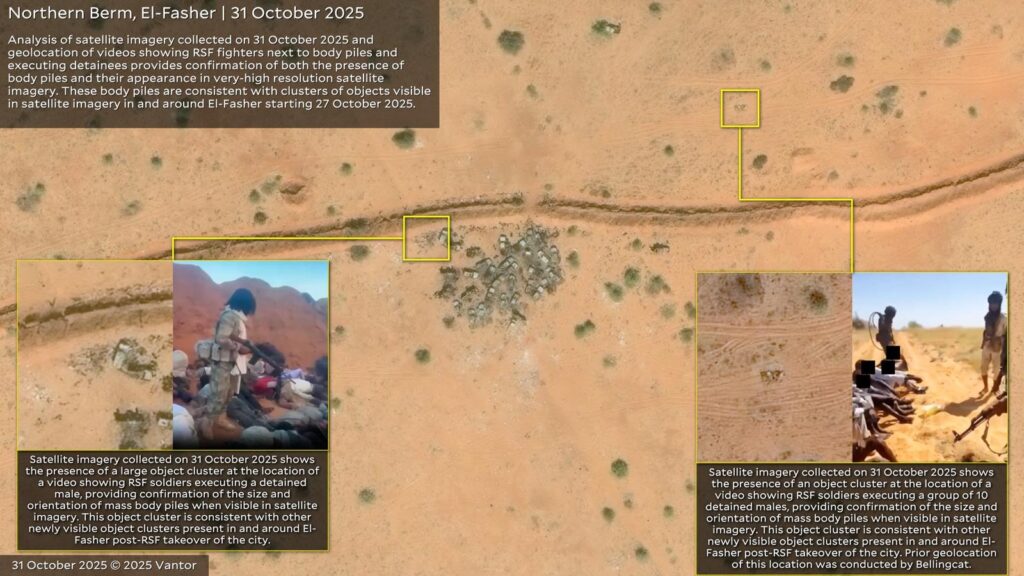
The report, which covers the period from October 26 to November 28, 2025, stated that researchers identified at least 150 clusters of objects believed to be human remains in and around the city of Al Fashir, in addition to 38 instances of reddish ground discoloration likely caused by the seepage of blood or bodily fluids, 20 sites of body burning, and eight locations of ground disturbance inconsistent with typical civilian burial patterns.
The report noted that the majority of these indicators were not visible in satellite imagery prior to October 26 and appeared after the Rapid Support Forces took control of the city. It added that the observed ground discoloration does not correspond to recognized soil types or vegetation patterns and was verified through multispectral analysis to rule out alternative natural explanations.
According to the report, repeated changes were observed in the size and number of body clusters, including increases or the complete disappearance of some, which researchers described as a pattern consistent with the systematic removal or transfer of human remains. It also noted heavy vehicle activity at the same sites, with vehicles matching in shape and color those associated with the RSF appearing during periods when mass killings were reported.
The report documented indications of the burning of human remains at several locations, particularly in the Daraja Oula neighborhood, one of the largest civilian refuge areas in Al Fashir prior to the RSFs’ takeover, as well as at sites near hospitals, civilian facilities, and former military areas.
Yale’s Humanitarian Research Lab confirmed that the analysis detected no patterns of normal civilian life in the city during the study period such as market activity, public gatherings, or civilian burial practices pointing to a near-total absence of indicators associated with residents’ daily life.
In its conclusions, the report stated that the spatial and temporal patterns of the observed indicators are inconsistent with lawful combat engagements and instead point to systematic mass killings, followed by extensive efforts to conceal evidence, including the removal, burial, and burning of human remains.
The report underscored that while satellite imagery cannot determine the exact number of victims, it reveals a widespread and systematic pattern of mass killings and body disposal. It called for granting independent international investigators access to Al Fashir to collect on-the-ground evidence and safeguard what remains.
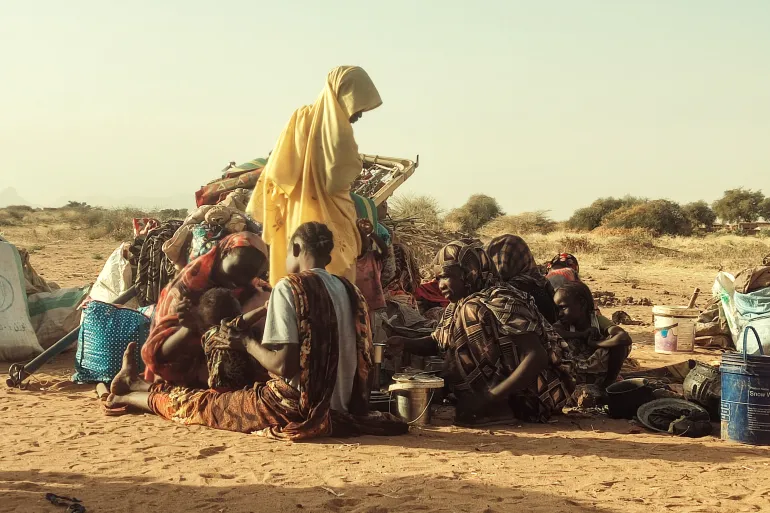
Al Fashir, the last stronghold of official authority in the Darfur region, has witnessed widespread abuses since the RSF took control in late October, with consistent reports of extensive violations against civilians, including killings, forced displacement, and restricted access to humanitarian aid.
International and UN organizations had previously warned of a worsening humanitarian and security crisis in North Darfur. With communications cut and access on the ground severely restricted, satellite imagery and open-source investigations have become some of the few ways to monitor the situation.