
Nyala – Sudan Now | 16 January 2026
Informed sources told « Sudan Now » that a major shift has occurred in the logistical supply map of the RSF militia, with the center of support operations moving from the Chadian border deep into the territory of the Central African Republic. This field development reflects increasing pressure on traditional supply routes.
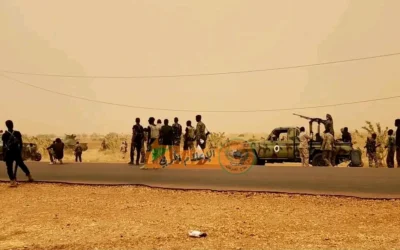
Sources reported observing unprecedented activity involving agricultural tractors and heavy transport vehicles during the current month of January, moving from inside the Central African Republic toward the Sudanese border via the strategic Um Dafuq area. These vehicles are being used as a substitute for small trucks, due to their greater ability to navigate rugged terrain and evade aerial surveillance by traveling through dense forest routes.
Military observers attributed this shift to heightened international monitoring of Am Djars Airport and the Chadian border, which has made it difficult to sustain the flow of weapons and ammunition at previous levels. They also pointed to the RSFs’ efforts to secure alternative routes in anticipation of any political understandings that could lead to an official closure of the Chadian border, as well as the exploitation of security fragility in northern Central African Republic to establish “transit” storage facilities beyond the reach of Sudanese Air Force strikes.
Over the past three weeks, more than 15 nighttime convoys have been observed entering via ”Adila” and ”Um Dafuq” corridors, consisting of tractors carrying sealed containers. At the same time, the militia has begun rehabilitating and leveling dirt tracks linking the city of Birao inside the Central African Republic to areas in South Darfur State.
The information also indicated that these new routes are being used for cross-border recruitment, not only for transporting weapons but also to facilitate the movement of mercenaries coming from Sahel countries.
A military analyst told «Sudan Now» that “the shift of supplies to the Central African Republic indicates an attempt by the RSF to establish a long-term support base” stressing that this necessitates strengthening security coordination with the Central African Republic and intensifying international pressure to shut down the new supply routes.