
New York – Sudan Now | April 10, 2026
The United Nations Population Fund (UNPFA) has revealed a severe collapse in the healthcare system in East Darfur and North Kordofan, amid escalating drone attacks and waves of displacement, directly threatening the lives of thousands of women and mothers.
El Daein: Entire Hospital Put Out of Service
A drone attack targeting El Daein Teaching Hospital in East Darfur has forced the facility to cease operations entirely, creating a critical gap in the provision of life-saving care across the region. A single primary healthcare center now remains the only functioning facility offering sexual and reproductive health services in the entire state.
El Obeid: Only Four of Seven Operating Rooms Functioning
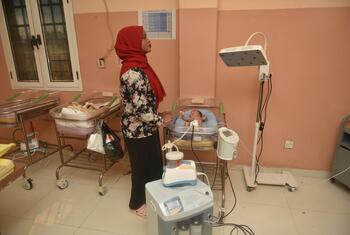
In North Kordofan, El Obeid Maternity Hospital is straining under immense pressure, serving more than 230,000 displaced people -most of them women and girls- and standing as the only referral hospital in western Sudan. In 2025, the hospital recorded approximately 2,655 cesarean sections and 3,479 natural births, averaging 25 deliveries per day.
However, the hospital’s medical director, Dr. Hassan Babiker, revealed that only four out of seven operating rooms are currently functional, amid recurring power outages, soaring fuel costs, and severe shortages of antibiotics, surgical sutures, and gloves. He also pointed to maternal deaths caused by anesthesia complications and prolonged waiting times.
Among the most harrowing accounts, Dr. Babiker recounted the case of a mother who gave birth to premature triplets; two of the infants were lost due to the lack of available neonatal intensive care beds, while the third left with the mother, its fate unknown.
Healthcare Workers Pay Out of Pocket
The suffering is not limited to patients. Midwives are working under harsh conditions, earning wages that do not even cover transportation costs, often forcing them to purchase delivery supplies from their own pockets. The head of the department described the delivery rooms as lacking even the most basic necessities, such as cotton, sterile gauze, and infant scales, in addition to the absence of air conditioning and privacy.
Collapse of Sudan’s Healthcare System
Since the outbreak of war between the Sudanese Armed Forces and the Rapid Support Forces in April 2023, healthcare facilities across Sudan have come under repeated attacks, affecting hospitals, clinics, and primary care centers. The World Health Organization has documented more than 213 attacks on healthcare facilities since the start of the conflict, resulting in hundreds of deaths and injuries among patients and medical staff.
East Darfur and North Kordofan are among the hardest-hit regions, hosting large numbers of displaced people fleeing conflict zones, as healthcare infrastructure continues to collapse under the combined weight of attacks, mass displacement, and severe funding shortages.
The crisis is further exacerbated by the fact that many medical workers have themselves been displaced or forced to stop working, while United Nations reports indicate that more than half of Sudan’s population is now in urgent need of humanitarian assistance.
Women and girls are bearing the heaviest burden of this collapse, amid the absence of reproductive health services across vast areas and rising maternal and neonatal mortality rates in the context of a near-total lack of basic medical care.