
Geneva – Sudan Now | April 13, 2026
A joint report by Action Against Hunger, CARE International, the International Rescue Committee, Mercy Corps, and the Norwegian Refugee Council has revealed that millions of Sudanese are surviving on just one meal a day, as the food crisis deepens and fears grow over its further spread.
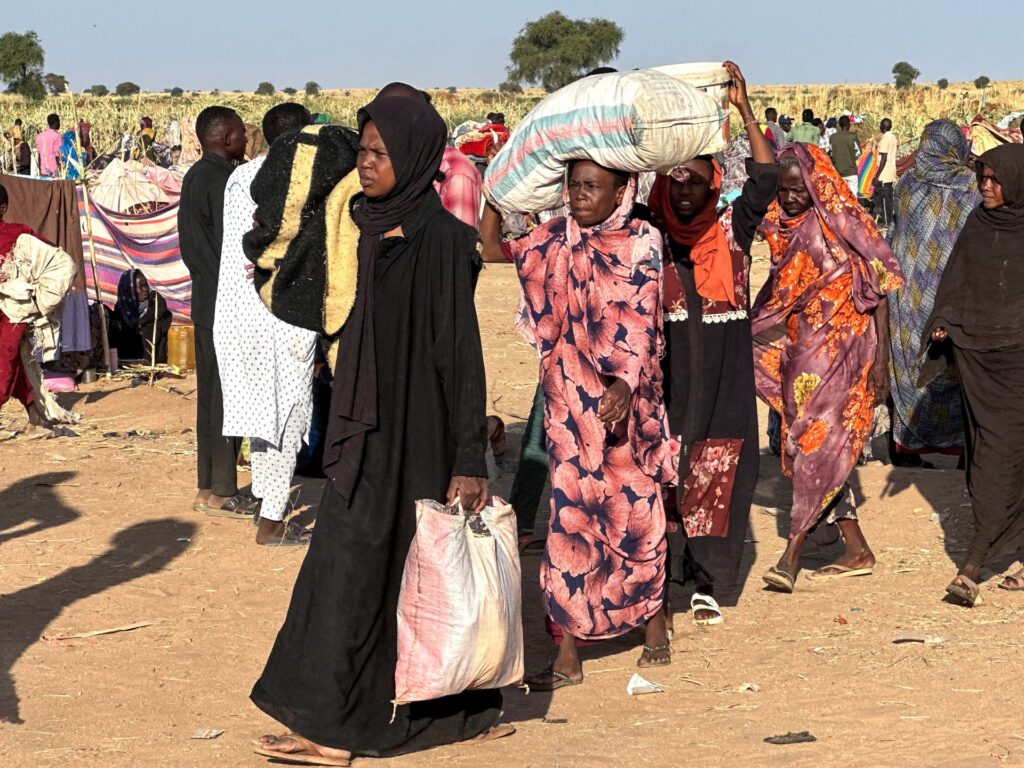
The report identified North Darfur and South Kordofan as the hardest-hit areas, where millions are forced to skip meals for days at a time, with some resorting to eating leaves and animal feed to stay alive.
The figures indicate that around 29 million people equivalent to 61.7% of Sudan’s population are suffering from acute food insecurity, while more than 10.2 million people fall into the severe and critical hunger categories, which are associated with malnutrition and risk of death.
At the level of displaced households, the report found that more than 80% of families in Sudan have reduced their meals, while 74% of households across Sudan, South Sudan, and Chad have no income at all. In Chad, nine out of ten female-headed households are living with a complete lack of income.
Risks to children are also escalating, with 18% of households reporting that they sent their children to work in the past month, while the risk of child marriage triples in cases of family separation.
As for humanitarian aid, emergency food assistance is reaching only about one in five people in need, a level that relief experts consider wholly insufficient to prevent famine or save lives at the necessary scale.
International food security monitors declared famine in parts of Darfur and Kordofan in late 2024, with the crisis continuing to spread into new areas throughout 2025 and 2026. Sudan is now considered the world’s largest hunger crisis, amid the systematic destruction of agricultural and food systems, the closure of supply routes, and severe restrictions on humanitarian access to the hardest-hit areas.
Women and children are bearing the brunt of the crisis, as social norms often place them last in line for food within households. Reports indicate that around 4.2 million children under the age of five are at risk of acute malnutrition. The situation is further complicated by the fact that humanitarian funding has reached only a fraction of what is required, while parties to the conflict continue to obstruct the delivery of aid.