
Khartoum – Sudan Now | 27 April 2026
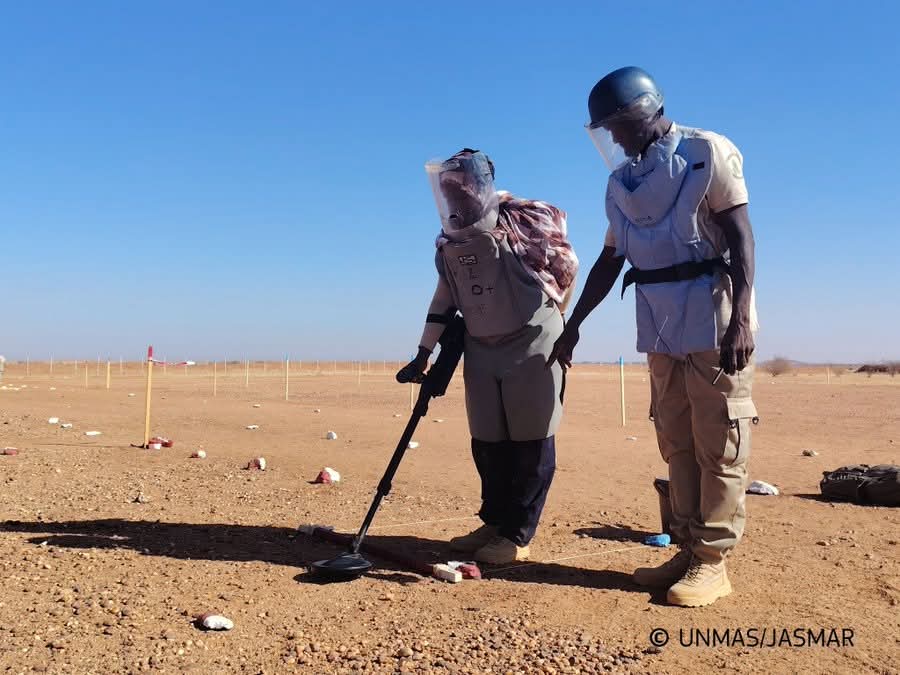
The European Union has announced new funding of €3 million to support demining activities in Sudan through the United Nations Mine Action Service (UNMAS), aiming to enhance civilian safety and facilitate the delivery of humanitarian aid in conflict-affected areas.
The funding comes under the project “Rebuilding Sudan: Mine Clearance for Recovery,” which runs for 18 months and focuses on addressing widespread explosive ordnance contamination, particularly in urban and peri-urban areas, especially Khartoum and regions receiving large numbers of returnees.
According to an official statement, the spread of unexploded ordnance has worsened since the outbreak of the war in April 2023, posing a direct threat to civilian lives and hindering relief operations and reconstruction efforts, particularly in residential neighborhoods and critical supply routes.
UNMAS Director Kazumi Ogawa said that these remnants continue to pose a deadly risk to families returning to their areas, stressing that their removal is a crucial step toward creating a safe environment.
The project will focus on clearing priority areas, alongside implementing explosive ordnance risk education programs and strengthening national capacities through training and technical support, contributing to safe returns and the resumption of essential services.
An estimated 700,000 civilians are expected to benefit directly from the project, in addition to more than one million people indirectly, through improved humanitarian access and the restoration of services in key sectors such as health, education, water, and food security.
Sudan has witnessed the widespread presence of war remnants, including landmines and unexploded ordnance, as a result of the ongoing conflict since 2023, posing a threat to civilian lives and restricting population movement and relief operations.
Mine clearance is considered a key humanitarian priority in the post-conflict phase, given its role in enabling the return of displaced people, supporting reconstruction, and reopening access routes for humanitarian assistance.