
By Abdelaziz Yakub | 14 April 2026
Conference Agenda.. Three Tracks and Limited Ambitions
Berlin is hosting the third edition of the International Ministerial Conference on Sudan on April 14–15, as part of an annual series following the Paris 2024 and London 2025 conferences. New to this edition is the introduction of a third track, the “Sudanese Civil Track” alongside the ministerial political and humanitarian tracks. The conference aims to mobilize humanitarian support and advance efforts toward peace amid escalating displacement and unmet humanitarian needs. It is worth noting that this is not a peace conference in the strict sense.
On the diplomatic front, the main session is expected to be attended by the foreign ministers of Germany, France, and the United Kingdom, alongside representatives of the international quartet the United States, Saudi Arabia, Egypt, and the United Arab Emirates as well as Turkey, Qatar, and leaders of the Quintet organizations. The humanitarian track is expected to focus on securing urgent financial pledges, while the civil track brings together around 40 Sudanese figures with the aim of issuing a joint declaration and forming a Sudanese steering committee.
Debate Over Representation.. Who Speaks for Sudan?
A closer look at the guest lists reveals a fundamental issue surrounding the criteria of representation. While the two parties to the armed conflict have been excluded, criticism has mounted that the civil track is dominated by groups aligned with the RSF. This has prompted the “Ta’sis” coalition to warn of a “hijacking of the genuine civilian voice” and the inclusion of figures that do not represent real grassroots constituencies.
On the other hand, the Sudanese government has rejected the conference outright. Prime Minister Kamil Idris stated that its success or failure depends on the participation of his government, stressing that any decisions made in its absence would not be binding on Khartoum. In the same context, Darfur Governor Minni Arko Minnawi sent only a humanitarian coordinator as an observer, describing the invitations as “inconsistent with the nature of the crisis.” Meanwhile, the National Forces Alliance announced a full boycott of the conference and its preparatory meetings.
Within Sudanese political positions, the Sudan Liberation Movement/Army led by Abdel Wahid al-Nur welcomed the convening of the conference, praising the scale of regional and international participation. In a statement, the movement called for outcomes that would ensure the unconditional delivery of humanitarian aid to all those affected, the opening of humanitarian corridors, and pressure on the warring parties to agree to a humanitarian truce in line with the statement of the international quartet, leading to a comprehensive ceasefire involving all armed forces. It also reaffirmed support for a civilian democratic transition with the participation of all Sudanese components.
Humanitarian Bet.. Commitments or Empty Promises?
Organizers are banking on the humanitarian track to mobilize urgent funding amid a catastrophic crisis. However, the 2025 London conference failed to produce a unified final statement due to divergent positions between the UAE on one side and Egypt and Saudi Arabia on the other. Observers fear a repeat of this scenario in Berlin, particularly as previous humanitarian funding has reached only 16% of what is required inside Sudan, while reports indicate that aid is reaching only one in five people in need.
Structural Gaps Undermining the Outcomes
Despite its humanitarian and political agenda, the Berlin conference risks reproducing the same failures that have marked previous initiatives, particularly in terms of weak representation of key actors and the absence of a critical assessment of past experiences. The structural shortcomings can be summarized in four main points:
First, the exclusion of both warring parties renders any resulting recommendations largely ineffective. No ceasefire can be implemented without the consent of those who hold arms. A serious international approach would require efforts to bring both sides together, either by building on previous understandings such as the Jeddah Agreement, or through a parallel track that encourages a transparent Sudanese–Sudanese dialogue among civilian actors away from polarization.
Second, the lack of genuine coordination between the Quartet and the Quintet, and the transformation of the conference into a platform for competing regional and international interests, undermines any chance of reaching a unified approach.
Third, the limited field knowledge of some participants and the failure to fully grasp the complexity of Sudan’s humanitarian, social, and political dynamics result in proposals that remain detached from the core of the crisis.
Fourth, the continued sidelining of a ceasefire as a precondition for any meaningful settlement remains the main obstacle to ending the conflict.
The Berlin conference, in its current form, risks becoming another link in a chain of ineffective initiatives that may deepen political divisions rather than resolve them. The real test is not what is announced on April 15, but what will be achieved on the ground in Sudan in the months that follow, whether in terms of aid delivery or progress toward a ceasefire. Unless the international approach is redesigned to reflect the complexity of the Sudanese reality and to grant local actors a central role in the peace process, the suffering of millions is likely to continue.
Three Years of War and a Humanitarian Catastrophe
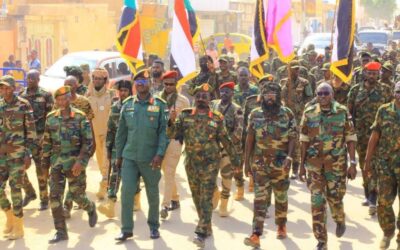
On April 15, 2023, war broke out between the Sudanese Armed Forces and the RSF in Khartoum, quickly spreading to Darfur, Kordofan, and Blue Nile, turning the country into a full-scale battlefield. The conflict was not born overnight; rather, it stemmed from decades of institutional fragility and elite power struggles, before erupting following a sharp dispute between the two military leaders over the arrangements for the transitional period.
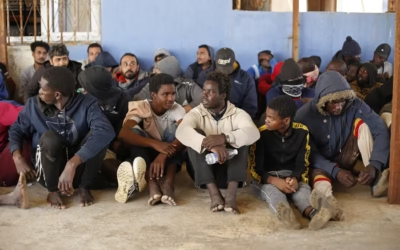
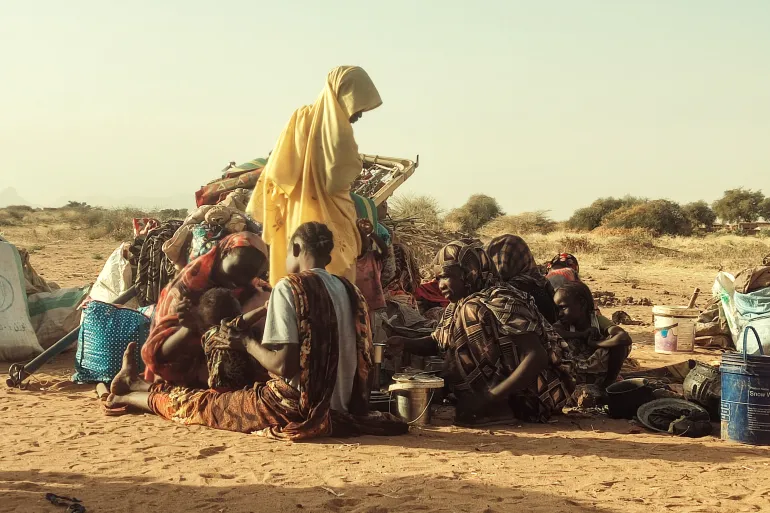
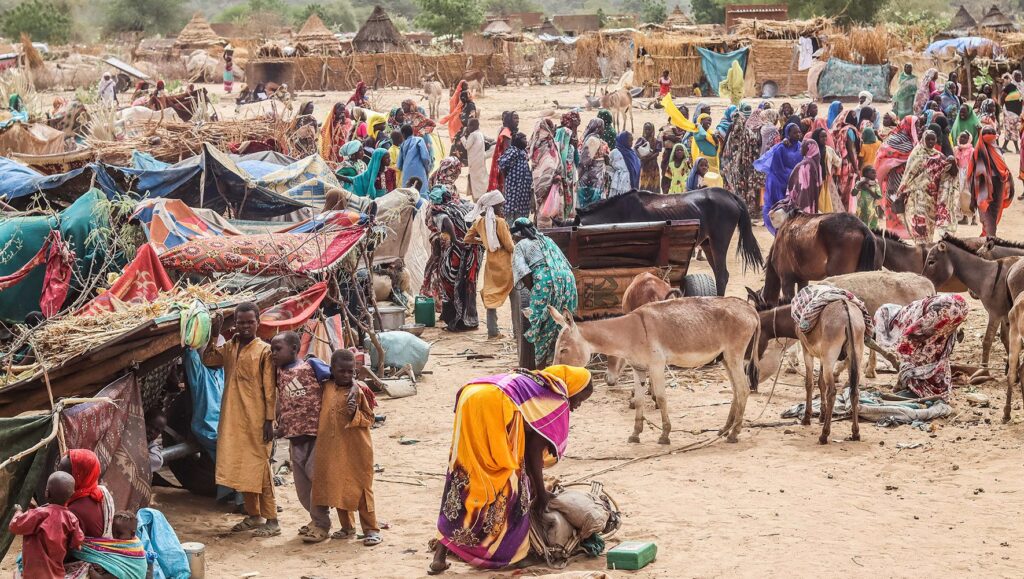
Sudan is currently classified as the world’s largest displacement and hunger crisis, with around 14 million people displaced, including 9 million internally and 4.4 million who have crossed borders. Approximately 29 million people are facing acute food insecurity. International food security monitors have reported famine conditions in parts of Darfur and Kordofan since late 2024, with the situation continuing to spread to new areas.
Women and children bear the heaviest burden amid the collapse of the healthcare system and a severe shortfall in humanitarian funding, which does not exceed 16% of what is required. Meanwhile, the international community continues to hold conferences without turning them into an effective ceasefire on the ground.