
New York – Sudan Now | 6 April 2026
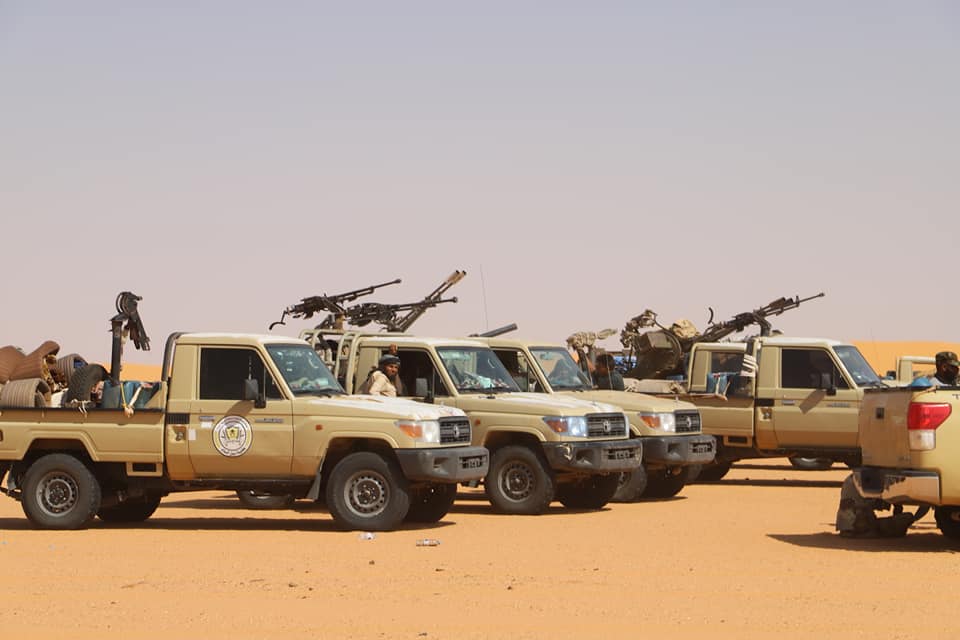
A recent report by the United Nations Panel of Experts on Libya has revealed the existence of cross-border support networks operating through southern Libya to provide military and logistical supplies to the RSF in Sudan, including the transfer of weapons, ammunition, and fighters.
The report noted that these networks rely on desert corridors stretching across Libya and Chad into Sudan, leveraging tribal ties, particularly with Tebu communities to facilitate the movement of supplies and evade detection.
The report identified the “Subul Al Salam” Battalion as a key actor in managing these networks, under the leadership of Abdulrahman Hashem al-Kilani. It noted that between January 2025 and January 2026, the group restructured its supply system, granting it near-complete control over critical transport routes in southeastern Libya.
The report explained that the activities of these networks were carried out with the tacit approval of elements within the Libyan National Army, enabling freedom of movement and the securing of supply lines with little to no obstruction, particularly in the Kufra region and desert corridors near the borders with Sudan and Chad, including the Jabal Uweinat area.
The report highlighted the use of logistical sites inside Libya, including Maaten al-Sarra Air base, as support hubs for transport operations. It also confirmed the presence of elements affiliated with the RSF within Libyan territory during 2025, noting their involvement in military activities and limited clashes.
The report stated that the supplies included weapons, ammunition, and military equipment, without specifying their types alongside the transfer of fighters to carry out combat and technical roles, as part of an organized network that goes beyond conventional smuggling operations.
The report also indicated that these networks have evolved into an integrated system linked to the shadow economy, with documented cases of weapons leaking to other actors, including smuggling networks and elements associated with extremist groups. This reflects a growing overlap between the conflict in Sudan and organized crime in the region.
The report explained that these networks’ control over supply chains has contributed to sustaining military operations inside Sudan, while also affecting the balance of power in southern Libya, amid weak government oversight and the expanding activity of non-state actors.
The Panel of Experts stressed that these patterns of support do not represent a temporary phenomenon, but rather a sustained and adaptable structure that relies on shifting routes and maintaining alternative channels to ensure the continuous flow of supplies.
The report called for stricter enforcement of the arms embargo, enhanced border and logistical monitoring, as well as sanctions against involved networks, alongside intensified efforts to trace the sources of weapons in order to curb their flow into conflict zones.
The report comes in the context of the UN Security Council’s monitoring of violations of the arms embargo imposed on Libya, as the Panel of Experts tracks cross-border activities and their impact on regional conflicts, including the war ongoing in Sudan since April 2023.
Since the outbreak of the conflict in Sudan, international concerns have intensified over the flow of weapons and fighters across borders, amid warnings of the expanding influence of non-state networks on regional security, particularly in the Sahel and Sahara regions.