
Khartoum – Sudan Now
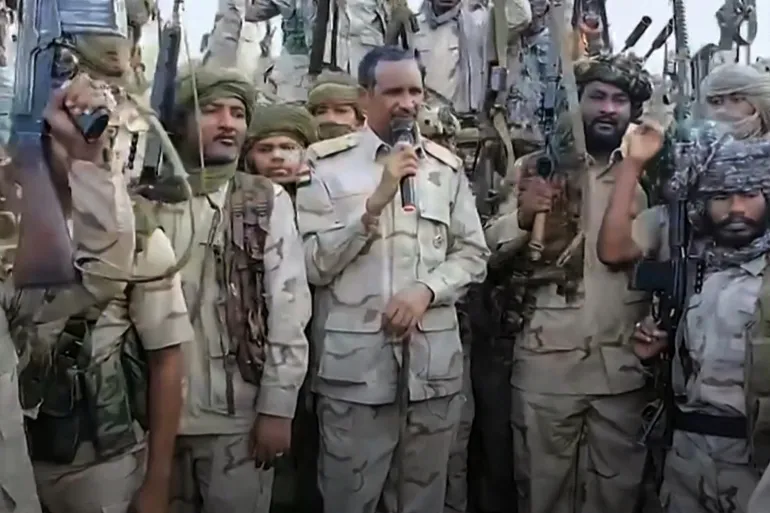
Mohamed Hamdan Dagalo, widely known as Hemedti, said the war in Sudan was not a struggle over power or influence but a confrontation between what he described as “two opposing projects.”
In an Eid al-Adha address, the commander of the Rapid Support Forces said one side sought to keep Sudan tied to authoritarianism, violence and discrimination, while the other aimed to establish a new state based on freedom, justice and equal citizenship.
Hemedti said his project was based on rebuilding the Sudanese state and establishing what he described as a professional national army not rooted in tribal or regional loyalties.
The RSF leader also accused the Islamist movement in Sudan of responsibility for wars, political divisions and corruption during past decades, saying the current conflict was the result of what he described as policies of domination and authoritarian rule.
The remarks come as fighting between the Sudanese army and the RSF continues across several parts of the country more than two years after the war erupted in April 2023.
Regional and international mediation efforts aimed at securing a ceasefire and launching a political process have repeatedly stalled amid deep political and military divisions.
Hemedti also pledged to work toward the return of displaced people and refugees and compensate those affected by the conflict, while calling for a broader national project addressing governance, justice and the distribution of power and wealth.
In recent months, the RSF has increasingly promoted political messaging linked to the idea of a “New Sudan” alongside new civilian and military alliances, while military confrontations have continued in multiple regions across the country.