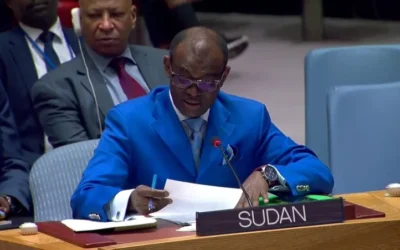

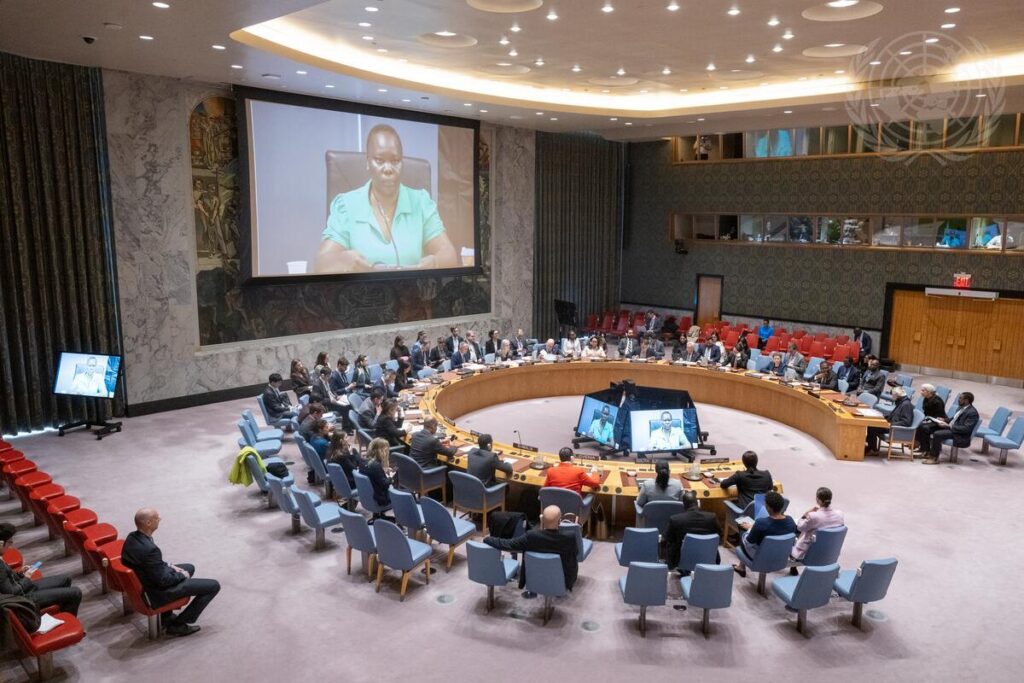
New York – Members of the United Nations Security Council warned of the risk of mass atrocities in El Obeid, the capital of North Kordofan State, and called on the RSF to immediately cease its attack on the city, amid fears that renewed military escalation could further worsen the humanitarian and security situation in the region.
In a press statement, Council members said they were deeply concerned by reports of large-scale RSF troop deployments and military reinforcements around El Obeid, as well as the possibility of a ground assault on the city. They called on the force to immediately cease its military operations.
El Obeid is the last major city under government control in the Kordofan region and serves as a key administrative and humanitarian hub for the area, making any military escalation around it a matter of increasing regional and international concern.
The Council also expressed concern over the ongoing violence across Sudan, including reports of escalating fighting in the Kordofan states, warning that the continuation of military operations threatens to deepen the country’s humanitarian crisis.
The Council also stressed the urgent need for an immediate cessation of hostilities in Sudan, urging all parties to the conflict to adhere to international humanitarian law and international human rights law, and to ensure the protection of civilians and civilian infrastructure.
The Council also expressed concern over reports of drone strikes on the city of El Obeid, as well as the increasing use of drones in the wider Sudanese conflict. It called for investigations into all violations and abuses, and for those responsible to be held accountable.
El Obeid has witnessed repeated drone attacks in recent weeks targeting civilian and service facilities, including electricity and fuel infrastructure, amid growing concerns over their impact on essential services and the living conditions of the population.
Council members also stressed the importance of adhering to the commitments set out in the Jeddah Declaration signed between the Sudanese Armed Forces and the RSF in May 2023, particularly those related to the protection of civilians and the facilitation of humanitarian aid access.
The statement also emphasized the need to ensure the safe, rapid and unhindered delivery of humanitarian aid to all those in need, as well as the provision of safe passage for civilians wishing to leave conflict areas or move through them.
The Council also called on all Member States to refrain from any external interference that could fuel the conflict or undermine stability in Sudan, and urged them to support efforts toward a lasting peace and the full implementation of Security Council Resolution 2791 (2025).
This call comes amid continued mutual accusations between the parties to the conflict over receiving military and logistical support from external actors, an issue that has remained central to Security Council discussions on Sudan in recent months.
Council members reiterated their full commitment to Sudan’s sovereignty, independence, unity, and territorial integrity, stressing their rejection of the establishment of any parallel authority or government in areas controlled by the RSF.
This position comes months after political and armed forces and alliances aligned with the RSF announced steps to establish parallel governing structures, a move that was rejected by the Sudanese government as well as several regional and international states and organizations.
In conclusion, Security Council members reaffirmed their support for efforts aimed at reaching a permanent ceasefire and creating the conditions necessary for a political solution that would end the war and restore stability to Sudan.