
Khartoum – Sudan Now
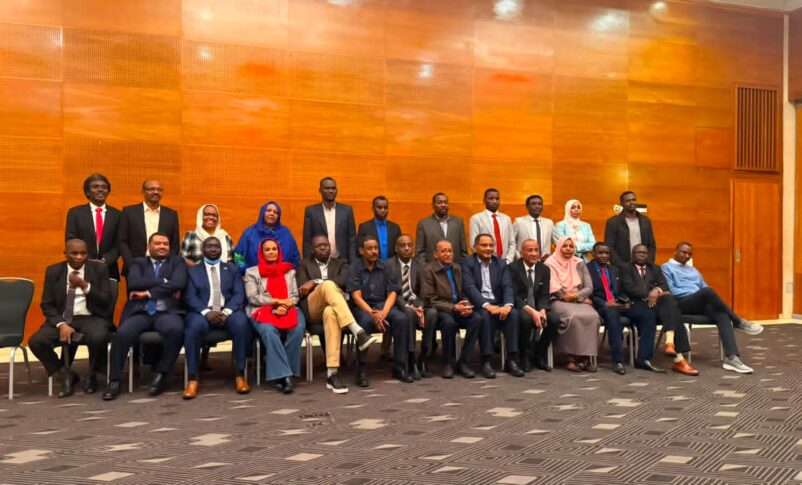
Sudanese political and civil forces agreed on a shared vision to launch a comprehensive political process aimed at ending the war in Sudan, addressing the root causes of the crisis, and building a democratic civilian state during a consultative meeting held in the Ethiopian capital, Addis Ababa, on June 3–4, 2026.
The participating forces said in a press statement that the consensus reached marks a step toward launching a Sudanese peace process through a preparatory committee that will pave the way for a political process aimed at achieving justice, preserving Sudan’s unity and sovereignty, and comprehensively addressing the root causes of the Sudanese crisis.
The statement affirmed that this consensus reflects a growing will among political and civil forces to work collectively toward ending the suffering of Sudanese people caused by the war, countering hate speech and racism, and preserving Sudan’s social fabric by prioritizing dialogue and peaceful solutions.
The signatory forces stressed that the ongoing war must be Sudan’s last, calling for a political process that adopts a comprehensive developmental project to address the destruction left by the conflict. They urged an integrated approach that prioritizes tackling the humanitarian catastrophe, expanding civic space, and creating the appropriate conditions for the success of the political process.
The vision outlined three interconnected tracks, namely the humanitarian track, the security track, and the political track, considering them an integrated and simultaneous package that cannot be separated from one another.
On the humanitarian front, the forces called for lifting the siege on cities and camps, opening safe corridors, delivering humanitarian aid, and ensuring the voluntary and safe return of displaced persons and refugees, in addition to protecting civilians and adhering to international humanitarian law.
As for the security track, it included a call for a humanitarian ceasefire based on the Jeddah Declaration, under regional, international, and UN monitoring, as a prelude to achieving a lasting cessation of hostilities that would pave the way for a comprehensive and sustainable political settlement.
On the political track, the forces emphasized the importance of an inclusive Sudanese dialogue to reach a new social contract based on social justice, equality, the elimination of marginalization, and the addressing of poverty and rural issues, as well as the establishment of a state of equal citizenship and a civilian democratic transition.
The vision also stressed the need to uphold human rights, ensure criminal and transitional justice, hold perpetrators of war crimes and crimes against humanity accountable, and address the deep social and psychological impacts left by the war.
The vision included a proposal to establish a preparatory committee for the political process, limited to no more than 40 members, representing political and civil forces, women, youth, and those affected by the war. The committee would be responsible for preparing the political dialogue, defining its parties, issues, and governance mechanisms, and coordinating with regional and international mediators.
The statement was signed by the Civil Democratic Alliance of Revolutionary Forces “Somoud,” the Democratic Bloc of the Forces of Freedom and Change, the Arab Socialist Ba’ath Party (Original), the Popular Congress Party, and the Umma Party, along with civil society figures, women’s organizations, and youth groups that took part in the consultative meeting.