
Geneva – Sudan Now | May 11, 2026
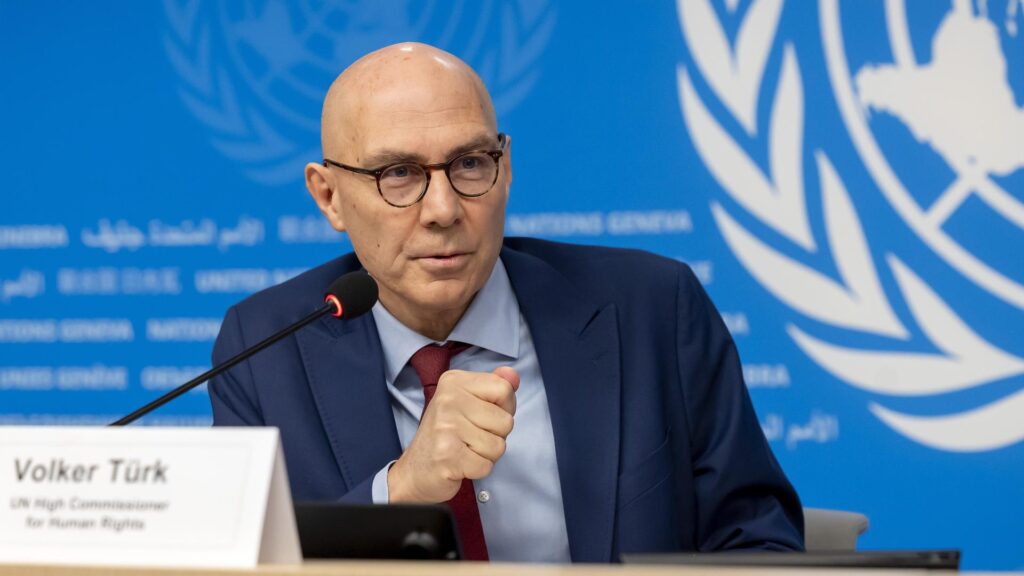
The United Nations High Commissioner for Human Rights, Volker Türk, strongly condemned the escalating use of drones in Sudan, warning that the conflict is on the verge of entering “a new and more deadly phase” amid the widening scope of attacks and the rising number of civilian casualties.
In a statement issued on Sunday, Türk said drone strikes had killed at least 880 civilians between January and April 2026, accounting for more than 80 percent of all conflict-related civilian deaths recorded during the same period, according to findings by the Office of the High Commissioner in Sudan.
He added: “Armed drones have now become, by far, the leading cause of civilian deaths.”
The High Commissioner also noted that the growing reliance on drones has enabled hostilities to continue despite the approaching rainy season, which had previously seen a decline in ground operations. He warned that attempts by the warring parties to seize more territory could lead to the expansion of fighting into the central and eastern states of Sudan.
He said: “The international community is facing a clear warning that, unless urgent action is taken without delay, this conflict is on the verge of entering yet another, more deadly phase.”
Volker Türk called for strict measures to prevent the transfer of weapons -including advanced armed drones- to the parties to the conflict, stressing that the continued attacks against civilians and civilian infrastructure “amid complete impunity” are deepening the humanitarian crisis and normalizing violence as a method of warfare for both sides.
The statement said that the majority of drone-related deaths were recorded in the Kordofan region during the first quarter of this year, noting that drone strikes targeting the areas of Al-Qouz and El-Obeid on May 8 killed 26 civilians and wounded others.
It also noted that the parties to the conflict have used drones to target markets, healthcare facilities, and critical infrastructure. Markets were hit in at least 28 separate attacks that resulted in civilian casualties, while medical facilities were struck at least 12 times over the past four months, forcing some of them to shut down or suspend services.
Türk said drone use has expanded beyond Kordofan and Darfur to include Khartoum, White Nile, and Blue Nile states. He pointed out that the attack on Khartoum International Airport on May 4 disrupted air traffic, while Khartoum and Omdurman have also witnessed a series of similar strikes in recent days.
He added that the intensity of recent attacks has “undermined the relative calm” that Khartoum had experienced over the past months, at a time when civilians had begun returning to the capital.
Türk warned that any further escalation in Kordofan, particularly in the cities of El-Obeid and Dilling, could trigger large-scale displacement and retaliatory attacks against civilians, amid a deteriorating humanitarian situation and severe shortages of food and health services.
He also noted that the escalation of violence threatens to disrupt the delivery of humanitarian aid, at a time when large parts of Sudan face the risk of famine and acute food insecurity.
Volker Türk called on all parties to the conflict to protect civilians and ensure their safe passage away from combat zones, urging the securing of evacuation routes and the prevention of acts of retaliation, including summary executions, sexual violence, arbitrary detention, and abductions.
The war in Sudan, ongoing since April 2023 between the Sudanese Armed Forces and the RSF, has seen a growing escalation in the use of drones and long-range attacks, amid UN and international warnings of an expanding conflict and a deepening humanitarian crisis in the country.