

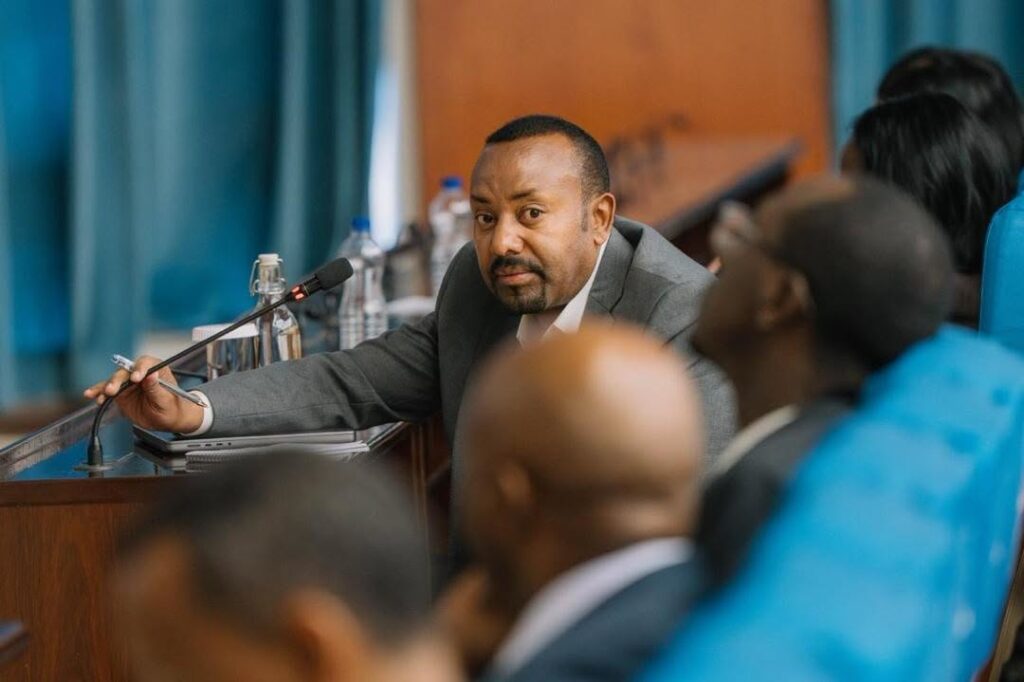
KHARTOUM – Sudan’s government on Wednesday rejected Ethiopian Prime Minister Abiy Ahmed’s offer to host peace talks, citing allegations of Ethiopian military support for the Rapid Support Forces (RSF) and the use of Ethiopian territory to launch drone attacks against Sudan.
In a statement issued on Nov. 25, Khartoum called on the African Union and other regional and international actors to exclude Ethiopia from any arrangements to host or facilitate Sudanese dialogue.
The government said neutrality and respect for Sudan’s sovereignty were essential conditions for accepting any country’s involvement in the peace process.
It also called for an independent investigation into the allegations against Ethiopia and reserved the right to pursue diplomatic and legal measures to protect Sudan’s sovereignty.
Abiy publicly announced the initiative on Tuesday, inviting Sudanese military, political and civilian groups to participate in talks aimed at ending the war and reaching a political settlement, potentially including the formation of a broadly accepted national unity government.
The Ethiopian prime minister said his country would remain impartial and that the initiative was not intended to advance its own political interests.
Sudanese Groups Divided Over Initiative
The government’s rejection contrasts with the positions of the RSF-led Sudan Founding Alliance (Tasis) and the civilian coalition Somoud, led by former Prime Minister Abdalla Hamdok, both of which welcomed the Ethiopian proposal.
The RSF-aligned parallel administration expressed readiness to engage with the initiative, while Somoud called for coordinated regional and international efforts towards a comprehensive political settlement.
Worsening Diplomatic Relations
The dispute comes amid deteriorating relations between Khartoum and Addis Ababa, with both governments accusing each other of interference in their internal affairs.
Earlier this month, Sudan lodged complaints with the U.N. Security Council and the African Union’s Peace and Security Council, accusing Ethiopia of allowing the RSF to launch drone attacks from its territory against civilian infrastructure in Sudan.
Ethiopia denies supporting the RSF.
In February, a Reuters investigation reported that Ethiopia was hosting a covert military training camp for thousands of RSF fighters, citing interviews, satellite imagery and documents reviewed by the news agency.
Diplomatic tensions escalated in early November when Ethiopia closed Sudan’s consulate in Assosa and ordered six Sudanese diplomats to leave. Sudan responded by closing Ethiopia’s consulate in Gedaref and expelling its diplomatic staff.
Ethiopia has separately accused Sudan, Egypt and Eritrea of supporting armed groups opposed to its government. All three countries have denied the allegations.
Khartoum said the choice of venue, agenda and facilitator for any Sudanese dialogue must be determined by Sudanese themselves through consensus, stressing that its sovereignty and independence in national decision-making were non-negotiable.


