
Berlin – Sudan Now | April 15, 2026
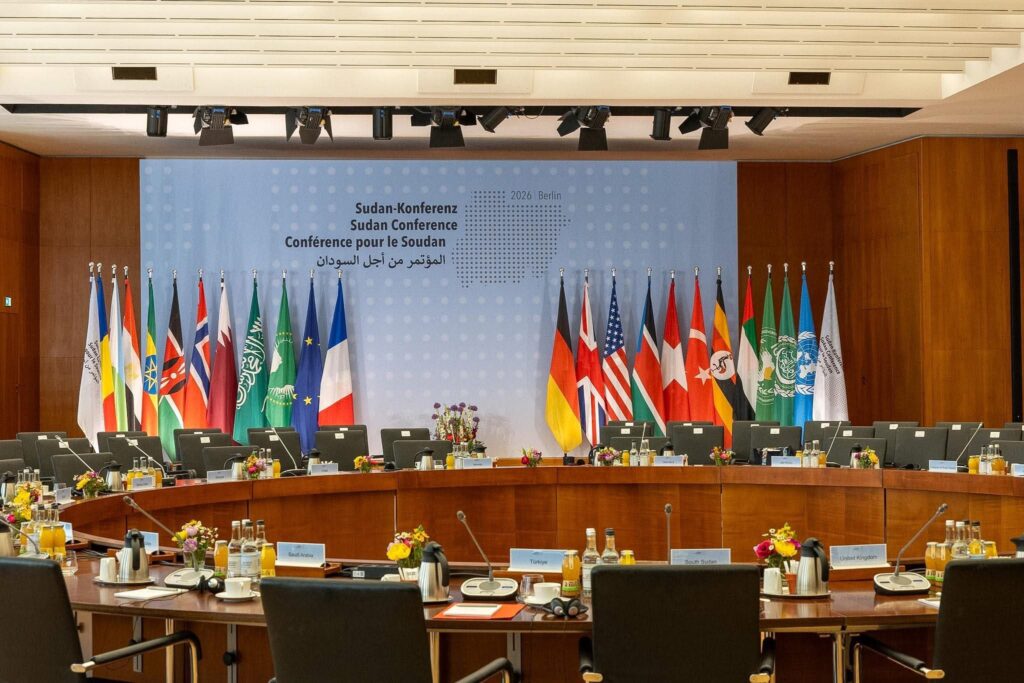
The Berlin Conference on Sudan concluded today with international pledges exceeding €1.3 billion in humanitarian aid, in an effort to address the country’s worsening crisis, amid the absence of any tangible political breakthrough toward ending the war.
Participants at the conference, hosted by Germany with the participation of countries and international organizations, affirmed that Sudan is facing one of the world’s worst humanitarian crises, as the number of people in need continues to rise, hunger spreads and basic services deteriorate.
Several international actors stressed the need to reach an immediate ceasefire and to push toward a comprehensive political settlement, while calling for intensified international efforts to curb the flow of arms to the parties to the conflict.
In this context, the British Foreign Secretary said that the international community has “failed to support the Sudanese people,” calling for greater pressure to be exerted on the parties to the conflict to reach an immediate cessation of hostilities.
For his part, the German Foreign Minister affirmed that Germany will continue to support humanitarian efforts, noting additional financial pledges as part of the aid package announced during the conference.
The conference also saw the attendance of international envoys, including the U.S. presidential envoy Massad Boulos, with discussions focusing on reviving the political process, despite assessments that the prospects for meaningful progress remain limited amid the ongoing fighting.
Despite these calls, the conference outcomes primarily focused on strengthening the humanitarian response, including support for food and healthcare services and the expansion of aid, without announcing any new mechanism or a clear roadmap to end the conflict.
The Sudanese conflict parties, including the Sudanese Armed Forces and the RSF, did not participate in the conference, which limited the prospects for direct political progress and made the meeting closer to a platform for coordinating international humanitarian support.
The Berlin Conference comes on the third anniversary of the outbreak of the war in Sudan, which has led to one of the world’s worst humanitarian crises, with millions displaced, rising hunger rates, and the collapse of basic services.
The conference is seen as a continuation of the Paris (2024) and London (2025) meetings, which focused on humanitarian support without achieving decisive progress on the political track, amid ongoing divergences among international actors.