
Khartoum – Sudan Now
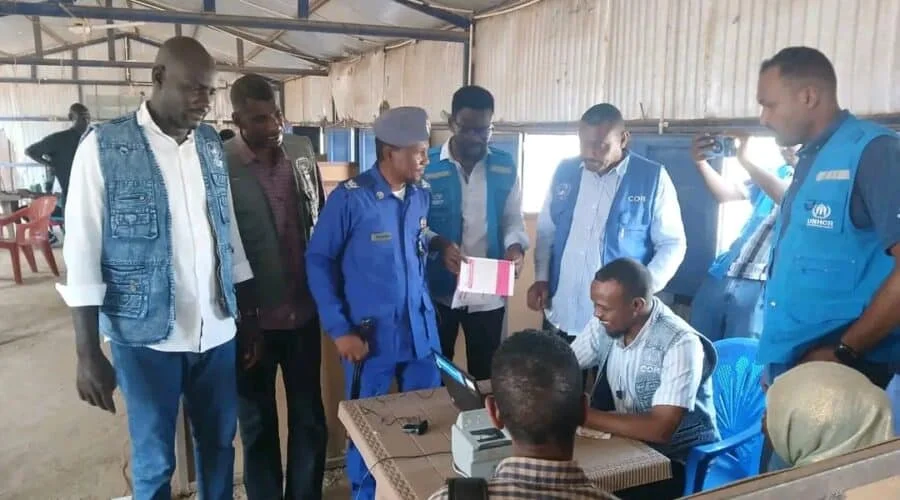
Sudan’s Commission for Refugees has resumed registration reviews and data updates for South Sudanese refugees living in camps across White Nile State, in cooperation with the Passports and Civil Registry Authority and the United Nations High Commissioner for Refugees (UNHCR).
Commissioner for Refugees Nizar Al-Tijani Ahmed Abu Al-Qasim said the initiative is part of a broader strategy to update refugee records and issue smart refugee identification cards linked to a foreign identification number system.
He said the project is intended to strengthen legal protection for refugees, improve the management of foreign populations in Sudan and support security and administrative efforts amid the country’s ongoing conflict, which began in April 2023.
The commissioner added that the initiative aims to modernize refugee data management systems and provide accurate information to improve services delivered to refugee communities while enhancing humanitarian protection mechanisms.
Sudan remains one of Africa’s largest refugee-hosting countries, accommodating nearly one million refugees from neighboring states, with South Sudanese refugees accounting for the largest share of the population.
Assistant Commissioner for Refugees in White Nile State, Major General Imad Mustafa, said the registration update is being implemented in accordance with Sudan’s 2014 Asylum Act and the country’s obligations under the 1951 Refugee Convention.
He noted that the program is expected to register more than 33,000 children born in refugee camps who have not yet been included in official records.
A South Sudanese refugee welcomed the resumption of the registration process, saying it would help families include their children in humanitarian assistance programs and access essential services.
White Nile State hosts one of the largest concentrations of South Sudanese refugees in Sudan, particularly in camps established following successive waves of displacement from South Sudan over the past decade.
Officials said the registration and verification exercise is expected to expand to other states in the coming period as part of wider efforts to improve refugee documentation and service delivery across the country.