
Khartoum – Sudan Now
International partners supporting peace efforts in Sudan reaffirmed their backing for a civilian-led political process and called for the launch of an inclusive Sudanese dialogue within the coming weeks, following consultations organized by the Quintet mechanism in Addis Ababa.
In a joint statement issued by the United States, the United Kingdom, France, Germany, Italy, Norway, Belgium, Greece, the African Union, the European Union, IGAD, the League of Arab States and the United Nations, the signatories stressed that there can be no military solution to Sudan’s conflict and that a durable settlement must be rooted in an inclusive civilian-led process reflecting the aspirations of the Sudanese people.
The statement expressed concern over the worsening humanitarian situation in Sudan, noting that millions continue to face displacement, acute food insecurity and limited access to basic services amid ongoing attacks on civilians and infrastructure.
The signatories reiterated the urgent need for a humanitarian truce leading to a permanent ceasefire and emphasized that the protection of civilians must remain central to all efforts aimed at ending the conflict.
The group welcomed the outcomes of the Berlin Conference on Sudan held in April 2026, including the Berlin Principles for Sudan and a joint call by Sudanese civilian stakeholders supporting a Sudanese-owned political process.
According to the statement, these initiatives represent an important step toward strengthening international coordination and reinforcing support for a civilian-led path toward a sustainable political settlement.
The signatories underscored the importance of advancing the civilian track as a central pillar of efforts to end the war and lay the groundwork for a democratic and inclusive transition process free from domination by any single actor and independent of extremist influences.
They also voiced support for a swift and time-bound political process leading to a civilian-led transition, adding that progress toward agreed benchmarks would continue to be reviewed and assessed. The statement said the international community could consider appropriate measures against those seeking to undermine the civilian transition process.
To that end, the signatories backed the Quintet’s preparations to launch a comprehensive Sudanese political dialogue within the coming weeks, bringing together a broad spectrum of civilian and political actors, including representatives of civil society, women, youth and communities reflecting Sudan’s geographic and social diversity.
The statement said the dialogue should be transparent, credible and free from coercion, and should be structured in a manner that allows it to reach conclusions within a reasonable timeframe, ideally within six months.
According to the statement, the outcome of the dialogue should establish a clear pathway toward an independent civilian-led government based on legitimacy, accountability and respect for human rights. The signatories described the establishment of such a government as essential to achieving a durable end to Sudan’s conflict.
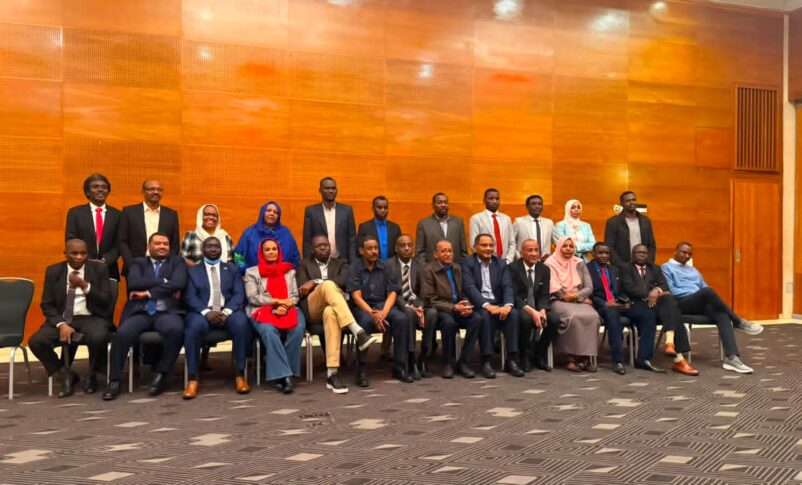
The statement followed consultations organized by the Quintet — comprising the African Union, IGAD, the League of Arab States, the European Union and the United Nations — in Addis Ababa from June 3 to 5 as part of follow-up efforts to the Berlin Conference on Sudan.
During the consultations, Sudanese political and civil groups agreed on a shared vision for launching a comprehensive Sudanese-led political process aimed at ending the war, addressing the root causes of the crisis and advancing a democratic civilian state. Participants described the agreement as a step toward establishing a preparatory committee that would help organize an inclusive political dialogue and lay the groundwork for a broader peace process.
The agreed vision outlined three interconnected tracks — humanitarian, security and political — including calls for improved humanitarian access, civilian protection, a humanitarian ceasefire under regional and international monitoring, and an inclusive Sudanese dialogue focused on social justice, equal citizenship and a civilian democratic transition.
Participants also proposed the formation of a preparatory committee of up to 40 members representing political and civil forces, women, youth and communities affected by the war. The committee would be tasked with preparing the political dialogue, defining its agenda and governance mechanisms, and coordinating with regional and international facilitators.