
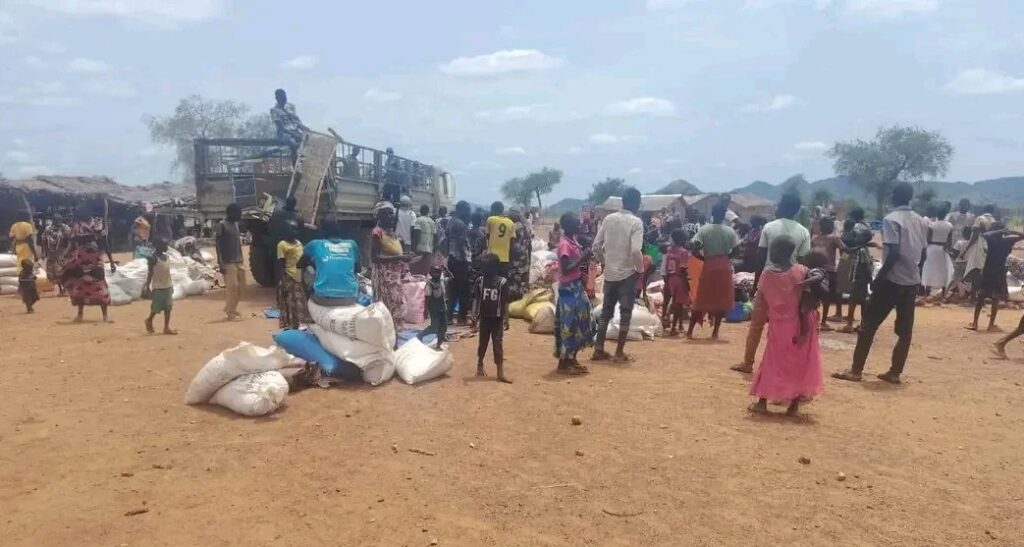
KAUDA – Thousands of civilians have reportedly fled villages near Kauda in Sudan’s South Kordofan after a large-scale attack that local Atoro community representatives blamed on forces affiliated with the Sudan People’s Liberation Army-North (SPLA-N).
The media committee of the Atoro tribe said in a statement on Thursday that heavily populated areas around Kauda came under attack at about 5 a.m., forcing residents from at least eight villages to flee.
The committee named the affected villages as Shiri, Kadri, Kurbala, Al-Qamayir, Shawri, Dowli, Karga and Namli. It said homes, markets and property were looted, burned or destroyed.
According to the statement, the attack involved forces advancing from several directions, backed by combat vehicles, heavy weapons and artillery. The committee estimated that about 5,000 fighters took part.
Sudan Now could not independently verify the number of forces involved, the scale of damage or casualty figures. The SPLM-N had not issued an immediate public comment on the allegations.
The committee said information remained incomplete about the fate of thousands of civilians, including women and children, and warned of a worsening humanitarian situation in the area.
It called on human rights and humanitarian organizations to urgently verify conditions on the ground, monitor possible violations, protect civilians and ensure access for aid.
The reported attack comes amid escalating tensions between the SPLM-N, led by Abdelaziz al-Hilu, and members of the Atoro community in parts of the Nuba Mountains.
The dispute has been linked to competing accusations over rebellion, local authority, land control and access to gold-rich areas. SPLM-N officials have previously said their operations target armed mutineers and security threats, while Atoro leaders have accused the movement of seeking to impose control over their lands by force.
In recent weeks, tensions around Kauda, Heiban and nearby areas have escalated into armed clashes, displacement and reports of homes, markets and property being burned or looted.
Local accounts have also alleged serious abuses against civilians, including killings and attacks on community and religious figures. Those allegations remain difficult to verify because of insecurity, restricted access and the limited presence of independent monitors in the area.
South Kordofan has remained one of Sudan’s most fragile conflict zones for years, with parts of the Nuba Mountains controlled by the SPLM-N and largely outside state authority. The wider war between the Sudanese Armed Forces (SAF) and the Rapid Support Forces (RSF), which began in April 2023, has further complicated security and humanitarian access across Kordofan.
Aid operations in the area remain constrained by poor roads, insecurity and competing armed authorities, leaving displaced communities at growing risk of food shortages, lack of shelter and limited access to medical care.