

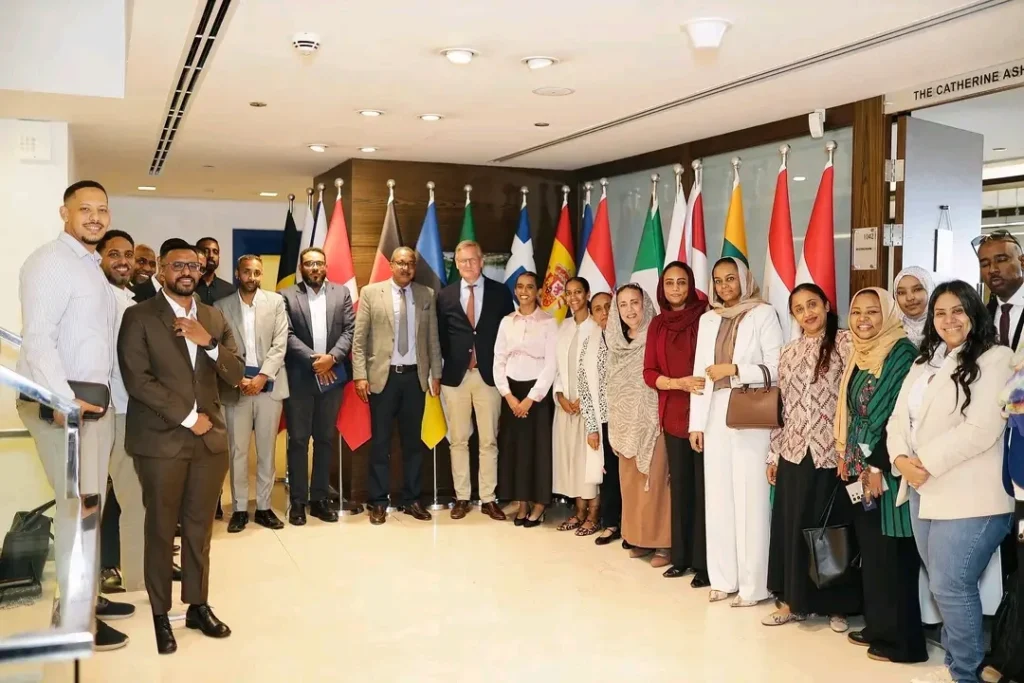
KHARTOUM – The European Union’s ambassador to Sudan, Wolfram Vetter, said the EU must continue open dialogue with different Sudanese social, civil and economic groups inside and outside the country, as the war continues to reshape Sudan’s political and humanitarian landscape.
Vetter said the EU Delegation to Sudan had concluded a series of meetings and discussions with Sudanese women, youth, civil society leaders and representatives of the business community.
He said the meetings were part of efforts to maintain direct communication with Sudanese citizens, learn from the past and discuss ways to support a better future.
The discussions also addressed the EU’s role in providing humanitarian assistance and supporting essential projects, as well as identifying new partners and ideas that could benefit the Sudanese people.
“We must continue to engage with everyone inside and outside Sudan to strengthen relations between the European Union and Sudanese society as a whole,” Vetter said.
The engagement comes as Sudan’s war, which erupted in April 2023 between the Sudanese Armed Forces (SAF) and the Rapid Support Forces (RSF), continues to deepen humanitarian needs, displace millions and weaken state institutions and public services.
Civil society groups, women’s networks and youth initiatives have played an increasingly important role in documenting violations, supporting displaced communities, running emergency response rooms and calling for an end to the war. Many have also warned that any political process must include civilian voices and not be dominated by armed actors.
The EU has remained engaged in Sudan through humanitarian support, diplomatic contacts and coordination with regional and international mediation efforts. Its discussions with Sudanese actors come amid continuing debate over peace initiatives, including the proposed Sudanese-Sudanese dialogue and external mediation tracks aimed at ending the conflict.
For many Sudanese civil groups, direct engagement with international partners remains important to ensure that humanitarian priorities, civilian protection, accountability, women’s participation and democratic transition remain central to any future peace process.


