
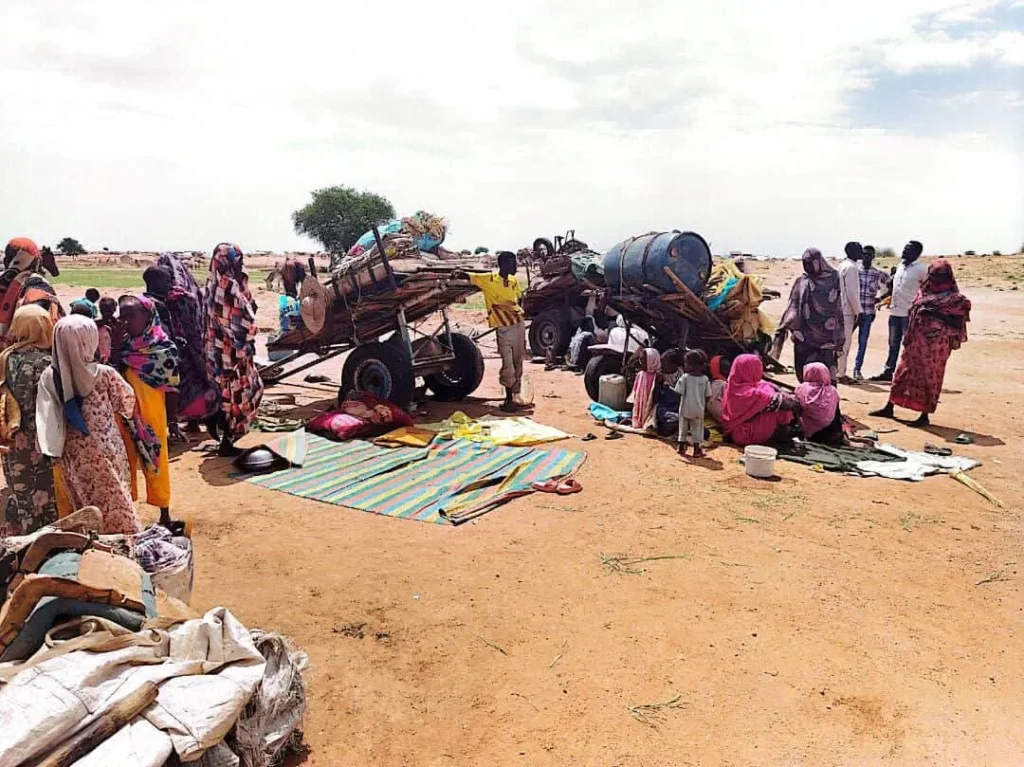
TAWILA – New groups of displaced civilians arrived in Tawila, North Darfur, as worsening security and humanitarian conditions continue to force families from their homes, according to the civilian administration affiliated with the Sudan Liberation Movement/Army led by Abdel Wahid Mohamed Nour.
The administration said the new arrivals reached Tawila on Sunday at a time when the locality is already facing growing pressure on limited services and resources.
It said displaced families urgently need food, drinking water, shelter materials, healthcare and protection, warning that continued arrivals could further strain communities and humanitarian facilities in the area.
The civilian administration did not specify where the newly displaced families had come from, saying only that deteriorating security and humanitarian conditions had forced them to move to Tawila in search of safety.
It called for an urgent and coordinated humanitarian response to meet basic needs and protect the safety and dignity of the new arrivals.
Tawila has become one of the main destinations for people fleeing violence in North Darfur. The International Organization for Migration said an estimated 652,079 internally displaced people were recorded across 32 locations in Tawila locality by September 2025, nearly three times the number recorded six months earlier. Most displaced households were living in gathering sites or informal settlements, while access to healthcare and food remained severely constrained.
Further displacement from El Fasher and surrounding villages continued into 2026. IOM said that among people displaced from the El Fasher area since late October 2025, about 11,491 had reached Tawila locality by March 2026.
The continued arrivals are placing additional pressure on water supplies, health services, food assistance and shelter in a locality already hosting a large displaced population.
North Darfur has experienced repeated waves of displacement during Sudan’s war as fighting, insecurity and deteriorating services force civilians to move repeatedly in search of safer areas.
Humanitarian organizations have warned that repeated displacement leaves families increasingly vulnerable, particularly during periods of heavy rain when roads become difficult to use and access to remote communities is further restricted.