
Khartoum – Sudan Now
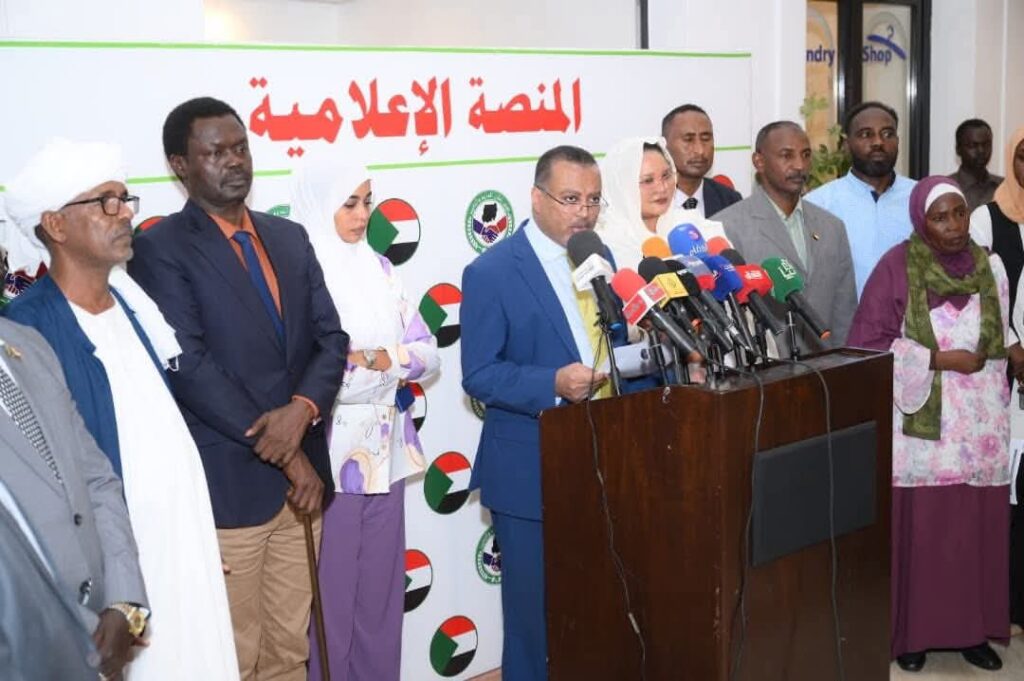
Signs of division have emerged within Sudan’s Democratic Bloc over participation in talks convened by the Quintet mechanism in Ethiopia’s capital, Addis Ababa, after two conflicting statements were issued regarding the bloc’s position on the planned consultations.
The Addis Ababa meetings are part of efforts led by the Quintet mechanism, which includes the African Union, the United Nations, the Intergovernmental Authority on Development (IGAD), the Arab League and the European Union, to facilitate consultations among Sudanese stakeholders on the future of the political process and ways to end the war that has continued since April 2023.
In a statement signed by Democratic Bloc Chairman Jaafar Al-Sadiq Al-Mirghani and a number of bloc leaders, the group announced that it would decline to participate in the meetings in their current format, arguing that the Quintet had moved ahead with determining the venue, participants and agenda without reaching prior consensus with the Sudanese parties concerned.
The statement said the bloc remains committed to the principle of Sudanese ownership of the political process and believes that any serious dialogue should be preceded by agreement on the venue, timing, participants, agenda and mechanisms of engagement.
It also criticized the invitation extended to the Tasis alliance to participate in the political track, describing it as a mixing of the political and security tracks.
The statement further stressed that the bloc rejects any arrangements that place Sudanese state institutions on equal footing with what it described as a “rebel militia,” reaffirming its commitment to a comprehensive Sudanese-Sudanese dialogue aimed at resolving the country’s crisis.
The position comes amid growing debate among Sudanese political actors over the shape of a future political process, with several groups in recent weeks expressing reservations about representation, invited participants and the relationship between political and security negotiations.
In contrast, a separate statement issued by Democratic Bloc Media Sector Head Al-Amin Daoud Mahmoud said the bloc had completed the necessary consultations regarding the Addis Ababa meetings and had clearly agreed to attend and participate in order to present its independent political vision and institutional positions.
The statement said the Quintet’s invitation had been based on prior official approval from the Democratic Bloc and noted that the bloc’s chairman had played a direct role in coordinating communications related to participation. It added that the delegation had been approved through the bloc’s established organizational and institutional procedures.
According to the statement, developments during the previous 72 hours prompted some parties to retreat from their earlier commitment to participate, although it did not specify the nature of those developments or identify the parties involved.
It also stressed that the delegation currently in Addis Ababa is the “only official delegation” authorized by the Democratic Bloc’s institutions to engage with the Quintet mechanism, adding that any participation or position taken outside that framework does not represent the bloc or its official bodies.
The dispute comes at a time when Sudan’s political landscape remains deeply fragmented, with civilian and military actors holding differing views on regional and international initiatives aimed at ending the war and launching a new political transition.
The Democratic Bloc has taken part in several regional and international consultations on the Sudanese crisis in recent years and has consistently called for an inclusive Sudanese-led dialogue aimed at preserving the country’s unity and state institutions.
The issuance of the two statements within a short period highlights growing disagreement within the Democratic Bloc over participation in the Addis Ababa meetings, as regional and international actors continue efforts to advance a political settlement and create conditions for ending the war and addressing its humanitarian and political consequences.