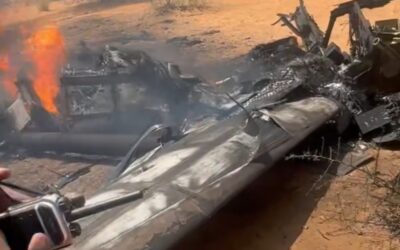

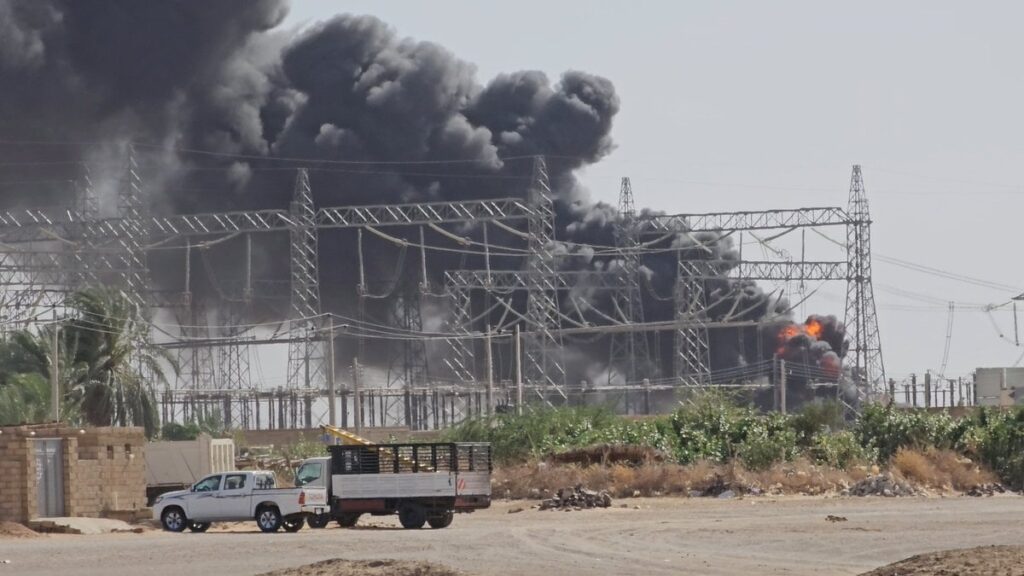
GENEVA – Drone strikes killed at least 1,120 civilians in Sudan during the first half of 2026, accounting for more than 80% of civilian deaths documented by the United Nations during the period, as the use of unmanned aircraft became one of the defining features of the war.
A new report by the Office of the United Nations High Commissioner for Human Rights said it documented at least 1,390 civilian deaths between Jan. 1 and June 30, with nearly two-thirds recorded in the Kordofan region as fighting shifted westward and drone warfare expanded far beyond conventional front lines.
Of the total, 1,254 civilians were killed during hostilities, while another 136 died in unlawful killings outside immediate combat, including summary executions.
OHCHR cautioned that the figures substantially understate the true toll because insecurity, telecommunications disruptions and difficulties distinguishing civilians from combatants prevented verification of many reported deaths.
Kordofan recorded 905 civilian fatalities, the highest toll of any region and nearly two-thirds of the nationwide total, followed by Darfur with at least 382 deaths.
The report said Kordofan became the principal theatre of the conflict during the first six months of the year, with fighting concentrated around El Obeid and Bara in North Kordofan, Dilling and Kadugli in South Kordofan, and El Fula, Al Muglad and El Nuhud in West Kordofan.
Control of roads and supply corridors linking those areas became a major focus of fighting between the Sudanese Armed Forces and the Rapid Support Forces and their respective allies.
Drones Reshape the War
OHCHR said both sides increasingly relied on drones to strike targets far beyond front lines, including markets, hospitals, schools, fuel supplies, water facilities, displacement sites and civilian vehicles.
The agency documented at least 39 drone strikes on markets, 20 on civilian vehicles, 17 on fuel tankers and depots and 16 on health facilities during the six-month period.
March was the deadliest month, with at least 460 civilians killed amid intensified fighting in South and West Kordofan and a surge in drone attacks across Kordofan and Darfur.
Among the incidents documented by OHCHR, alleged Sudanese army drones struck several locations in Al Muglad, West Kordofan, on March 4, including markets, residential areas and Al-Walidayn Hospital, killing at least 50 civilians.
Three days later, alleged army drone strikes on markets in Abu Zabad and Wad Banda killed at least 40 civilians, including women and children.
The report also documented deadly attacks attributed to the RSF, including a Feb. 22 drone strike in Misteriyha in North Darfur that killed at least 28 civilians and a May 24 strike on a commercial vehicle leaving Tina that killed at least 17.
In El Obeid, repeated drone attacks attributed to the RSF killed at least 81 civilians and injured at least 72 between January and June. In Dilling, similar attacks killed at least 30 civilians in January alone.
OHCHR said the repeated striking of civilian objects and infrastructure essential to survival raised serious concerns over compliance with the principles of distinction, proportionality and precautions under international humanitarian law.
Hospitals and Aid Workers Hit
Health facilities and humanitarian workers were also increasingly affected as drone warfare expanded.
OHCHR confirmed the deaths of at least 18 health workers and injuries to nine others during the reporting period.
In March, at least five health facilities in West Kordofan were hit by drones attributed to both the SAF and RSF, bringing healthcare in parts of the state close to a standstill.
A March 20 aerial attack on El Daein Teaching Hospital and a nearby residential area in East Darfur killed at least 64 civilians and injured 89 others. Three health workers were killed and eight wounded, while the hospital’s paediatric, maternity and emergency departments were severely damaged.
Both the SAF and RSF denied responsibility for that attack, according to the report.
Humanitarian workers were also killed while travelling on supply routes. OHCHR cited a Feb. 19 drone strike attributed to the RSF on a convoy in Kurtala, South Kordofan, that killed three humanitarian drivers and damaged aid supplies.
Sexual Violence, Detention and Summary Killings
The report said sexual violence remained a weapon of war, particularly in Darfur and Kordofan.
OHCHR documented 17 incidents of conflict-related sexual violence involving at least 46 victims, including 27 women, 14 girls, four men and one boy.
The agency stressed that the documented cases represented only a fraction of the true scale because insecurity, stigma, fear of retaliation and lack of accountability prevented many survivors from reporting abuses.
In Darfur, OHCHR said it continued to document ethnically motivated sexual violence, particularly involving RSF attacks against Zaghawa and other communities perceived as supporting the army and allied Joint Forces.
The report also documented at least 136 unlawful civilian killings outside immediate hostilities, including summary executions.
Both sides and their allies were accused of killing civilians suspected of collaborating with their opponents, often following changes in territorial control or amid intensified fighting.
Arbitrary arrest and detention remained widespread in both SAF- and RSF-controlled areas, with OHCHR receiving reports from at least 13 states of people being detained without warrants or judicial review, often on loosely defined accusations of “collaboration.”
Those affected included humanitarian workers, teachers, journalists, community leaders, civil society activists and displaced people.
The agency also documented at least 104 deaths in detention facilities linked to the RSF capture of El Fasher between late October 2025 and January 2026, amid reports of torture, overcrowding, lack of food and water and almost no medical care.
OHCHR also recorded allegations of torture and ill-treatment by SAF-affiliated security actors and allied forces.
Courts and Civic Space
OHCHR documented at least 162 conflict-related court rulings across 11 states during the first half of the year, most involving alleged collaboration with the RSF or offences against the state.
Courts imposed at least 44 death sentences, nine life sentences and more than 100 fixed-term prison or rehabilitation sentences.
The agency raised concerns over the broad and inconsistent use of “collaboration” allegations, saying the term remained undefined despite being used to justify arrests and prosecutions.
Restrictions on civic space also persisted, with journalists, lawyers, humanitarian volunteers, activists and human rights defenders facing detention, threats and intimidation from both sides.
OHCHR said telecommunications shutdowns, confiscation of satellite internet equipment and searches of mobile phones at checkpoints had further restricted access to information and contributed to self-censorship.
War Economy and External Support
The UN human rights office said the conflict had entered its fourth year sustained by a thriving war economy, continued weapons flows and external support.
It warned that cross-border military activity, alleged training camps and reports of drone operations originating beyond Sudan’s borders were increasing the risk of the conflict spilling into neighbouring countries.
The report concluded that serious violations of international humanitarian law documented during the period may amount to crimes under international law.
OHCHR called on all parties to halt attacks on civilians and civilian infrastructure, end indiscriminate and disproportionate attacks, protect medical and humanitarian personnel, end arbitrary detention and investigate serious violations regardless of the affiliation of those responsible.
It also called for safe humanitarian access and measures to prevent conflict-related sexual violence and ensure survivors have access to medical, psychological and legal support.