
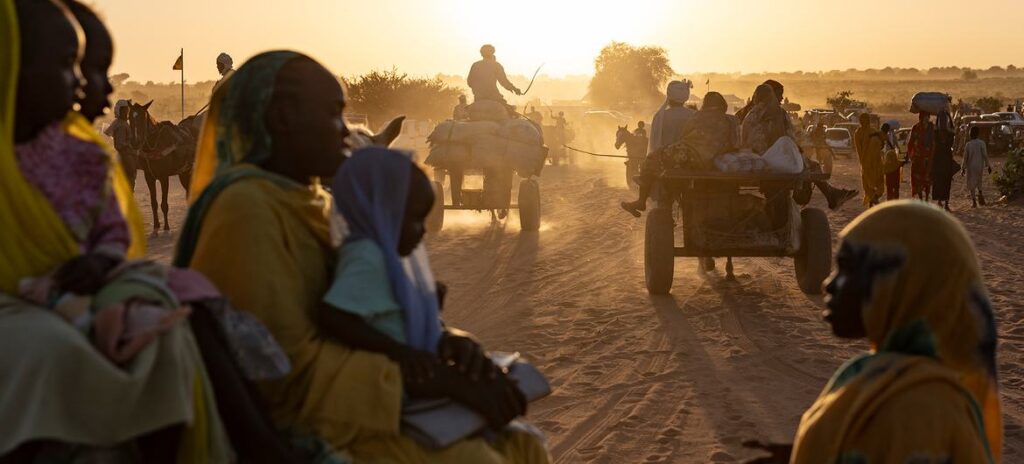
KHARTOUM – More than 190,000 Sudanese refugees are still waiting to be relocated from border entry points in eastern Chad, where overcrowding, insecurity, climate shocks and shortages of basic services are increasing protection risks, the U.N. refugee agency said.
In its September 2026 regional update, UNHCR said Chad received about 14,300 Sudanese refugees during the month despite the border closure, while more than 17,500 people were moved from border areas to established refugee sites farther inside the country.
Women and children accounted for 87% of newly registered arrivals in September, including 67% children.
Chad has registered more than 969,300 Sudanese refugees since war broke out between the Sudanese Armed Forces and the Rapid Support Forces in April 2023. About 65,700 were registered since the beginning of 2026.
UNHCR said drought and below-average rainfall were adding pressure on communities hosting refugees and increasing competition over already limited resources.
Refugees in camps across Chad received an average of about 12 litres of water per person per day in September, while water, sanitation and health facilities remained under severe pressure.
Health facilities serving refugee-hosting areas recorded about 106,600 consultations during the month, but shortages of medicines, diagnostic equipment, nutritional supplies, trained personnel, ambulances and reliable electricity continued to affect services.
In the Central African Republic, refugees at the Korsi site received an average of 10.7 litres of water per person per day, below the 15-litre minimum referenced by UNHCR.
The regional refugee response remains severely underfunded. The 2026 Regional Refugee Response Plan seeks $1.6 billion to assist 5.9 million refugees, returnees and members of host communities across seven countries, but was only 28% funded at the time of the update.
UNHCR’s separate $929 million appeal for the Sudan crisis, covering operations inside Sudan and neighbouring countries, was 33% funded as of Sept. 30.
More Than 8.5 Million Remain Displaced Inside Sudan
Inside Sudan, around 8.58 million people remained internally displaced as of Sept. 30, according to International Organization for Migration data cited by UNHCR.
An estimated 5.15 million people had returned to their areas of origin or previous places of residence. About 82% of the returnees had been displaced inside Sudan, while 18% had returned from abroad.
UNHCR cautioned that returning families were placing additional pressure on areas where housing, healthcare, water and other essential services had been damaged by more than three years of war.
Fighting in Blue Nile, Kordofan and Darfur intensified during September, including ground clashes and drone strikes, triggering further displacement and disrupting humanitarian operations.
Strong winds, rain and flooding also damaged shelters, sanitation facilities and schools in Kassala and Gedaref states, while a fire at the Al-Afad displacement site in Northern State affected about 100 families.
UNHCR and its partners provided shelter assistance and essential household supplies to around 6,000 refugee and displaced families in Gedaref, East Darfur, North Kordofan and White Nile during the reporting period.
Protection Risks Rise in Libya
UNHCR also warned of deteriorating conditions for Sudanese refugees in Libya, citing reports of raids on homes, forced evictions, threats, harassment and violence amid tighter security measures and growing anti-refugee rhetoric.
Reports cited by the agency indicated that a large-scale security operation in Tobruk resulted in the arrest of more than 4,000 people, most of them Sudanese, many of whom were transferred to detention centres.
The number of Sudanese refugees registered with UNHCR in Libya reached 93,581 by the end of September.
Registration remained suspended throughout the month because UNHCR could not access its Tripoli office and its registration centre remained closed.
Thousands of Sudanese Refugee Files Closed in Egypt
In Egypt, UNHCR closed 6,052 Sudanese refugee files in September, the highest monthly figure recorded in the update, bringing the total number closed between January and Oct. 3 to 33,286.
The agency said preliminary interviews suggested some files were closed because of travel, departure arrangements or possible return to Sudan.
It cautioned, however, that closed files should not be interpreted as evidence that all those concerned had permanently returned, as some Sudanese refugees continued to make repeated cross-border movements.
UNHCR also cited reports of sexual exploitation affecting some Sudanese women and girls in Egypt, linking heightened protection risks to poverty, reduced humanitarian funding and limited opportunities for legal employment.
Services Under Pressure Across Host Countries
In South Sudan, UNHCR warned that the suspension of food assistance for some refugee groups in Maban could encourage spontaneous returns to Sudan under potentially unsafe conditions.
Funding shortages were also threatening essential health services.
In Uganda, heavy rain and strong winds damaged shelters in Kiryandongo on Sept. 22, leaving more than 300 families without adequate accommodation.
Uganda hosted 96,966 Sudanese refugees and asylum seekers by the end of September.
UNHCR said it had begun assessing refugees’ intentions regarding possible return, information needs and protection concerns, stressing that the exercise did not amount to facilitating or promoting organised voluntary returns.
The figures underline the regional scale of Sudan’s displacement crisis, with neighbouring countries facing increasing pressure as humanitarian funding falls far below requirements and fighting continues to force people from their homes.


