Introduction
The Sudan humanitarian crisis is one of the world’s largest and most complex emergencies. Since the outbreak of the Sudan war on 15 April 2023, millions of people have been displaced, essential services have collapsed in many areas and humanitarian needs have increased dramatically. The crisis has affected nearly every aspect of daily life, including food security, healthcare, education and access to clean water. This guide explains the causes, scale and humanitarian consequences of the crisis while outlining the international response and the challenges facing aid operations.
Overview
Sudan’s humanitarian crisis has developed over years of political instability, economic hardship and armed conflict. However, the war that began in April 2023 significantly accelerated humanitarian needs across the country.
Millions of people have been displaced within Sudan, while many others have sought refuge in neighboring countries. Fighting has damaged homes, hospitals, schools, markets and other civilian infrastructure, disrupting access to essential services.
International humanitarian organizations describe Sudan as one of the world’s largest displacement and protection crises. The situation continues to evolve as conflict affects new regions and humanitarian needs increase.
What Caused the Humanitarian Crisis?
The humanitarian crisis in Sudan is the result of several overlapping factors rather than a single event. Years of economic challenges, political instability and localized conflicts had already placed pressure on communities before the outbreak of the current war.
The fighting between the Sudanese Armed Forces (SAF) and the Rapid Support Forces (RSF) in April 2023 dramatically worsened existing conditions. Armed conflict disrupted government services, damaged critical infrastructure and forced millions of civilians to flee their homes.
The crisis has also been intensified by restrictions on humanitarian access, insecurity along transport routes, inflation and the destruction of agricultural production in several regions.
Internal Displacement
The conflict has displaced millions of people inside Sudan, making internal displacement one of the defining features of the humanitarian crisis. Families have been forced to leave their homes because of fighting, insecurity and the destruction of civilian neighborhoods.
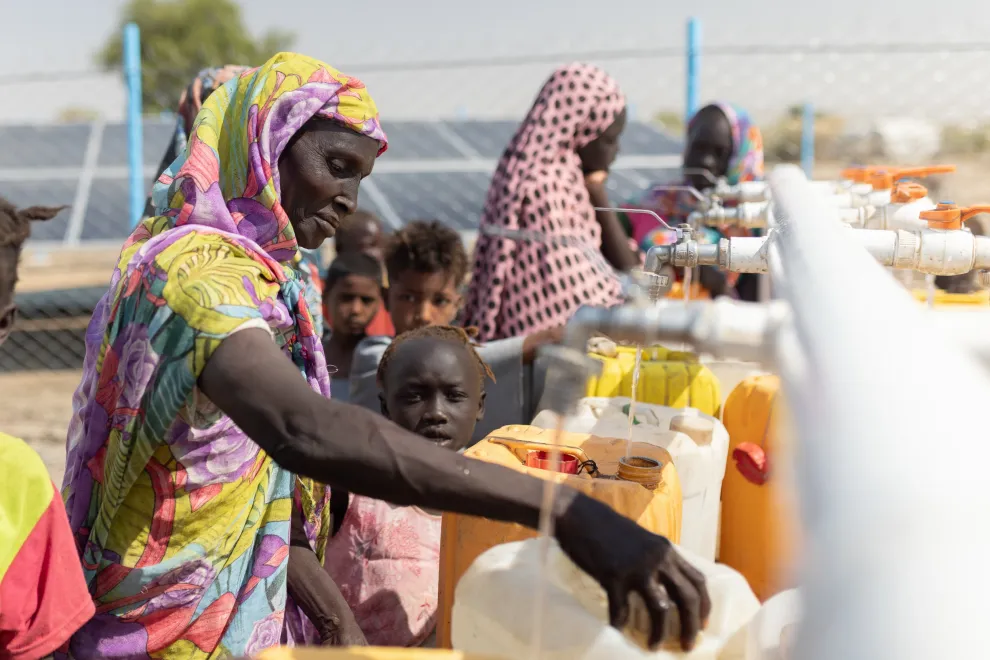
Many internally displaced people (IDPs) have sought shelter in schools, public buildings, informal settlements or with host communities. Access to healthcare, sanitation, food and clean water remains limited in many displacement sites.
Humanitarian organizations continue to monitor displacement patterns as military developments change across different regions of Sudan.
Refugees
The Sudan war has forced millions of people to seek refuge outside the country, making Sudan one of the world’s largest sources of refugees. Neighboring countries, including Chad, South Sudan, Egypt, Ethiopia, the Central African Republic and Libya, have received large numbers of people fleeing the conflict.
Many refugees have crossed international borders with limited belongings and require emergency assistance, including shelter, food, healthcare and protection services. Host communities and humanitarian organizations continue to face significant challenges in responding to growing needs as displacement persists.
The refugee situation remains closely linked to developments inside Sudan, with renewed fighting often triggering additional cross-border movements.
Food Insecurity
Food insecurity has become one of the most serious consequences of Sudan’s humanitarian crisis. Armed conflict has disrupted agricultural production, damaged markets and transport networks, and reduced access to farming areas in several parts of the country.
Many families face difficulties obtaining sufficient food because of displacement, rising prices, loss of income and interruptions to supply chains. Humanitarian organizations have repeatedly warned that prolonged conflict could further increase the risk of hunger and malnutrition, particularly among children, pregnant women and other vulnerable groups.
Food security conditions continue to vary across Sudan, with some regions facing significantly greater humanitarian needs than others.
Healthcare
Sudan’s healthcare system has been severely affected by the conflict. Hospitals, clinics and medical facilities in several areas have been damaged, closed or forced to reduce services because of insecurity, shortages of medical supplies and the displacement of healthcare workers.
Limited access to medicines, electricity, clean water and medical equipment has complicated the treatment of both routine illnesses and conflict-related injuries. Interruptions to vaccination programmes and public health services have also increased concerns about disease outbreaks.
International humanitarian organizations continue to support emergency health services where access is possible, although ongoing fighting has restricted medical operations in many parts of the country.
Education
The conflict has significantly disrupted education across Sudan. Thousands of schools have suspended classes because of insecurity, displacement or damage to educational facilities, while many school buildings have been used as temporary shelters for displaced families.
Millions of children have experienced interruptions to their education, raising concerns about long-term learning losses and reduced access to future opportunities. Teachers, students and educational institutions have also been affected by displacement and economic hardship.
National authorities, local communities and international organizations continue to explore ways of restoring access to education, although progress depends largely on improvements in security and humanitarian conditions.
International Humanitarian Response
The international humanitarian response to the Sudan crisis involves United Nations agencies, international and national non-governmental organizations, regional institutions and donor governments working to provide life-saving assistance to people affected by the conflict.
Organizations including the Office for the Coordination of Humanitarian Affairs (OCHA), the UN High Commissioner for Refugees (UNHCR), the World Food Programme (WFP), UNICEF, the World Health Organization (WHO) and the International Committee of the Red Cross (ICRC) continue to deliver emergency aid where security conditions allow.
Humanitarian operations include food assistance, healthcare, nutrition programmes, water and sanitation services, emergency shelter, protection for vulnerable populations and support for refugees and internally displaced people. Humanitarian agencies have repeatedly appealed for increased funding and improved access to communities affected by the conflict.
Regional governments and international partners have also supported relief efforts through financial contributions, diplomatic initiatives and logistical assistance aimed at expanding humanitarian access.
Challenges to Delivering Aid
Delivering humanitarian assistance in Sudan remains extremely challenging because of ongoing insecurity, damaged infrastructure and logistical constraints. Active fighting has limited access to many communities, while damaged roads, bridges and airports have complicated the transportation of relief supplies.
Humanitarian organizations have also reported difficulties related to administrative procedures, communications disruptions and the safety of humanitarian workers. In some areas, insecurity has forced agencies to suspend or reduce operations until conditions improve.
The scale of humanitarian needs continues to exceed available resources. Funding shortages, combined with the large number of displaced people and expanding humanitarian requirements, have placed additional pressure on relief operations throughout Sudan and neighboring countries.
Future Outlook
The future of Sudan’s humanitarian situation depends largely on developments in the ongoing conflict. A sustained reduction in violence would improve humanitarian access, facilitate the return of displaced communities and support the restoration of essential public services.
Even if security conditions improve, recovery is expected to require substantial national and international support. Rebuilding healthcare systems, schools, housing, transport infrastructure and livelihoods will likely take years, while humanitarian assistance will remain essential for millions of people during the recovery process.
International organizations continue to emphasize that lasting humanitarian improvement will depend on protecting civilians, ensuring safe and unhindered access for aid agencies and achieving a durable political settlement that addresses the underlying causes of the conflict.
Frequently Asked Questions (FAQ)
What is the Sudan humanitarian crisis?
The Sudan humanitarian crisis refers to the widespread humanitarian emergency caused by years of instability and dramatically intensified by the outbreak of war between the Sudanese Armed Forces (SAF) and the Rapid Support Forces (RSF) in April 2023. The crisis has resulted in mass displacement, food insecurity, the collapse of essential services and growing humanitarian needs across the country.
Why is Sudan facing a humanitarian crisis?
The crisis has been driven by armed conflict, political instability, economic challenges, population displacement and the destruction of civilian infrastructure. These factors have disrupted access to healthcare, education, food, clean water and other basic services.
How many people have been displaced in Sudan?
The number of displaced people continues to change as the conflict evolves. According to United Nations agencies, Sudan is experiencing one of the world’s largest displacement crises, with millions of people displaced internally and across international borders.
Which areas are most affected?
Humanitarian needs exist across much of Sudan. Areas that have experienced prolonged fighting—including Khartoum, Darfur, Kordofan, Gezira and parts of Blue Nile—have faced particularly severe humanitarian challenges, although conditions vary between regions.
Which organizations provide humanitarian assistance?
Humanitarian assistance is provided by Sudanese organizations, United Nations agencies, the International Committee of the Red Cross (ICRC), international and national NGOs, regional organizations and donor governments working to deliver emergency relief and protection services.
What are the biggest humanitarian challenges?
Major challenges include displacement, food insecurity, limited healthcare, interrupted education, protection risks, damaged infrastructure, funding shortages and restricted humanitarian access caused by ongoing insecurity.
Related Guides
– Sudan War Explained
– Sudanese Armed Forces (SAF)
– Who are the Rapid Support Forces (RSF)?
– Who is Mohamed Hamdan Dagalo (Hemedti)?
– Sudan Conflict Timeline
– Sudan Humanitarian Crisis
– History of Sudan
– Sudan Economy
Sources
This guide is based on publicly available information from:
• United Nations Office for the Coordination of Humanitarian Affairs (OCHA)
• United Nations High Commissioner for Refugees (UNHCR)
• World Food Programme (WFP)
• World Health Organization (WHO)
• UNICEF
• International Committee of the Red Cross (ICRC)
• International Organization for Migration (IOM)
• ReliefWeb
• Sudanese government statements
• Reports published by international humanitarian organizations and research institutions.