Introduction
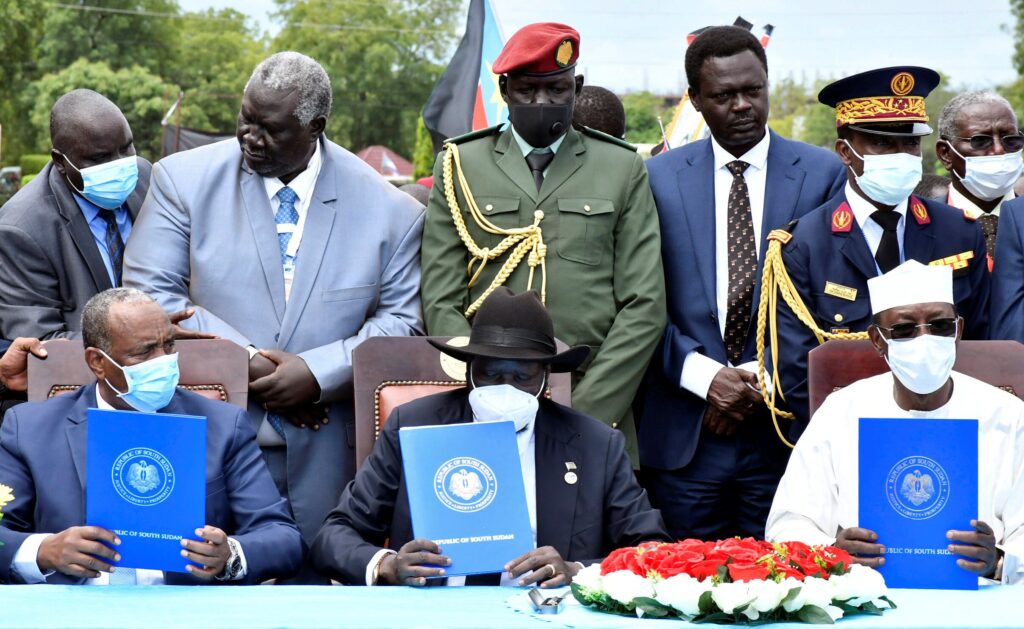
The Juba Peace Agreement (JPA) is a comprehensive peace accord signed on 3 October 2020 between the Transitional Government of Sudan and several armed movements after months of negotiations in Juba, the capital of South Sudan. The agreement sought to address the root causes of armed conflicts in Darfur, South Kordofan, Blue Nile and other marginalized regions through political, security, economic and constitutional reforms.
The agreement marked one of the most significant milestones of Sudan’s post-2019 political transition. It introduced provisions on power sharing, wealth sharing, security arrangements, transitional justice, the return of displaced persons and institutional reforms aimed at promoting lasting peace.
Although the agreement was welcomed by many regional and international actors, some major armed movements did not join the negotiations, and implementation has faced significant political, financial and security challenges. The outbreak of the Sudan war in April 2023 further complicated efforts to implement many of its provisions.
This guide explains the origins, negotiation process, key provisions, participating groups, implementation challenges and current status of the Juba Peace Agreement.
Overview
The Juba Peace Agreement was negotiated between the Transitional Government of Sudan and representatives of several armed movements following the overthrow of President Omar al-Bashir in 2019. Talks officially began in late 2019 under the mediation of the Government of South Sudan and concluded with the signing of the agreement on 3 October 2020.
Rather than being a single document, the agreement consists of multiple protocols and thematic chapters addressing national issues as well as region-specific concerns. These include arrangements for Darfur, the Two Areas (South Kordofan and Blue Nile), Eastern Sudan, Northern Sudan and Central Sudan.
The agreement also established mechanisms intended to oversee implementation, monitor compliance and coordinate security reforms during Sudan’s political transition.
Background
Armed conflicts in Sudan have persisted for decades, driven by disputes over political representation, unequal development, resource distribution and governance. While the Comprehensive Peace Agreement (CPA) ended Sudan’s second civil war in 2005, conflicts continued in Darfur, South Kordofan and Blue Nile.
Following the popular uprising that led to the removal of President Omar al-Bashir in April 2019, Sudan’s transitional authorities identified peace with armed movements as one of their highest priorities. Negotiations were launched with the support of the Government of South Sudan, regional organizations and international partners.
The resulting agreement sought not only to end armed hostilities but also to address structural political and economic issues that had contributed to conflict across several regions of Sudan.
Why Was the Agreement Signed?
The Juba Peace Agreement was designed to create a framework for ending armed conflicts and integrating formerly marginalized regions into Sudan’s political system.
Its objectives included reducing violence, expanding political participation, facilitating the return of internally displaced persons and refugees, reforming national institutions and supporting economic development in conflict-affected areas.
The agreement also aimed to establish long-term constitutional and security reforms that could contribute to a more stable and inclusive Sudan.
Why Was the Agreement Signed?
The Juba Peace Agreement was designed to create a framework for ending armed conflicts and integrating formerly marginalized regions into Sudan’s political system.
Its objectives included reducing violence, expanding political participation, facilitating the return of internally displaced persons and refugees, reforming national institutions and supporting economic development in conflict-affected areas.
The agreement also aimed to establish long-term constitutional and security reforms that could contribute to a more stable and inclusive Sudan.
Signatory Armed Movements
The agreement was signed by the Transitional Government of Sudan and several armed movements, including members of the Sudan Revolutionary Front (SRF).
Signatory groups included:
• Justice and Equality Movement (JEM)
• Sudan Liberation Movement/Army – Minni Minawi (SLM/MM)
• Sudan People’s Liberation Movement–North (SPLM-N) led by Malik Agar
• Gathering of the Sudan Liberation Forces (GSLF)
• Sudan Liberation Movement–Transitional Council (SLM-TC)
• Other movements and political representatives participating in the regional tracks established under the agreement.
These organizations committed to implementing the agreement’s political, security and institutional provisions through Sudan’s transitional process.
Groups That Did Not Sign
Not all armed movements joined the Juba Peace Agreement.
Among the most prominent non-signatories were:
• Sudan People’s Liberation Movement–North (SPLM-N) led by Abdelaziz al-Hilu.
• Sudan Liberation Movement (SLM) led by Abdel Wahid al-Nur.
SPLM-N led by Abdelaziz al-Hilu argued that a comprehensive peace required constitutional guarantees concerning the relationship between religion and the state and broader political reforms before a final agreement could be reached.
The Sudan Liberation Movement led by Abdel Wahid al-Nur declined to participate in the negotiations, maintaining that conditions for meaningful peace negotiations had not yet been met.
The absence of these movements meant that the agreement did not encompass all major armed actors operating in Sudan.
Role of South Sudan
South Sudan played a central role as host and mediator throughout the negotiations. President Salva Kiir Mayardit’s government facilitated dialogue between Sudan’s transitional authorities and the armed movements, providing both political support and logistical assistance.
The mediation built upon historical relationships between South Sudanese leaders and several Sudanese armed movements dating back to the period before South Sudan’s independence.
The successful conclusion of the negotiations strengthened South Sudan’s diplomatic profile within the region and demonstrated its role in supporting peace efforts in neighbouring Sudan.
International Support
The peace process received broad support from regional and international organizations, including the African Union (AU), the Intergovernmental Authority on Development (IGAD), the United Nations (UN) and the international donor community.
International partners welcomed the agreement as an important step toward ending decades of armed conflict and supporting Sudan’s democratic transition. Many governments and development agencies subsequently pledged financial and technical assistance for implementation.
At the same time, international organizations emphasized that the success of the agreement would depend on sustained political commitment, adequate funding, effective implementation mechanisms and continued dialogue with groups that remained outside the peace process.
Structure of the Agreement
The Juba Peace Agreement consists of a national framework accompanied by several thematic and regional protocols. Rather than addressing Sudan’s conflicts through a single set of provisions, the agreement recognizes the differing historical, political and economic circumstances of the country’s conflict-affected regions.
Its chapters cover national issues such as security arrangements, power sharing, wealth sharing, land rights, transitional justice and constitutional reform, alongside region-specific protocols for Darfur, the Two Areas, Eastern Sudan, Northern Sudan and Central Sudan.
This multi-track approach was intended to address both nationwide reforms and the unique grievances of individual regions within a single comprehensive peace framework.
Power Sharing
One of the central objectives of the Juba Peace Agreement was to increase the political participation of regions affected by armed conflict. The agreement introduced provisions allocating representation within Sudan’s transitional institutions, including the Sovereignty Council, the Council of Ministers, the Transitional Legislative Council and regional governments.
It also provided for the appointment of governors, state officials and civil servants from signatory movements as part of efforts to broaden political inclusion and strengthen national unity during the transitional period.
The power-sharing arrangements were intended to address longstanding concerns regarding political marginalization and unequal representation in national decision-making.
Wealth Sharing
The agreement established mechanisms for improving the distribution of national resources and promoting economic development in conflict-affected regions.
Its provisions called for increased public investment in infrastructure, healthcare, education, agriculture and basic services, particularly in Darfur, South Kordofan and Blue Nile. It also proposed financial arrangements intended to support reconstruction, regional development and compensation for communities affected by conflict.
The agreement emphasized transparency, accountability and equitable resource allocation as key principles for reducing regional inequalities.
Security Arrangements
Security arrangements formed one of the most significant and technically complex components of the agreement.
The parties agreed on a phased process involving ceasefire monitoring, disarmament, demobilization and the integration of eligible members of armed movements into Sudan’s national security institutions. These institutions included the Sudanese Armed Forces, police and other security services, subject to agreed implementation procedures.
The agreement also provided for the establishment of Joint Security Keeping Forces to protect civilians in Darfur during the transitional period.
Implementation of these security provisions has faced significant political, financial and operational challenges, and many elements remain incomplete.
Transitional Justice
The agreement recognized the importance of accountability, reconciliation and justice for communities affected by decades of armed conflict.
It called for the establishment of mechanisms to investigate violations of human rights and international humanitarian law, support victims and strengthen judicial institutions. The agreement also emphasized truth-seeking, reconciliation and institutional reform as essential components of sustainable peace.
These provisions were intended to complement Sudan’s broader transitional justice efforts while recognizing the specific experiences of conflict-affected regions.
Land Rights and Hawakeer
Land ownership and traditional land rights, commonly known as Hawakeer, represented one of the most sensitive issues addressed by the agreement, particularly in Darfur.
The agreement acknowledged the historical significance of customary land tenure systems and called for mechanisms to resolve land disputes, protect traditional rights and facilitate the return of displaced communities.
It also proposed legal and institutional reforms aimed at reducing future land-related conflicts and supporting peaceful coexistence among local communities.
Refugees and Internally Displaced Persons
The agreement included provisions supporting the voluntary, safe and dignified return of refugees and internally displaced persons (IDPs) to their places of origin.
It emphasized the restoration of basic services, reconstruction of damaged communities, protection of property rights and assistance for reintegration. The agreement also called for cooperation with humanitarian organizations and international partners to facilitate durable solutions for displaced populations.
The return process was closely linked to improvements in security, reconstruction and local governance.
Constitutional Reform
The Juba Peace Agreement viewed constitutional reform as a fundamental requirement for achieving sustainable peace.
Its provisions called for the participation of conflict-affected regions in drafting a permanent constitution that reflects Sudan’s political, cultural and regional diversity. The agreement emphasized democratic governance, decentralization, equal citizenship and the protection of fundamental rights.
Several provisions of the agreement were incorporated into amendments to Sudan’s Constitutional Declaration during the transitional period, strengthening the legal framework for implementation.
Implementation Mechanisms
To oversee implementation, the agreement established a number of joint committees, monitoring bodies and coordination mechanisms involving the Sudanese government, signatory movements and relevant national institutions.
These bodies were tasked with supervising security arrangements, political implementation, financial commitments and regional development programmes. International partners were also expected to provide technical assistance, monitoring support and financial resources.
The effectiveness of these mechanisms has depended largely on political cooperation, institutional capacity, funding and the broader security situation within Sudan.
Darfur Track
The Darfur Track forms one of the largest and most comprehensive sections of the Juba Peace Agreement. It addresses the political, security, humanitarian and development challenges arising from the conflict that began in Darfur in 2003.
Its provisions include power sharing, wealth sharing, security arrangements, land rights, transitional justice, compensation for victims, voluntary return of displaced persons and refugees, reconstruction and regional development.
The agreement also provides for the establishment of institutions responsible for implementing development projects, protecting civilians and supporting reconciliation among Darfur’s communities.
Two Areas Track
The Two Areas Track focuses on South Kordofan and Blue Nile, regions that experienced prolonged armed conflict following South Sudan’s independence in 2011.
The agreement addresses governance, political participation, economic development, humanitarian access, security arrangements and constitutional issues affecting these regions.
The track was negotiated with the SPLM-N faction led by Malik Agar. However, the SPLM-N faction led by Abdelaziz al-Hilu did not sign the agreement, meaning that parts of the conflict in the Two Areas remained outside the framework of the Juba Peace Agreement.
Eastern Sudan Track
The Eastern Sudan Track was designed to address longstanding political, economic and social grievances in Red Sea, Kassala and Gedaref states.
Its provisions include regional development, infrastructure investment, employment opportunities, public services and increased political representation.
Implementation of this track later became the subject of political disagreement among various groups in Eastern Sudan, with some organizations rejecting aspects of the agreement and calling for further consultations.
Northern Sudan Track
The Northern Track focuses on development priorities in Sudan’s Northern and River Nile states.
It includes commitments to improve infrastructure, expand agricultural investment, support local economic development and strengthen public services.
Compared with other regional tracks, the Northern Track places greater emphasis on economic development than on conflict resolution, reflecting the different challenges facing the region.
Central Sudan Track
The Central Sudan Track addresses development needs in Gezira, White Nile and Sennar states.
Its provisions include agricultural development, infrastructure rehabilitation, investment promotion, environmental protection and improvements in education and healthcare.
The track seeks to reduce regional disparities by supporting economic growth and strengthening public institutions across central Sudan.
Implementation Challenges
Although the Juba Peace Agreement established an ambitious roadmap for peace, implementation has faced significant obstacles.
Among the principal challenges have been political instability, limited financial resources, delays in establishing transitional institutions, slow implementation of security arrangements and disagreements among political actors regarding governance and constitutional reform.
The October 2021 political crisis further disrupted implementation by delaying several institutional reforms and affecting coordination between national authorities and signatory movements.
Impact of the Sudan War
The outbreak of large-scale armed conflict between the Sudanese Armed Forces (SAF) and the Rapid Support Forces (RSF) in April 2023 significantly affected implementation of the Juba Peace Agreement.
Many implementation mechanisms became inactive or operated only on a limited basis as government institutions, security structures and administrative systems were disrupted by the conflict.
Some signatory movements became involved in the evolving political and military landscape, while others continued to call for preserving the agreement as a framework for any future peace process.
Despite these challenges, the agreement continues to serve as an important reference document in discussions concerning Sudan’s future political settlement and post-conflict reconstruction.
Current Status
The Juba Peace Agreement remains formally in force, although implementation has been significantly affected by Sudan’s political instability and the outbreak of nationwide armed conflict in 2023.
Several provisions relating to political representation were implemented during the transitional period, while many security, constitutional and development commitments remain incomplete.
Regional organizations, the United Nations and international partners continue to refer to the agreement as an important component of future peace initiatives, although many observers believe that additional negotiations and updated political arrangements will be required to address Sudan’s evolving realities.
Significance
The Juba Peace Agreement represents one of the most comprehensive peace frameworks negotiated in Sudan since the Comprehensive Peace Agreement (CPA) of 2005.
Its importance extends beyond ending armed conflict, as it seeks to address governance, regional inequality, constitutional reform, security sector transformation and transitional justice within a single political framework.
Although implementation has encountered major obstacles, the agreement continues to influence discussions on peacebuilding, state reform and political transition. Many analysts consider it an important foundation that could inform future negotiations aimed at achieving a comprehensive and sustainable peace in Sudan.
Timeline
2019 – Peace negotiations begin in Juba, South Sudan, following the establishment of Sudan’s Transitional Government.
2019–2020 – Negotiating parties hold multiple rounds of talks covering political, security, humanitarian and regional issues.
31 August 2020 – Initial Peace Agreement signed between the Transitional Government of Sudan and several armed movements.
3 October 2020 – The Final Juba Peace Agreement is formally signed in Juba, South Sudan.
2020 – The Constitutional Declaration is amended to incorporate provisions of the agreement.
2021 – Implementation of political power-sharing arrangements begins, while security arrangements experience delays.
October 2021 – Sudan’s political crisis slows implementation of several provisions.
2023 – The outbreak of war between the Sudanese Armed Forces (SAF) and the Rapid Support Forces (RSF) significantly disrupts implementation.
2024–Present – Regional and international actors continue to reference the Juba Peace Agreement as an important framework for future peace efforts, while acknowledging the need for renewed political dialogue and updated implementation mechanisms.
Frequently Asked Questions
What is the Juba Peace Agreement?
The Juba Peace Agreement is a comprehensive peace accord signed on 3 October 2020 between Sudan’s Transitional Government and several armed movements following negotiations hosted in Juba, South Sudan.
Why was the Juba Peace Agreement signed?
The agreement sought to address the root causes of armed conflict through political reform, power sharing, wealth sharing, security arrangements, transitional justice and regional development.
Who mediated the negotiations?
The negotiations were hosted and mediated by the Government of South Sudan with support from regional and international partners, including the African Union and IGAD.
Who signed the agreement?
The agreement was signed by Sudan’s Transitional Government and several armed movements, including the Justice and Equality Movement (JEM), the Sudan Liberation Movement/Army led by Minni Minawi, and the SPLM-N faction led by Malik Agar.
Which groups did not sign?
The SPLM-N faction led by Abdelaziz al-Hilu and the Sudan Liberation Movement led by Abdel Wahid al-Nur did not sign the agreement.
What are the main provisions of the agreement?
Its principal provisions include power sharing, wealth sharing, security arrangements, transitional justice, land rights, regional development, constitutional reform and the voluntary return of displaced persons and refugees.
What are the Joint Security Keeping Forces?
These are joint security units established under the agreement to contribute to civilian protection, particularly in Darfur, during the implementation period.
Has the agreement been fully implemented?
No. While some political provisions were implemented, many security, constitutional and development commitments remain incomplete.
How did the 2023 Sudan war affect the agreement?
The conflict significantly disrupted implementation by affecting state institutions, delaying security reforms and reducing the capacity of implementation mechanisms.
Is the Juba Peace Agreement still valid?
Yes. The agreement remains formally in force, although implementation has been affected by Sudan’s political and security developments.
Sources
This guide is based on publicly available information from:
• Official text of the Juba Peace Agreement
• Government of Sudan
• Government of South Sudan
• United Nations (UN)
• African Union (AU)
• Intergovernmental Authority on Development (IGAD)
• International Crisis Group (ICG)
• United States Institute of Peace (USIP)
• Rift Valley Institute
• Small Arms Survey
• Human Rights Watch (HRW)
• Amnesty International
• SIPRI (Stockholm International Peace Research Institute)
• Encyclopaedia Britannica
• Academic books and peer-reviewed research on Sudan’s peace processes
Further Reading
• Comprehensive Peace Agreement (CPA)
• Sudan People’s Liberation Movement–North (SPLM-N)
• Malik Agar
• Minni Arko Minnawi
• Jibril Ibrahim
• Darfur
• Kordofan