
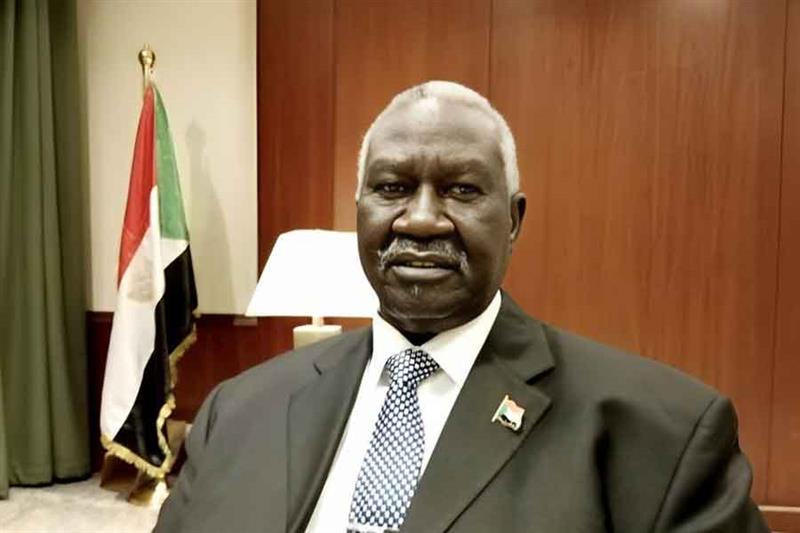
KHARTOUM – Sudan’s Deputy Sovereign Council Chairman Malik Agar said the government is engaging positively with initiatives to end the war, but warned that military action remains the current option unless serious conditions are created for negotiations with the Rapid Support Forces (RSF).
In remarks to Al Jazeera, Agar said any talks with the RSF must be preceded by the force’s withdrawal from cities and residential areas. He said disarmament and other issues could be discussed only after RSF fighters withdraw and gather in designated locations.
Agar said the government is facing significant pressure to accept a U.S. initiative, but remains committed to what it considers the principles of the Sudanese state. He added that any political settlement would be followed by a transitional government tasked with preparing the country for elections.
The comments come as regional and international actors continue efforts to push for a negotiated end to Sudan’s war, which erupted in April 2023 between the Sudanese Armed Forces (SAF) and the RSF. Previous mediation tracks, including U.S.- and Saudi-backed talks in Jeddah, have struggled to secure a lasting ceasefire or a durable political process.
Agar said the government has not rejected dialogue and remains open to initiatives that preserve Sudan’s unity and state institutions. However, he said Khartoum has concerns about the U.S. initiative and fears it could consolidate realities on the ground in a way that may lead to Sudan’s division.
The government and army leadership have repeatedly said any peace process must begin with the RSF leaving civilian areas, ending attacks, and entering arrangements for assembly, disarmament and integration. The RSF has accused the army of blocking a negotiated solution, while both sides have continued military operations across several fronts.
On regional issues, Agar accused Ethiopia of allowing RSF forces to use its territory to carry out operations against Sudanese government forces, saying this had contributed to a deterioration in relations between the two countries. Sudan Now could not independently verify the allegation, and Ethiopian authorities did not immediately comment.
Agar also addressed the issue of forces that have defected from the RSF and joined the army, saying they now operate under the command of the Sudanese Armed Forces. He said alleged abuses linked to such forces could be addressed through justice mechanisms.
His remarks come amid growing debate over the future of armed formations in Sudan, as the army fights alongside allied groups, joint forces, popular resistance units and former RSF elements. The issue of accountability, integration and security-sector reform is expected to remain central to any post-war settlement.
Agar said the government would continue to deal positively with initiatives aimed at ending the war, but stressed that it would not compromise on the principles of the state. In the absence of serious conditions for negotiation, he said, continued military operations would remain the available path.