

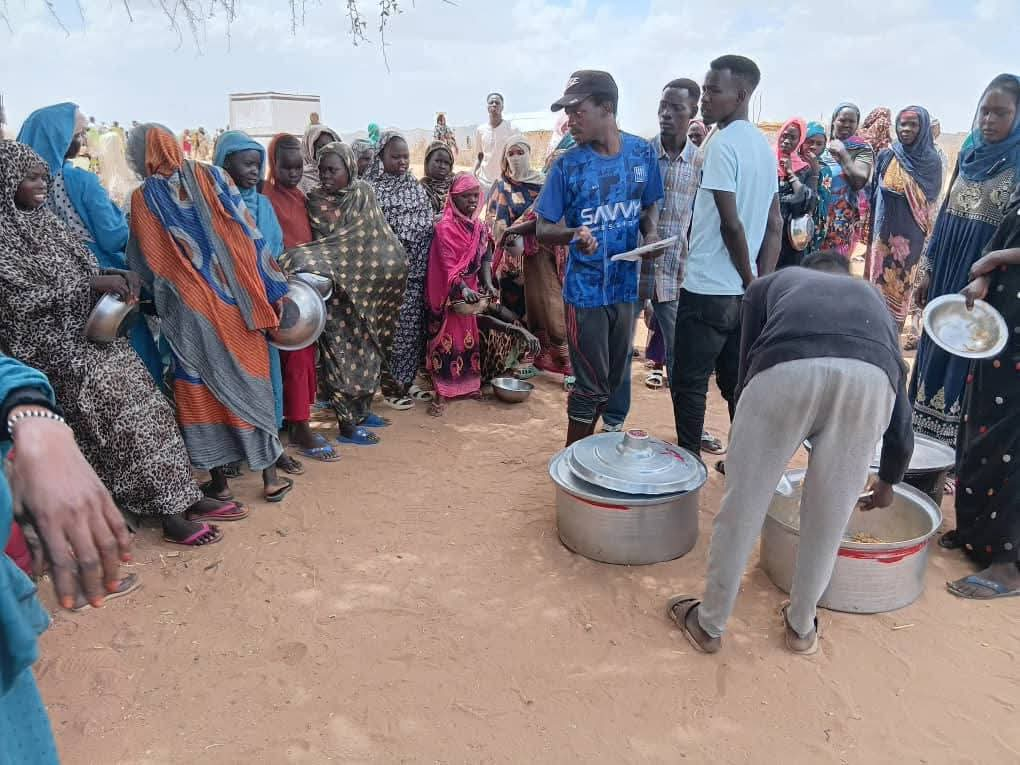
KHARTOUM – Women and girls displaced from El Fasher in North Darfur continue to suffer the effects of sexual violence, family loss and displacement a year after the Rapid Support Forces (RSF) captured the city, with most still living in unsafe conditions and struggling to access basic services, UN Women said.
Anna Mutavati, UN Women’s regional director for East and Southern Africa, said a survey of 50 women-led organizations supporting people displaced from El Fasher found that 90% reported that women and girls remained in unsafe environments and continued to show signs of trauma and psychological distress.
Speaking at a briefing in Geneva on Friday, Mutavati said survivors were dealing with the consequences of rape, physical violence, humiliation and looting, as well as the disappearance or killing of daughters, sisters, mothers, husbands and children.
Many had also lost their homes, livelihoods and possessions during the fighting and displacement.
The crisis follows an approximately 18-month RSF siege of El Fasher before the paramilitary force captured the North Darfur capital in October 2025.
During the siege, supplies of food, medicine and water were severely restricted, while markets and health facilities came under attack and movement into and out of the city became increasingly difficult.
A U.N. human rights investigation published in February 2026 documented more than 6,000 killings during the first three days of the final RSF assault on El Fasher, including at least 4,400 people killed inside the city and more than 1,600 along escape routes.
The investigation, based on interviews with more than 140 survivors and witnesses, also documented mass killings, summary executions, sexual violence, abductions, torture, detention and looting.
It said some civilians were targeted because of their ethnicity or perceived links to the Sudanese Armed Forces and allied Joint Forces.
UN Women said the consequences for survivors extend beyond physical injuries and the loss of relatives and property.
Women reported insomnia, persistent psychological distress and continuing fear while struggling to obtain food, water and health care.
Mutavati said providers of essential services, including mental health and medical care, were themselves facing threats and harassment while trying to assist affected communities.
An assessment by the International Organization for Migration found that women from El Fasher were avoiding markets, collecting firewood and participating in social, community and religious activities because of fears of violence.
Although some residents have begun returning to the city, Mutavati said fear of renewed attacks remains widespread.
Thousands of people who fled El Fasher and surrounding areas remain displaced elsewhere in Darfur, including in and around Tawila, where humanitarian agencies have struggled to meet growing needs for health care, protection, shelter and psychological support.
Limited funding and continuing insecurity have further constrained services available to women and girls.
UN Women also warned that the expanding use of drones against displacement sites, markets and civilian infrastructure across Sudan was creating additional risks for women and children.
Babar Baloch, a spokesperson for the U.N. refugee agency, said some attacks were forcing families to flee without warning or enough time to collect their belongings as fighting spread into areas of Kordofan and Blue Nile.
U.N. officials called for an immediate halt to attacks on civilians and for safe and unhindered humanitarian access, while urging greater international efforts to end the violence.
Despite the risks, Mutavati said Sudanese women continue to play central roles in the humanitarian response, providing frontline assistance, caring for displaced communities and participating in mediation and peacebuilding.
She said sustained support for women-led organizations was essential to ensure women and girls could access basic services and resources and participate in decisions concerning peace and Sudan’s future.