
GENEVA – Senior representatives from 22 countries and five international and regional organizations met in Geneva on Wednesday to coordinate efforts to end Sudan’s war, with U.N. and Swiss officials urging participants to turn diplomatic initiatives into practical steps toward de-escalation, civilian protection and a Sudanese-led political process.
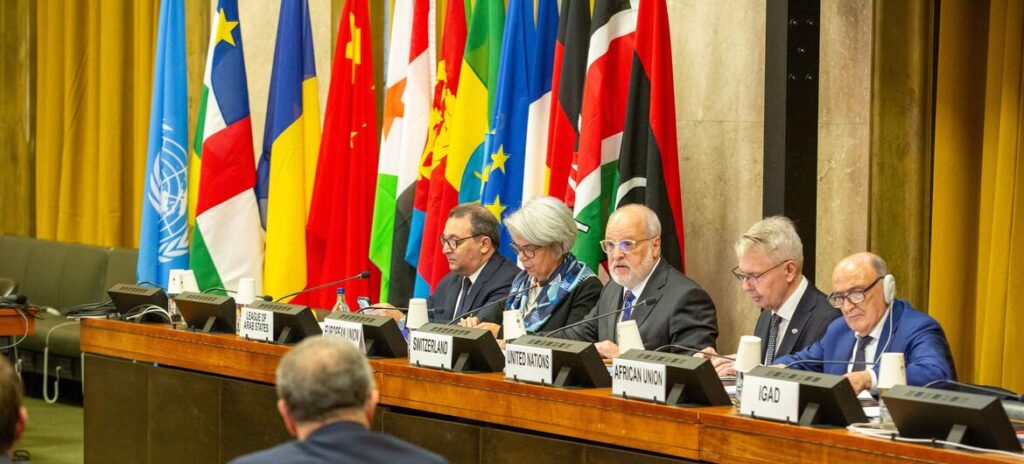
The United Nations hosted the sixth consultative meeting on enhancing coordination of peace initiatives and efforts in Sudan at the Palais des Nations. Participants included representatives of the United Nations, African Union, European Union, Intergovernmental Authority on Development (IGAD) and Arab League.
Neither Sudanese government representatives nor the Rapid Support Forces (RSF) participate directly in the mechanism’s deliberations. Organizers consult the conflict parties ahead of meetings and brief them on outcomes afterward.
Previous rounds of the consultation have been held in Cairo, Djibouti, Nouakchott and Brussels as international and regional actors seek to reduce fragmentation among competing peace initiatives.
U.N. Secretary-General’s Personal Envoy for Sudan Pekka Haavisto said international and regional partners needed to demonstrate a firm commitment to ending the war, easing the suffering of Sudanese civilians and supporting their right to peace, security and dignity in a united Sudan.
He said Sudanese voices should guide the discussions and that the aspirations of the country’s people should be the benchmark against which diplomatic progress is measured.
The meeting focused on practical measures to reduce tensions and build confidence between the warring sides, as well as preparations for a transitional political phase and a broader process led by Sudanese actors.
Regional spillover was also on the agenda, reflecting concerns that continued fighting could deepen instability in countries neighboring Sudan.
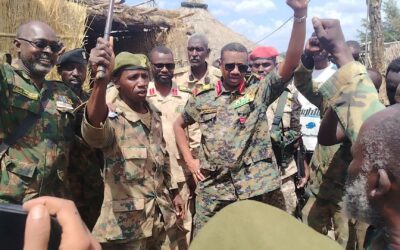
The war between the Sudanese Armed Forces (SAF) and RSF began in April 2023 and has entered its fourth year, driving mass displacement, damaging infrastructure and creating one of the world’s largest humanitarian emergencies.
Haavisto urged participants to translate the growing international recognition of the urgency of the crisis into concrete action.
He called for efforts to ensure that April 2027 marks a turning point toward peace rather than the beginning of another year of war.
Civilian Protection Cannot Wait
Swiss State Secretary for Foreign Affairs Alexandre Fasel, whose country co-hosted the meeting, said the conflict had become increasingly complex and deadly and had created one of the world’s gravest humanitarian and protection crises.
Fasel said Switzerland viewed the security, political and humanitarian tracks as interconnected and argued that progress toward peace would require coordinated action across all three.
Switzerland has also been facilitating informal contacts among Sudanese actors aimed at creating conditions for eventual formal political negotiations.
Fasel stressed that protecting civilians and delivering humanitarian aid should not be conditional on reaching a ceasefire or political settlement.
He said conflict parties remained obligated to protect civilians and facilitate access to humanitarian assistance regardless of the status of negotiations.
The appeal comes amid renewed reports of civilian casualties across Sudan. UNICEF said this week that at least 12 children were reportedly killed in separate attacks in West Kordofan and Khartoum, including nine children at a displacement camp and three in a residential area.
International concern has also grown over the expanding use of drones and long-range weapons, which have increasingly affected civilian areas, infrastructure and humanitarian operations far from traditional front lines.
Fasel acknowledged differences among participating countries over assessments of developments in Sudan but said there was broad agreement that the conflict could not be resolved militarily.
He said a durable settlement would require support for an inclusive dialogue led by Sudanese themselves.
The Swiss official also warned that the consequences of continued violence and fragmentation in Sudan would extend beyond its borders, urging participating states and organizations to intensify collective efforts.
No immediate breakthrough or new ceasefire arrangement was announced during the consultations.