KHARTOUM – A former senior Rapid Support Forces commander has accused RSF deputy commander Abdelrahim Hamdan Dagalo of directly overseeing military operations and atrocities against civilians in El Fasher, alleging that the campaign was carried out under orders from the group’s leadership with foreign financial, logistical and combat support.
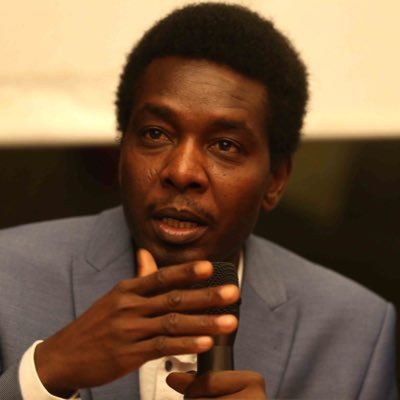
Maj. Gen. Al-Nour Ahmed Adam, known as Al-Nour Guba, made the allegations in an interview with Al Arabiya after defecting from the RSF earlier this year.
Guba said Abdelrahim Dagalo supervised the battle for El Fasher from its beginning to its conclusion and bore direct responsibility for operations in which civilians were killed, displaced and forced from their homes.
He also alleged that the campaign in North Darfur involved mobilization of fighters, recruitment of foreigners and various forms of external financial, material and military support.
Guba did not identify the foreign actors he said provided that assistance.
He distinguished between instructions issued by higher levels of the RSF leadership, which he said he could not discuss in detail, and what he described as Abdelrahim Dagalo’s direct command and supervision on the ground.
Neither Abdelrahim Dagalo nor the RSF has publicly responded to Guba’s latest allegations.
Guba defected from the RSF in April 2026. The Sudanese Revolutionary Awakening Council announced on April 19 that he had reached army-controlled territory with officers, soldiers, military vehicles and equipment following reports of clashes between his forces and the RSF in North Darfur.
He later said he had once occupied what he described as the third-ranking position within the RSF hierarchy and had been in Khartoum before the war erupted in April 2023, but was excluded from internal discussions and decision-making.
His latest allegations come nearly a year after the RSF captured El Fasher in October 2025 following an approximately 18-month siege.
The final assault triggered mass displacement and was followed by extensive reports of killings, sexual violence, detention, torture, looting and other abuses against civilians.
More Than 6,000 Killed in Three Days
The U.N. Human Rights Office documented more than 6,000 killings between Oct. 25 and Oct. 27, 2025, during the RSF’s final assault on El Fasher.
At least 4,400 people were killed inside the city and more than 1,600 others died along escape routes while attempting to flee.
The U.N. said the actual death toll was likely considerably higher.
Its investigation, based on interviews with more than 140 victims and witnesses, documented mass killings, summary executions, sexual violence, abductions, torture, detention and looting.
The office said some of the violations amounted to war crimes and could also constitute crimes against humanity.
Some civilians were targeted because of their ethnic identity or perceived links to the Sudanese Armed Forces and allied Joint Forces.
Guba Previously Described El Fasher as Devastated
In an April news conference, Guba described El Fasher as effectively destroyed and said most of its residents had either fled or been displaced.
He accused the RSF of bringing people from other areas into the city and filming them for propaganda intended to portray conditions as normal.
He also described the collapse of health and education services and widespread instability across North Darfur.
Those comments preceded his latest allegation that Abdelrahim Dagalo personally supervised abuses committed during the battle for the city.
Amnesty Documents Detention, Torture and Forced Labour
The allegations also come as fresh testimony continues to emerge about conditions inside El Fasher under RSF control.
Amnesty International said in a report published on Oct. 23 that civilians continued to face arbitrary detention, torture and unlawful killings nearly a year after the city’s capture.
The organization said fewer than 70,000 people remained in El Fasher, compared with a pre-war population of more than one million.
Amnesty interviewed 25 people in August and September, including 19 residents and six humanitarian workers.
Seventeen of the 19 residents said they had been detained by the RSF.
Survivors described women and children being held in schools, severe shortages of food and medical care, prisoners being released after ransom payments and civilians being forced to collect bodies, clear rubble and work without pay.
Several witnesses said Zaghawa and Masalit civilians faced a heightened risk of detention and abuse.
Amnesty also said residents and humanitarian workers were subject to extensive surveillance and that aid access remained limited.
In an earlier investigation, the organization said it had documented crimes against humanity and ethnic cleansing during the RSF campaign to seize El Fasher, including abuses targeting Zaghawa civilians.
Amnesty wrote to the RSF on Oct. 9 regarding its findings but said it had received no response by the time of publication.
The war between the Sudanese army and the RSF has continued since April 2023, displacing millions of people and devastating civilian infrastructure across large parts of the country.