
KHARTOUM – Drone strikes hit five power substations across four Sudanese states on Monday, knocking out electricity across much of southeastern Sudan and threatening the stability of the national grid, according to the state-owned electricity operator.
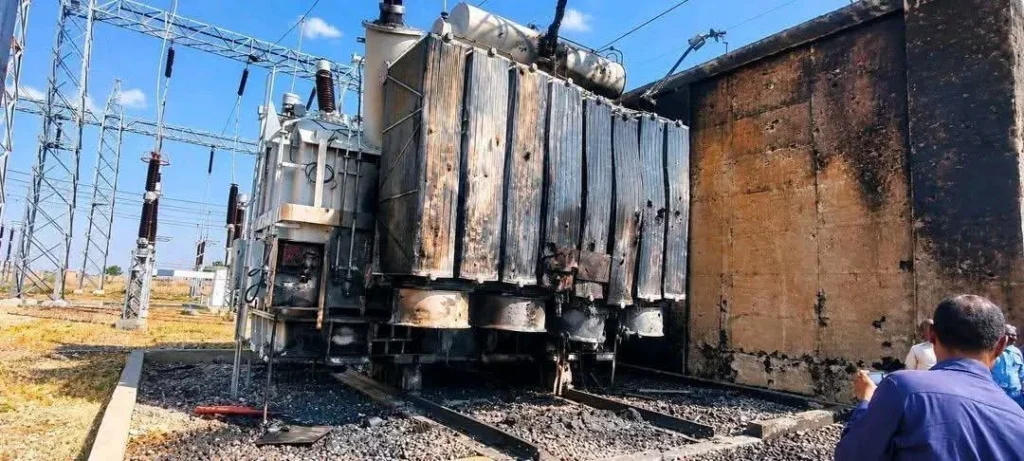
Sudan Electricity Holding Company said substations in Singa, Al-Hawata, Al-Faw, Mashkour and Al-Junaid were struck, causing severe damage to equipment and cutting power across Sennar, Gedaref, White Nile and Gezira states.
The company attributed the attacks to the Rapid Support Forces (RSF). The paramilitary group did not immediately respond publicly to the accusation.
The extent of the damage and the duration of the outages were not immediately clear.
In Gedaref State, drones struck power facilities in Al-Faw and Al-Hawata in the early hours of Monday, cutting electricity across parts of eastern Sudan.
No fatalities were reported in the initial accounts from the two facilities.
In Gezira, a drone struck the Al-Junaid transformer station at around 2:30 a.m., knocking the facility out of service and contributing to widespread outages.
A power station in Singa, Sennar State, was also hit, while another drone targeted the Mashkour station in White Nile State.
The attacks represent one of the broadest coordinated strikes on Sudan’s electricity infrastructure during the conflict and follow a series of drone attacks on power stations and fuel facilities in army-controlled areas.
The electricity company said engineering teams had been deployed to affected sites to assess the damage and begin repairs, warning that disruption to the southeastern network could affect the stability of the wider national grid.
Sudan’s power infrastructure has repeatedly been hit during the war between the Sudanese Armed Forces (SAF) and RSF, which began in April 2023.
A drone strike last week hit the Tendelti power station in White Nile State, triggering a fire and cutting electricity to Tendelti and areas of North Kordofan.
Fuel depots have also been targeted in recent months, while both sides have expanded their use of long-range drones against areas far from conventional front lines.
The latest outages raise concerns extending beyond electricity supply itself.
Hospitals, dialysis centres, water pumping stations, bakeries, cold-storage facilities and communications networks depend on electricity to maintain essential services.
Prolonged outages can disrupt medical treatment, jeopardize refrigerated medicines such as insulin and vaccines, interrupt water supplies and increase pressure on businesses and households already struggling with rising prices and deteriorating services.
Damage to energy infrastructure can also affect food supply chains by disrupting refrigeration, agricultural processing, transport and market operations.
Sudan is already facing a severe economic and humanitarian crisis, with nearly 20 million people experiencing high levels of acute food insecurity and basic commodity prices rising sharply.
The U.N. Human Rights Office warned last week that drone strikes were increasingly hitting civilian infrastructure across Sudan, including power stations and water sources.
It documented at least 306 deaths from drone strikes during the first three weeks of October and said drones accounted for the majority of conflict-related civilian deaths recorded in Sudan this year.
Both the SAF and RSF have intensified drone operations in recent months, with strikes reaching Khartoum, Darfur, Kordofan, Blue Nile and eastern and central Sudan.
International humanitarian law requires parties to distinguish between military objectives and civilian objects and to take feasible precautions to minimize civilian harm.
Whether an electricity facility constitutes a lawful military target depends on its use, the circumstances of the attack and whether the anticipated military advantage outweighs the expected harm to civilians.
The growing frequency of attacks on electricity and fuel infrastructure has nevertheless heightened concern over the cumulative impact on civilians, particularly as repeated disruptions undermine health care, water supplies, food storage and other services essential to daily life.