

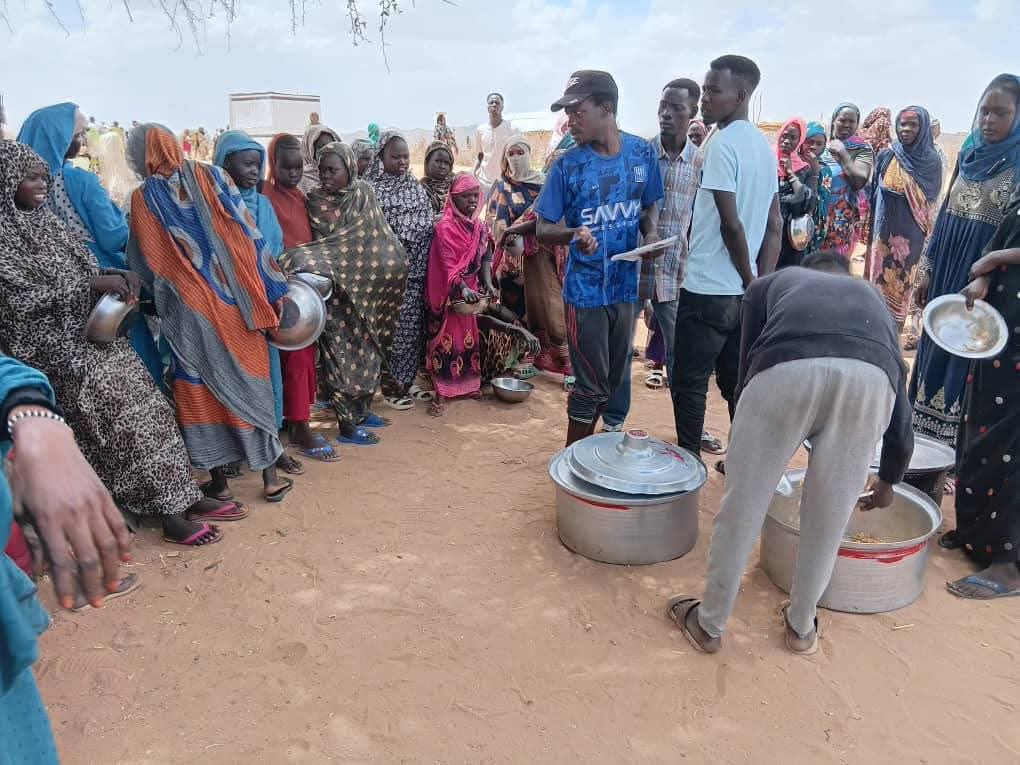
NYALA – Displaced families in Darfur are facing worsening hardship as many women who lost their husbands in the war struggle to secure food, shelter and basic assistance amid limited humanitarian access and continued insecurity.
A video circulating online from South Darfur showed a local community leader describing difficult conditions at a displacement site, saying many families had lost their primary providers during the fighting.
The speaker said about 70% of women at the site were widows whose husbands had been killed in the war while fighting alongside the Rapid Support Forces (RSF). Sudan Now could not independently verify the figure or the circumstances of the deaths.
“We are all in the same situation, and we are all from Darfur,” the speaker said, referring to women and children sheltering at the site. “About 70% of them are widows; their husbands died in the war.”
He urged humanitarian organizations to expand assistance to all affected communities rather than focusing on one location or group.
“Aid organizations should not come to just one place; they should come to everyone,” he said, adding that displaced families needed food, shelter and wider support.
The speaker said some displaced people were staying in schools, while others had no stable place to live. He said some families sheltering in schools had been told to leave, worsening their uncertainty.
“We paid the price. I swear to God, we lost thousands of men,” he said, criticizing the difficulties faced by war-affected families in accessing aid.
Darfur has been one of the regions most severely affected by Sudan’s war, which erupted in April 2023 between the Sudanese Armed Forces (SAF) and the RSF. The conflict has caused mass displacement, destroyed livelihoods and deepened already fragile humanitarian conditions across the region.
The situation of widows and female-headed households has become increasingly urgent as many families have lost income earners, property and access to social support networks. Women caring for children alone often face heightened risks of hunger, exploitation, unsafe shelter and limited access to health care.
Aid agencies have repeatedly warned that insecurity, damaged roads, funding shortages and administrative obstacles continue to restrict humanitarian operations in Darfur. Many displaced communities remain difficult to reach, while those in towns, schools and informal shelters face growing pressure as new families arrive.
The accounts from South Darfur highlight the broader civilian cost of the war, in which families connected to fighters, displaced civilians and host communities are all facing mounting hardship as the conflict continues without a political settlement.


