
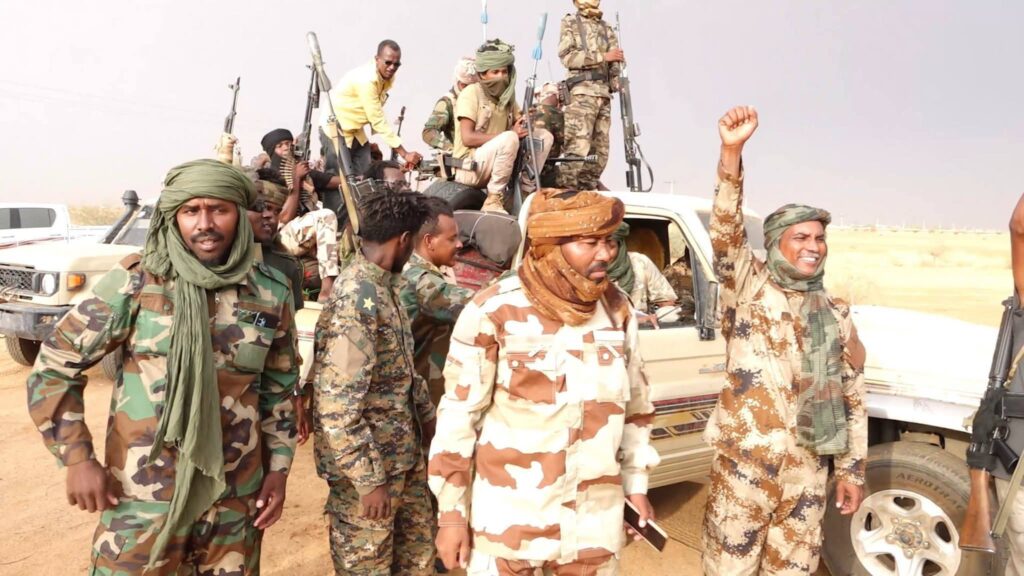
KHARTOUM – A new group of 200 fighters has defected from the Rapid Support Forces (RSF) and arrived in Omdurman, including a senior intelligence commander from North Kordofan, Sudan’s state news agency reported.
According to SUNA, the group includes field commanders led by Abubakar Hamouda Dahloub, described as the RSF’s special tasks intelligence chief in North Kordofan, covering Hamrat Al-Sheikh and the Triangle area, and a member of the force’s executive office.
The defecting group said it had joined the Sudanese Armed Forces (SAF) with its weapons and was ready to take part in military operations alongside the army, the Joint Force and other allied formations.
Dahloub told SUNA that the group had realized what he described as its mistake in joining the RSF, accusing the force led by the Dagalo family of pursuing a project that threatens Sudan. He said the defectors had sided with what he called the national camp and would fight to defeat the RSF.
Sudan Now could not independently verify the number of defectors, their ranks or the circumstances of their arrival in Omdurman. The RSF did not immediately comment.
The latest announcement comes amid a wider pattern of reported defections from the RSF during 2026, as the war with the army enters a more fluid phase marked by shifting front lines, pressure on supply routes and intensified fighting in Kordofan, Darfur and other regions.
Several former RSF-linked commanders have announced defections in recent months, including Al-Nour Al-Qubba, Ali Rizgallah, known as Al-Savana, and Musa Khamsin, who recently arrived with fighters and vehicles before meeting Revolutionary Awakening Council leader Musa Hilal.
For the army, such defections offer potential military and intelligence gains beyond additional fighters. Former RSF commanders may provide knowledge of command structures, supply routes, deployment patterns and tribal networks used by the paramilitary force.
However, the integration of former RSF fighters into army-aligned forces has also raised questions about accountability. Rights groups have warned that individuals accused of abuses during the war should not receive protection from investigation simply because they switch sides.
Sudan’s war, which erupted in April 2023, has been marked by shifting alliances, the mobilization of armed groups and the growing role of local and tribal forces. The wave of defections underscores the strain placed on armed formations as the conflict continues and both sides seek to strengthen their battlefield and political positions.
Dahloub praised earlier commanders who defected to the army, including Al-Nour Al-Qubba, Al-Savana and Musa Khamsin, and called on other RSF leaders to leave the force and join what he described as Sudan’s national project.