BRUSSELS – Sudan cannot overcome its worsening hunger crisis through humanitarian aid alone and needs an end to the war to restore food production and livelihoods, the European Union’s ambassador to Sudan, Wolfram Vetter, said on Friday.
Writing to mark World Food Day on Oct. 16, Vetter said Sudan was facing one of the world’s most severe food crises despite its vast agricultural land, water resources and potential to become a major regional food producer.
The war between the Sudanese Armed Forces (SAF) and the Rapid Support Forces (RSF), which began in April 2023, has displaced millions of people, disrupted farming and trade and damaged supply chains, while the collapse of the currency has pushed food prices beyond the reach of many households.
Vetter said the crisis was not simply about the availability of food, but also about access, production and livelihoods. Farmers have struggled to cultivate land safely, livestock owners have lost animals and grazing routes, while many families have seen their purchasing power sharply eroded.
The warning comes as humanitarian agencies face severe funding shortages and restrictions on access across Sudan. Vetter cited a recent attack on a World Food Programme convoy in Dilling, South Kordofan, as an example of the risks facing humanitarian operations.
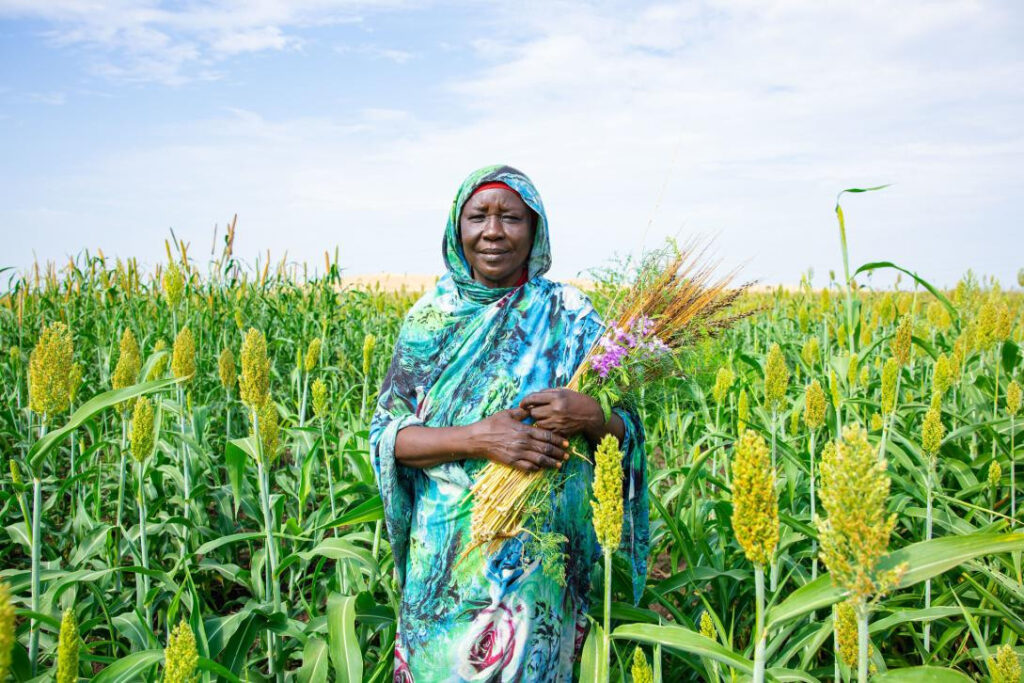
Sudan’s food crisis has also been compounded by poor rainfall and worsening agricultural conditions. Vetter said delayed seasonal rains and unusually low water levels in the Nile and major irrigation canals had damaged farmland and affected crops during critical early stages of growth.
He said sorghum and sesame crops had suffered in several areas, with crop failures reported around Nertiti in Central Darfur and in agricultural projects in Gedaref State.
The combined impact of war and climate pressures comes as Sudan faces one of the world’s largest humanitarian emergencies, with millions requiring food assistance and other forms of support.
Vetter said rising prices for fuel, fertilizer and other agricultural inputs had further increased production costs. He linked some of those pressures to disruptions in global trade, Russia’s war against Ukraine and instability affecting shipping through the Red Sea.
He called for the protection of civilians, humanitarian workers, farmland, markets and supply routes, saying food must not be used as a weapon of war.
The ambassador urged parties to the conflict to respect international humanitarian law and work toward an immediate cessation of hostilities, while ensuring that any humanitarian truce allows food and other life-saving assistance to reach affected communities.
The EU is pursuing what Vetter described as parallel political and humanitarian tracks, pressing for conditions that would allow recovery while financing food security and resilience programmes.
The bloc is funding humanitarian projects worth €30 million in Gedaref, Kassala, Red Sea and Northern states to support people affected by hunger and displacement.
It is also investing €165 million in food-security programmes across several parts of Sudan, including Darfur, Blue Nile, White Nile, Sennar, Gedaref, Kassala, Red Sea, River Nile, Northern State and the three Kordofan states.
The programmes support local food production, agriculture and livestock value chains, climate-resilient farming, markets and school feeding.
A further three EU programmes worth €40 million are targeting 12 states, including support linked to education and community resilience.
Vetter said longer-term recovery would require investment in rural infrastructure, irrigation, water systems, improved seeds, livestock, storage facilities and markets, as well as greater access to financing for smallholder farmers.
He also called for the private sector and financial institutions to return to productive investment, with Sudanese farmers, businesses and local communities taking a leading role in recovery.
But he stressed that such measures would remain limited without a political settlement to the conflict.
“Peace is not separate from food security. In Sudan, it is its prerequisite,” Vetter said.