

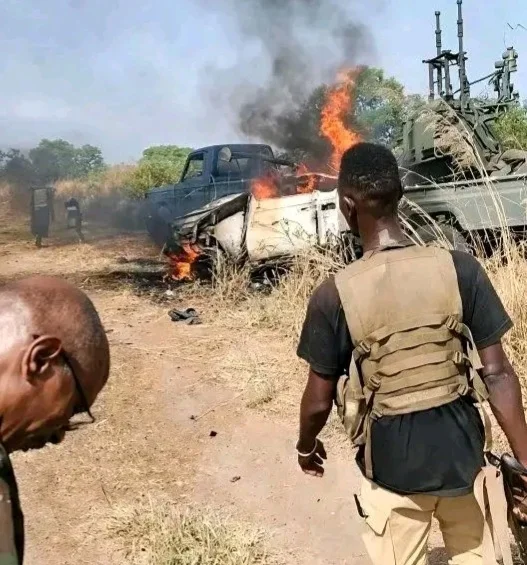
KHARTOUM – Sudan’s army said it had repelled an attack and seized 15 military vehicles in Blue Nile State, while a separate drone strike on a power station in White Nile State cut electricity to several cities in the Kordofan region.
The army’s 4th Infantry Division said forces from the Rapid Support Forces (RSF) and units allied with Joseph Tuka attacked its positions in the Sali area along the eastern axis of Blue Nile.
In a statement issued in Ad-Damazin on Monday, Oct. 20, the division said its forces and allied units repelled the assault, seized 15 combat vehicles and destroyed five others.
The army said the captured vehicles were fully equipped and that the attacking forces suffered casualties, but it did not provide figures.
The reported losses and seizure of equipment could not be independently verified.
Blue Nile has seen renewed fighting in recent months, including around Kurmuk, Qeisan and areas along the eastern and southern fronts, with control of some positions shifting as rival forces advance and retreat.
The state holds strategic importance because of its borders with Ethiopia and South Sudan, while continuing insecurity has driven new displacement and increased risks for communities near the front lines.
Separately, a drone attack attributed by local sources to the RSF struck the Tandalti power station in White Nile State, disrupting electricity supplies to several cities in Kordofan.
The sources did not provide details on the extent of damage to the facility or how long the outage was expected to last.
The attack highlights the growing impact of drone warfare on civilian infrastructure as Sudan’s conflict increasingly extends beyond battlefield positions to electricity networks and other essential services.
Power outages can disrupt hospitals, water systems, communications and commercial activity, placing additional pressure on communities already affected by fighting and shortages of basic services.
Drone attacks have become an increasingly prominent feature of the war between the Sudanese Armed Forces (SAF) and RSF, with strikes reported against military sites, infrastructure and urban areas across several parts of the country.
The circumstances of the Tandalti strike and responsibility for the attack could not be independently verified.


