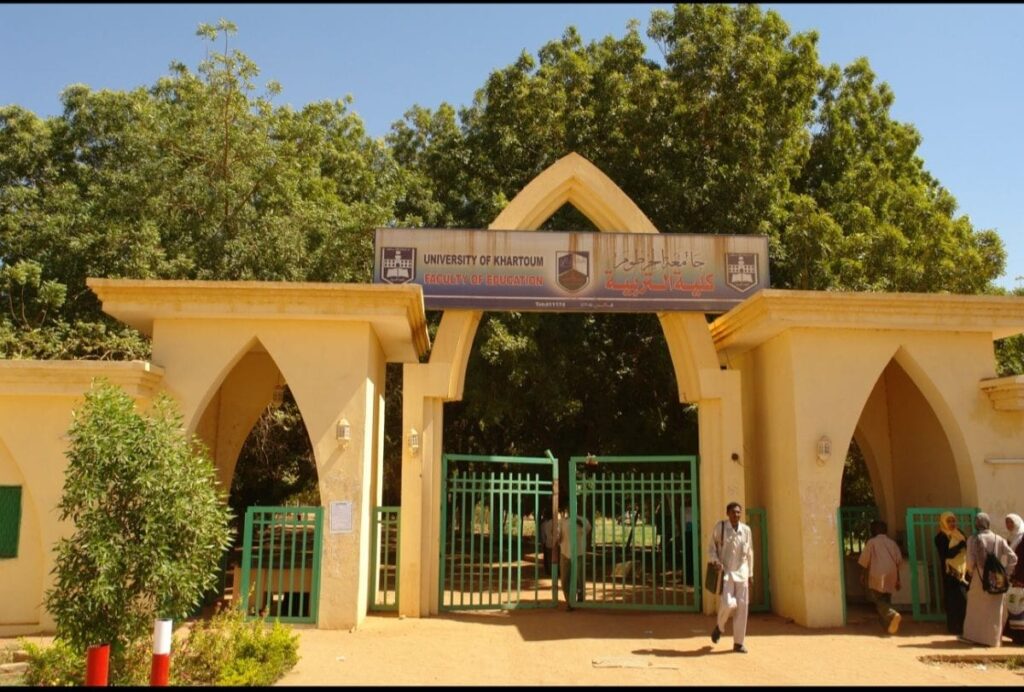
KHARTOUM – At least 124 higher education and scientific institutions in Sudan have been damaged by the war, with rehabilitation costs estimated at about $870 million, as UNESCO called for urgent investment to rebuild the country’s academic and research capacity.
The figures were presented at an international forum on the “Cost of Knowledge Loss,” held at the International University of Africa in Khartoum on Oct. 21-22.
More than 100 officials, academics, researchers and experts attended the forum, organized by the Federation of Arab Scientific Research Councils and Sudan’s Ministry of Higher Education and Scientific Research under an initiative focused on protecting scientific research during the conflict.
Higher Education and Scientific Research Minister Ahmed Musa Madawi said the war had caused extensive destruction to universities, research centres and other academic institutions.
Sudan’s conflict, which began in April 2023, has disrupted education at all levels, damaged university campuses and laboratories and displaced students, faculty members and researchers across the country and abroad.
UNESCO said the impact extends beyond physical destruction, warning that interrupted research, the displacement of scientists and academics and the loss of institutional expertise could have long-term consequences for Sudan’s recovery.
Junaid Soroush-Wali, UNESCO’s representative in Sudan and head of its office, said restoring scientific activity should form a central part of the country’s recovery.
He said the cost of losing knowledge includes not only damaged buildings and laboratories but also suspended research, displaced expertise and scientific opportunities that may be lost to future generations.
UNESCO is working with Sudanese institutions to assess the impact of the conflict on the country’s science, technology and innovation system and develop a framework for recovery.
A proposed five-year recovery plan estimates that about $1.5 billion will be required to rebuild scientific infrastructure, support researchers, restore institutional capacity and strengthen connections between Sudanese institutions and international academic networks.
The organization is also developing a monitoring platform intended to help national institutions and development partners identify priorities, coordinate assistance and track reconstruction progress.
The forum included discussions on Sudanese scientists and researchers displaced by the war and ways to maintain their links with universities and research networks.
Participants also examined how displaced academics could continue their work and contribute to rebuilding Sudan’s higher education and research sector.
UNESCO said rebuilding scientific capacity should not be limited to restoring institutions to their pre-war condition, but should also be used to develop a more resilient research system capable of supporting Sudan’s needs in education, health, environment, innovation and economic development.
The scale of the estimated damage underscores the wider challenge facing Sudan’s education sector as the country considers reconstruction while fighting continues in several regions.