

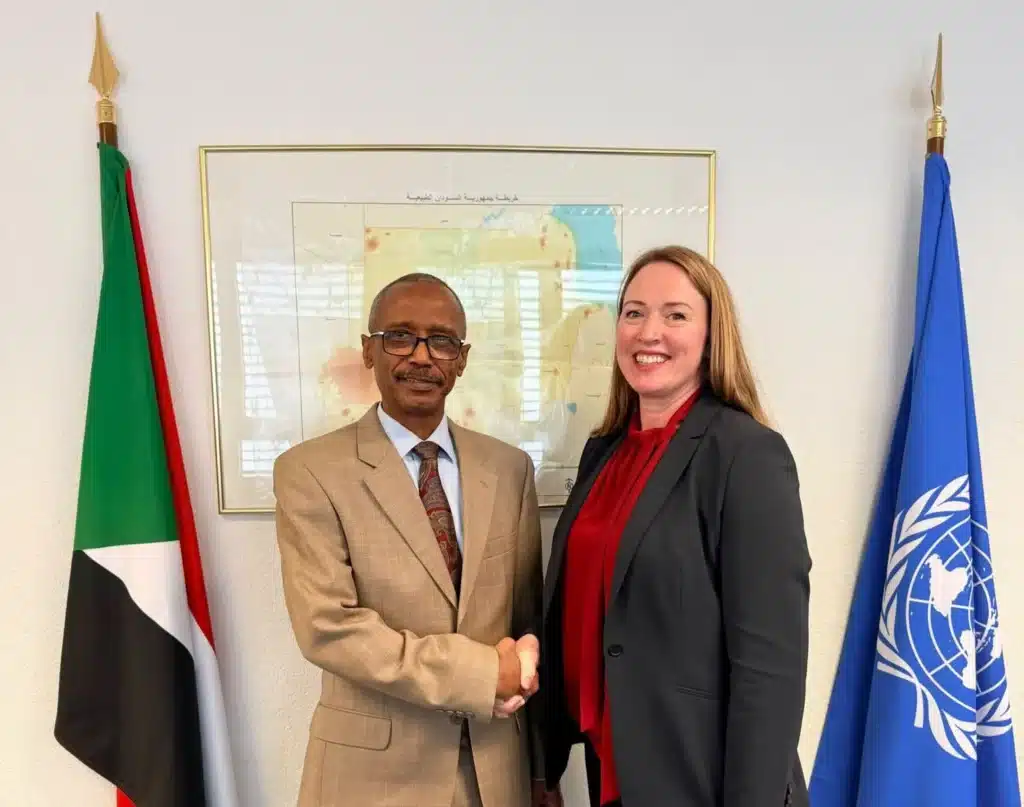
GENEVA – Sudan has urged the World Food Programme to expand its support beyond emergency food assistance toward agricultural recovery and rebuilding livelihoods, as conflict, poor rainfall and severe funding shortages deepen the country’s hunger crisis.
Sudan’s Permanent Representative to the United Nations in Geneva, Ambassador Hassan Hamid Hassan, raised the issue during talks with Shannon Howard, director of WFP’s Geneva office.
Hassan said attacks on electricity, water and other civilian infrastructure, alongside the displacement of farming communities, had worsened humanitarian conditions and disrupted food production.
He accused the Rapid Support Forces of using hunger to force communities from their homes, an allegation the RSF has previously rejected in broader disputes over responsibility for Sudan’s humanitarian crisis.
The Sudanese diplomat called for greater support for the winter agricultural season, expanded irrigated farming and investment in national food-production capacity.
Sudan’s agricultural outlook has deteriorated after below-average rainfall across major farming areas during the 2026 rainy season, compounded by conflict, displacement, shortages of agricultural inputs and restricted access to farmland.
Around 19.5 million people are facing acute hunger nationwide, including about five million at emergency levels, according to WFP.
Funding shortages have also forced the agency to reduce assistance. WFP said on Thursday that an estimated 900,000 vulnerable people had lost food assistance in recent months and that it was now reaching just over three million people.
The agency says it urgently needs $520 million to provide food and nutrition assistance to 5.4 million people through April 2027.
Hassan said humanitarian warnings and food-security assessments should remain objective and not be politicised, while reiterating the government’s commitment to facilitating aid through approved routes and crossings.
The meeting followed the first Sudan field mission by WFP Executive Director Luke Lindberg, who called for an end to the fighting and warned that humanitarian agencies could not overcome hunger while conflict continued.
WFP has said conflict and displacement remain the principal drivers of hunger, while rising food and fuel prices and disrupted transport routes are making basic food increasingly unaffordable.
Howard stressed the need for continued cooperation between WFP and Sudanese authorities, stronger international funding and greater support for communities seeking to restore livelihoods and food production.


