

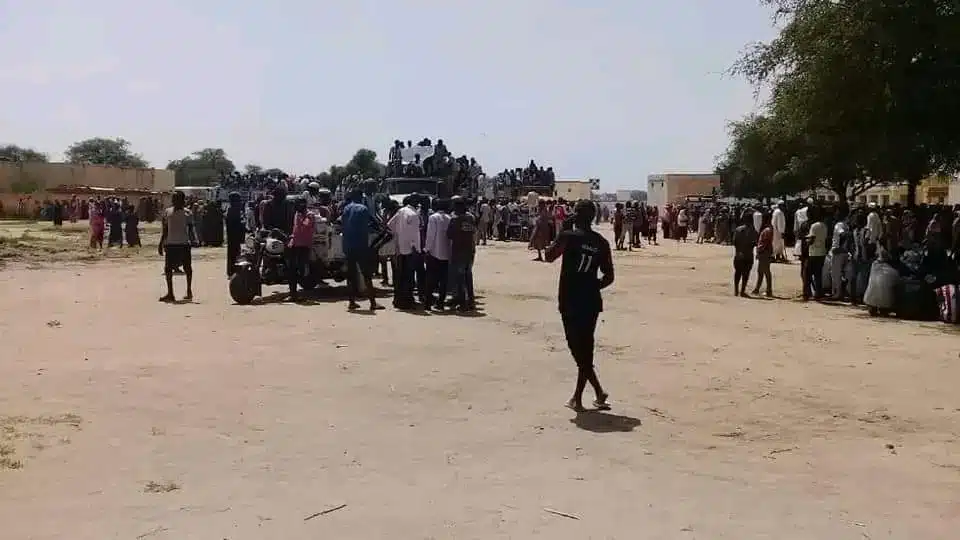
AL-LAIT – More than 2,300 displaced people in Al-Lait Jar al-Nabi in North Darfur are facing worsening food shortages, disease and a lack of humanitarian assistance after poor rainfall contributed to crop failure and the loss of livelihoods, a displacement group said.
Adam Rijal, spokesperson for the General Coordination for Displaced Persons and Refugees, said Tuesday that 571 families comprising 2,325 people were living in deteriorating humanitarian conditions.
The population includes 941 children under 15, with 26 cases of acute malnutrition recorded among children, according to the group.
It also reported 133 pregnant and breastfeeding women in need of healthcare and around 200 malaria cases, alongside other illnesses.
Rijal said poor rainfall and climatic shocks had damaged the agricultural season, affecting communities that depend heavily on millet and groundnut cultivation for food and income.
The group said the absence of humanitarian assistance had compounded the crisis and warned that conditions could deteriorate further without urgent intervention.
The figures could not be independently verified.
The situation in Al-Lait reflects wider food insecurity across Darfur, where conflict, displacement, falling agricultural production and restricted humanitarian access have increased hunger and malnutrition.
An October alert by the Integrated Food Security Phase Classification warned of an increasing risk of famine in parts of Darfur and Kordofan if conflict intensifies and humanitarian access deteriorates.
Earlier food-security analysis estimated that about 19.5 million people across Sudan were facing acute food insecurity, including more than 5 million at emergency levels and around 135,000 facing catastrophic conditions.
Humanitarian officials have also warned that poor rainfall in some areas is worsening food insecurity and disease risks, particularly among children already affected by repeated displacement.
The General Coordination called on U.N. agencies and humanitarian organizations to urgently provide food, medicine, shelter and primary healthcare in Al-Lait Jar al-Nabi, with priority given to children and pregnant and breastfeeding women.


