
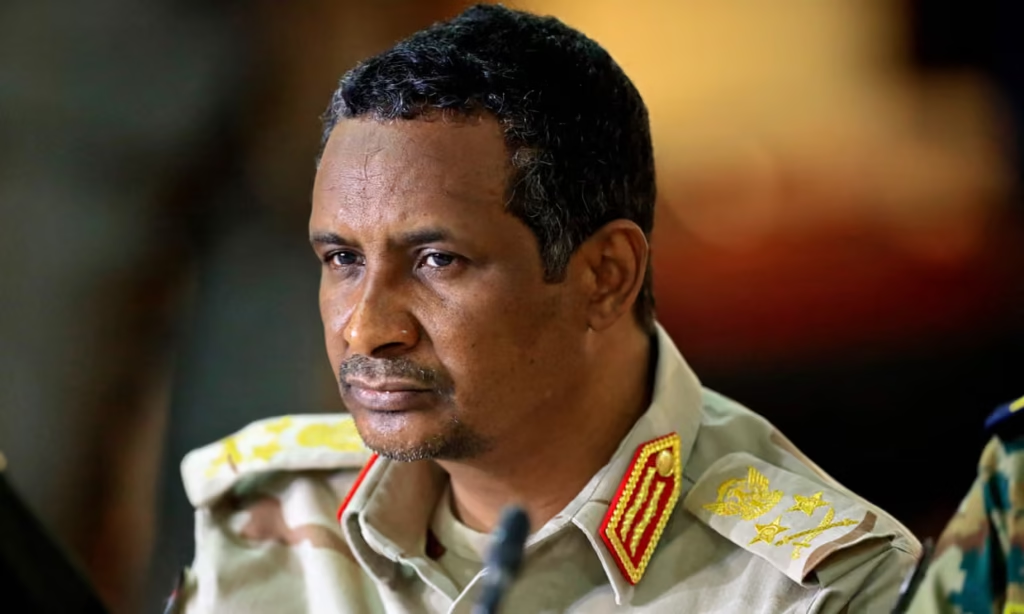
NYALA – The Sudan Founding Alliance (Ta’sees), led by the Rapid Support Forces (RSF), said on Wednesday it would resume military operations following what it described as attacks by the Sudanese Armed Forces (SAF) and allied forces on areas under its control.
In a statement, the alliance accused the SAF and its allies of launching an offensive aimed at capturing territory controlled by Ta’sees forces, alleging that the operations were accompanied by retaliatory attacks against civilians. Sudan Now could not independently verify the claims.
The alliance said its forces had refrained from launching offensive operations in recent months in response to international appeals calling for de-escalation, humanitarian access and the revival of a political process.
It argued that the latest military offensive, coupled with what it described as international silence, had rendered those appeals ineffective and provided what it called an operational and political justification for resuming military action against SAF positions.
The statement follows a series of military gains announced by the SAF and the Joint Force of the Armed Movements in North Kordofan, where government forces said they had recaptured Bara and several surrounding areas and reopened the strategic Export Road linking Omdurman with El Obeid. The announcement appears to be the alliance’s first public response to those battlefield developments.
The renewed escalation comes amid growing international scrutiny of the conflict in Kordofan. The U.N. Independent International Fact-Finding Mission for Sudan has previously told the U.N. Human Rights Council that it documented alleged attacks by the RSF against civilians in parts of Kordofan, including unlawful killings, forced displacement and attacks on civilian infrastructure. The mission has also documented alleged violations by the SAF in other parts of Sudan, while urging all parties to comply with international humanitarian law and ensure accountability for abuses.
The conflict between the SAF and the RSF, which erupted in April 2023, has killed thousands of people, displaced millions and triggered what the United Nations describes as one of the world’s worst humanitarian crises. International mediators have repeatedly called on both sides to reduce hostilities, protect civilians and facilitate unhindered humanitarian access.