

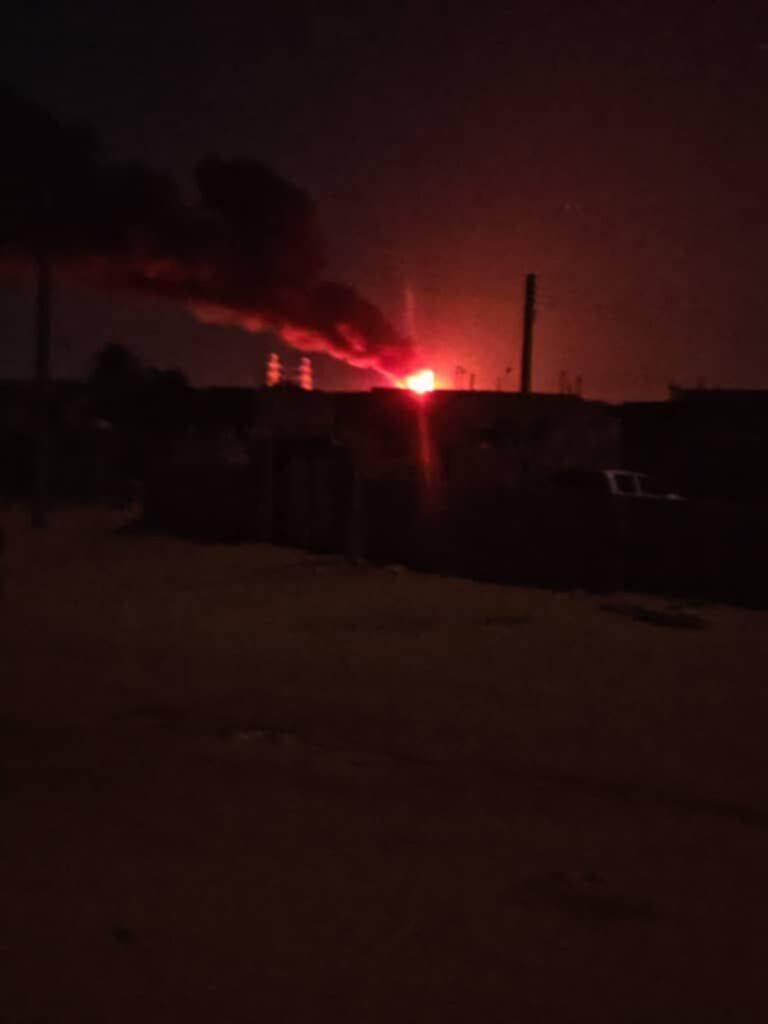
KHARTOUM – Drone strikes hit electricity facilities in Al-Dabba in Northern State and Abu Hamad in River Nile State early Sunday, destroying the Abu Hamad substation and knocking it out of service, as Egypt condemned an escalating campaign of attacks on civilian and critical infrastructure across Sudan.
The Abu Hamad Locality Security Committee attributed the attack to the Rapid Support Forces (RSF), saying a drone struck the electricity substation and completely destroyed the facility.
No casualties were reported.
Authorities said security and executive agencies were working to address the damage and restore electricity services as quickly as possible.
Witnesses also reported drone attacks targeting the Al-Dabba electricity facility and several fuel stations in Northern and River Nile states.
The extent of damage at Al-Dabba and the fuel facilities was not immediately clear.
The RSF had not publicly commented on the latest accusations in the information available.
Emergency Lawyers Warn of Expanding Campaign
The Emergency Lawyers group condemned the strikes and said attacks on electricity infrastructure had become systematic.
The group said 15 electricity substations were targeted during October, with the latest strikes extending the campaign into November.
It warned that damage to electricity facilities was disrupting both power and water supplies and threatening hospitals, dialysis services, medicine and vaccine storage, food preservation and other essential civilian services.
The group also said prolonged outages were affecting commercial and productive activity and forcing households to rely on expensive alternatives for electricity and water.
Those additional costs were contributing to higher prices for goods and services and increasing pressure on civilians already affected by the economic consequences of the war, it said.
Sudan’s electricity network has been subjected to repeated drone strikes in recent weeks, with facilities hit in Khartoum, Gezira, Sennar, Gedaref, White Nile, Red Sea and other states.
Several substations have been damaged or forced out of service, causing widespread outages.
Egypt Condemns Drone Attacks
Egypt condemned what it described as an escalation in drone attacks against civilian and critical infrastructure in Sudan.
Cairo said the attacks had caused civilian casualties and damaged infrastructure and described attacks on civilian facilities as a violation of international humanitarian law.
Egypt called for civilians to be protected and urged all parties to avoid exposing civilian populations to the effects of military operations.
It also renewed its call for an end to weapons flows to the RSF through countries neighbouring Sudan.
Egypt reaffirmed its support for Sudan’s unity, sovereignty and territorial integrity and called on neighbouring states to respect Sudanese sovereignty and refrain from interference in its internal affairs.
Cairo also called for intensified regional and international efforts to secure a ceasefire, improve humanitarian access and create conditions for a comprehensive political settlement.
Power Infrastructure Increasingly Targeted
The latest strikes follow a sharp increase in attacks on Sudan’s electricity network.
In late October, drone attacks hit substations in Singa, Al-Hawata, Al-Faw, Mashkour and Al-Junaid, causing extensive outages across Sennar, Gedaref, White Nile and Gezira states.
Al-Markhiyat substation in Omdurman was subsequently struck and knocked out of service, affecting electricity supplies in parts of Khartoum and River Nile State.
Other attacks targeted electricity and fuel infrastructure in Al-Managil and a power station under construction in Red Sea State.
Sudanese authorities have attributed many of the attacks to the RSF.
They have also alleged that some drones used in the strikes were launched from Ethiopian territory, an accusation that has not been independently verified.
The government last week briefed foreign diplomatic missions on what it said was technical and satellite evidence concerning drone launch locations in Ethiopia.
Civilian Services at Risk
Medical groups and U.N. agencies have warned that repeated attacks on power infrastructure can have consequences far beyond the immediate damage.
Hospitals, intensive care units, dialysis centres and blood banks depend on uninterrupted electricity, while refrigeration systems are needed to preserve medicines, vaccines and food.
Electricity is also critical to water pumping systems, telecommunications, bakeries and commercial activity.
The Sudan Doctors Network recently warned that continued damage to power infrastructure could trigger broader public health emergencies affecting millions of people.
U.N. Secretary-General António Guterres has also condemned the escalating use of drones by parties to Sudan’s conflict and called for an immediate cessation of hostilities.
The latest attacks in Northern and River Nile states underscore the growing geographical reach of drone warfare, with strikes increasingly targeting infrastructure far from conventional ground battlefields.


