

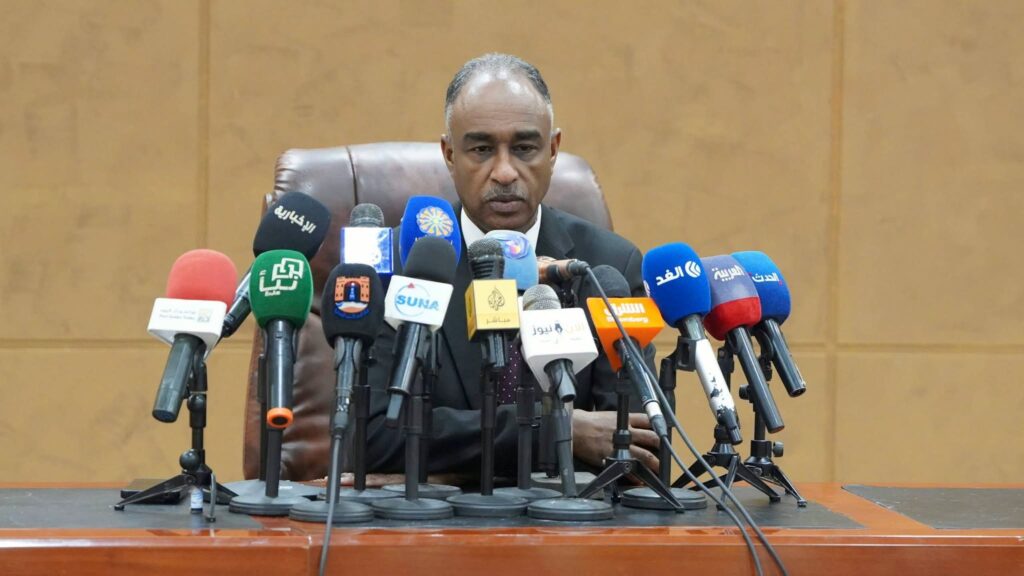
PORT SUDAN – Sudan accused Ethiopia of allowing its territory to be used to launch drone attacks against the country on behalf of regional actors, chiefly the United Arab Emirates, as Khartoum briefed foreign diplomats on what it described as an escalating threat to its sovereignty and civilian infrastructure.
Foreign Ministry Undersecretary Muawiya Osman told diplomatic missions accredited to Sudan that drone attacks originating from Ethiopian territory had increased in recent months and targeted electricity facilities, water stations, hospitals, schools and fuel installations.
He said the strikes had killed and injured hundreds of people.
Sudanese authorities did not provide an independently verified casualty breakdown during the briefing.
Osman described the attacks as part of a “proxy war” and accused Ethiopia of acting on behalf of regional states, naming the UAE in particular.
He also accused the Rapid Support Forces (RSF) of serving as a military arm in the campaign.
The UAE has repeatedly denied allegations that it provides military support to the RSF.
There was no immediate Ethiopian response to the latest Sudanese accusations in the information available.
Sudan Points to Asosa Base
Osman alleged that a base in Asosa, western Ethiopia, had become a hub for supplying the RSF with weapons and military equipment and facilitating the movement of foreign fighters and mercenaries into Sudan.
He said the more serious concern was the alleged use of Ethiopian territory and military facilities as launch points for drone attacks inside Sudan.
Sudan has made similar accusations in recent days after a series of strikes targeted electricity infrastructure across several states.
Earlier this week, government officials said technical data extracted from intercepted drones and satellite imagery indicated that some aircraft had been launched from Ethiopian territory, including areas around Bahir Dar.
Those claims have not been independently verified.
Military sources also said drones targeting a power facility under construction in Red Sea State originated from Ethiopia.
Wave of Attacks on Power Infrastructure
Sudan has experienced a sharp increase in attacks on its electricity network in recent days.
Power facilities have been struck in Gezira, Sennar, Gedaref, White Nile, Khartoum and Red Sea states, causing damage and widespread outages.
Sudanese authorities have attributed the attacks to the RSF.
Among the facilities hit were substations in Al-Junaid, Singa, Al-Faw, Al-Hawata, Mashkour and Al-Markhiyat, as well as installations around Al-Managil and other locations.
The attacks have raised concerns over their wider effects on hospitals, dialysis centres, water pumping stations, communications networks and other essential civilian services that depend on stable electricity supplies.
The United Nations and Sudanese medical groups have separately warned that continued attacks on electricity infrastructure could produce broader humanitarian and public health consequences.
Khartoum Says It Seeks De-escalation
Despite the accusations, Osman said Sudan was pursuing diplomatic efforts to reduce tensions and address what he described as problems in relations with Ethiopia.
He said Khartoum was using diplomatic channels but reserved what he described as its right to respond to any aggression in accordance with international law.
The briefing was intended to place foreign diplomatic missions before what Sudan described as their responsibility to respond to attacks threatening its sovereignty and territorial integrity.
According to the Foreign Ministry, ambassadors and diplomats attending the briefing reiterated support for Sudan’s unity, sovereignty and territorial integrity and expressed hope for an end to the war.
The escalating accusations risk adding another layer of tension to Sudan-Ethiopia relations, already shaped by border disputes, regional alliances and competing security concerns.
Sudan’s war between the Sudanese Armed Forces and the RSF has continued since April 2023 and has increasingly involved long-range drone operations capable of striking critical infrastructure far from active ground front lines.


