

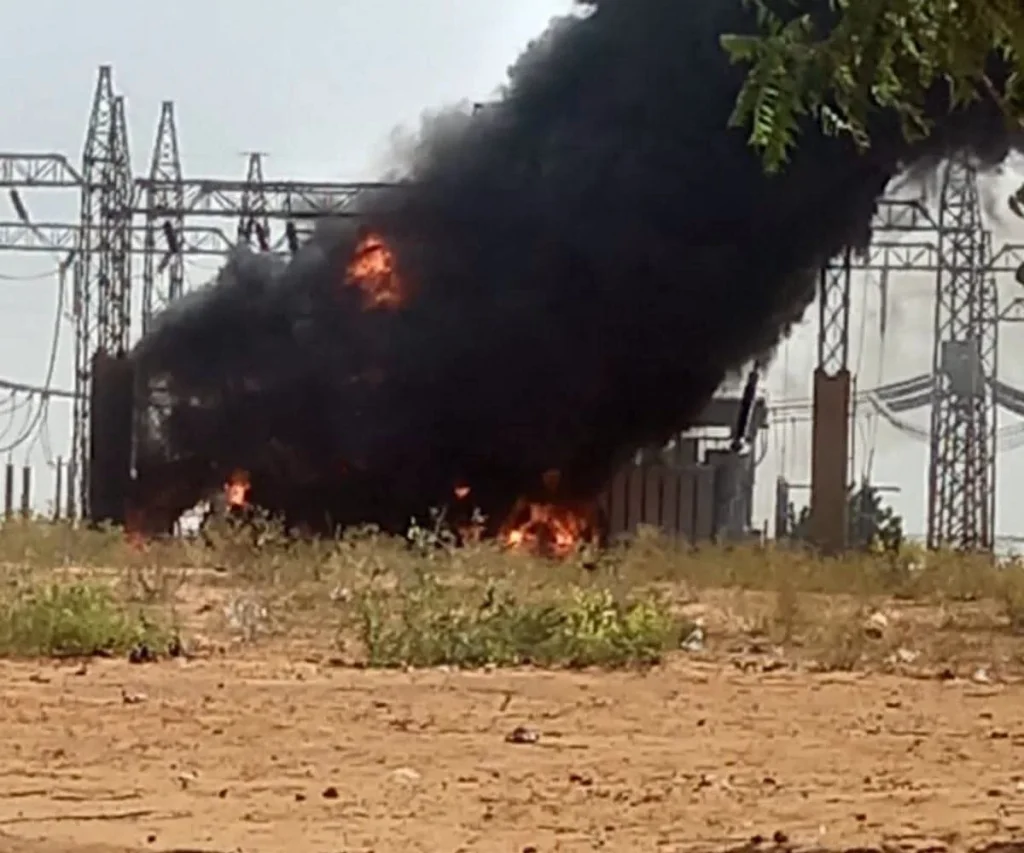
PORT SUDAN – Rapid Support Forces drones struck a power station under construction in Sudan’s Red Sea State after being launched from Ethiopian territory, Sudanese military sources said, amid an escalating campaign of drone attacks on electricity and energy infrastructure across the country.
The sources attributed the latest attack to the RSF and said the drones originated from inside Ethiopia. The claim could not be independently verified, and the available information did not include details on the extent of damage or any casualties.
The attack marks a further expansion of strikes on Sudan’s power infrastructure after electricity facilities in Gezira, Sennar, Gedaref, White Nile and Khartoum states were hit in recent days.
Sudanese authorities have accused the RSF of carrying out the attacks and have separately alleged that drones used in some of the strikes were launched from Ethiopian territory.
Ethiopia has previously rejected Sudanese accusations linking its territory to military support for the RSF.
Power Facilities Hit Across Sudan
Recent attacks have targeted a series of substations and electricity facilities, including Al-Junaid in Gezira, Singa in Sennar, Al-Faw and Al-Hawata in Gedaref, Mashkour and Um Dabakar in White Nile and Al-Markhiyat in Omdurman.
Several facilities were knocked out of service, causing power cuts across wide areas and increasing concerns over the stability of Sudan’s electricity network.
The attacks have also affected fuel and other energy infrastructure.
Sudan’s government has said technical data recovered from intercepted drones and satellite imagery indicate that some aircraft used in the attacks originated from Ethiopian territory, including locations around Bahir Dar.
Those claims have not been independently verified.
Red Sea Previously Targeted
Red Sea State, where Port Sudan became the government’s main administrative centre during much of the war, has previously been targeted by long-range drone attacks.
In May 2025, drone strikes hit electricity facilities, fuel depots and other infrastructure in Port Sudan, disrupting power and water supplies and demonstrating the growing reach of drone warfare beyond conventional front lines.
The latest attack on a power station under construction raises further concerns over damage to infrastructure intended to expand or restore electricity supply.
Power stations and substations are particularly important to civilian services because hospitals, water pumping systems, telecommunications networks, bakeries and food-storage facilities depend on reliable electricity.
Humanitarian organizations have warned that repeated attacks on electricity infrastructure can produce consequences far beyond the immediate sites of impact.
The war between the Sudanese Armed Forces and the RSF began in April 2023 and has increasingly involved long-range drones capable of striking cities and infrastructure far from active ground battles.
International humanitarian law requires parties to distinguish between military objectives and civilian objects and to take precautions to minimize harm to civilians.


