
KHARTOUM – The atrocities committed during the fall of El Fasher were repeatedly forecast and documented before they occurred, but international action failed to prevent them, according to a new report by the Strategic Initiative for Women in the Horn of Africa documenting calls for justice and accountability one year after the Rapid Support Forces captured the North Darfur capital.
The report, “Remembering El Fasher,” followed an Oct. 26 gathering organized by SIHA Network and Amnesty International that brought together survivors, Sudanese rights defenders, medical professionals, researchers and international justice experts.
Participants said civilians in Darfur continue to face insecurity, detention, surveillance, sexual violence and displacement, warning that the violence surrounding El Fasher was not an isolated episode and that the conflict in Darfur remains unresolved.
Nathaniel Raymond of Yale University’s Humanitarian Research Lab told the gathering that satellite monitoring, intelligence and repeated briefings had provided extensive advance warning about the threat facing civilians in El Fasher.
He described the violence as “the most accurately predicted mass killing in human history,” arguing that the failure to prevent it was not caused by a lack of information or available mechanisms.
Participants said accountability should extend beyond those who directly committed abuses to political, financial and military networks that enabled or supported them.
Amnesty Details Killings, Starvation and Sexual Violence
Amnesty International researcher Laura Mills presented findings from the organization’s investigation into El Fasher, based on more than 200 interviews.
The investigation documented abuses attributed to the RSF including deliberate starvation, killings, rape, sexual slavery, torture, abduction and attacks targeting communities on ethnic grounds.
It examined violence against communities surrounding El Fasher, the prolonged siege of the city and abuses committed during its capture.
The report said survivors continue to experience insecurity, detention, surveillance and severe deprivation, while displacement camps remain vulnerable to further attacks.
Participants called for an immediate ceasefire, stronger civilian protection and tighter measures to prevent weapons transfers that could fuel further abuses.
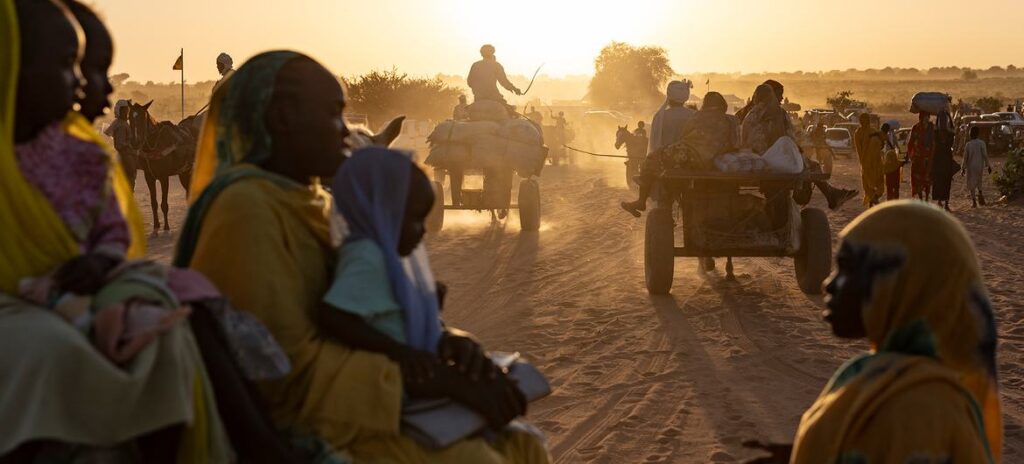
The RSF captured El Fasher in October 2025 following a prolonged siege that severely restricted food, medical supplies and civilian movement.
U.N. investigations have since documented mass killings, sexual violence and other abuses during and after the city’s fall.
Health System Reduced to One Hospital
The destruction of El Fasher’s health infrastructure emerged as another major concern.
Dr. Mudathir Ibrahim, former director of Al Saudi Hospital, said repeated attacks had reduced what was once an extensive healthcare system to a single functioning hospital.
Medical workers continued providing care despite shortages of medicine, water, electricity, food and basic medical equipment, according to the report.
“We knew how to intervene in order to save the lives of our patients, but we did not have the elementary means to actually provide these services,” Ibrahim said.
The report said survivors of conflict-related sexual violence require sustained access to reproductive healthcare, psychological support, secure accommodation and other services without unnecessary administrative barriers.
Women displaced to refugee camps in eastern Chad were also described as facing inadequate shelter, food insecurity, poor healthcare access and economic exploitation.
Education Disruption Risks a Lost Generation
Participants also warned that years of interrupted education could have long-term consequences for Darfur’s recovery.
Medical student Rafia Idris said students had lost years of schooling as institutions were attacked or closed and displacement, financial hardship, insecurity and detention prevented many from resuming their studies.
The report argued that education should be treated as a central component of recovery rather than a secondary humanitarian concern.
Without access to education, Darfur could lose future generations of doctors, teachers and other skilled professionals needed to rebuild the region.
Participants called for practical measures allowing displaced and refugee students to continue their studies safely and affordably.
Return Must Include Land and Property Rights
The report also warned against treating the return of displaced people solely as a logistical issue.
Speakers linked forced displacement in Darfur to loss of land, confiscation of property and destruction of livelihoods.
They said voluntary return would require physical security, restoration of property and land rights, compensation or restitution for losses and rehabilitation of essential infrastructure.
Displaced people should also have the right to decide whether and when they return, the report said.
Participants called for truth-seeking and efforts to determine the fate of missing and forcibly disappeared people as part of any future justice process.
Rights Defenders Face Threats
The report highlighted risks faced by Sudanese journalists, lawyers, activists and witnesses documenting atrocities.
Human rights defender Musbah Eisa warned that attacks on those collecting evidence can destroy both individual testimony and information needed for future accountability.
Participants called for greater investment in secure documentation systems, digital security, emergency protection programmes and flexible funding for frontline human rights defenders.
Legal experts also emphasized the importance of collecting evidence according to standards that could support future criminal proceedings.
Concerns were raised about Chad’s announced withdrawal from the Rome Statute of the International Criminal Court and the possible implications for Sudanese refugees and witnesses in eastern Chad.
The report said weaker cooperation with international justice mechanisms could make it harder to protect witnesses, preserve evidence and pursue accountability.
Accountability for Those Who Enabled Atrocities
Human rights lawyer Mutasim Ali said international accountability mechanisms already exist but argued that political will to use them remains insufficient.
Participants said investigations should consider not only those who carried out crimes but also those who ordered, financed, facilitated or otherwise enabled them.
They called for stronger international legal action through the ICC and other mechanisms.
SIHA Regional Director Hala Al-Karib said the destruction of El Fasher represented not only a massive loss of life but an assault on Darfur’s identity, history and future.
The gathering concluded that protecting civilians, restoring essential services, safeguarding land rights, ending sexual violence and ensuring justice were interconnected priorities.
It said the atrocities in El Fasher were neither unforeseen nor inevitable and warned that continuing violence across Darfur made renewed international action necessary.


