
KHARTOUM – Sudan’s Prime Minister Kamil Idris on Tuesday launched the National Committee for Economic Management, a new executive body tasked with coordinating economic policy and addressing the country’s mounting economic challenges.
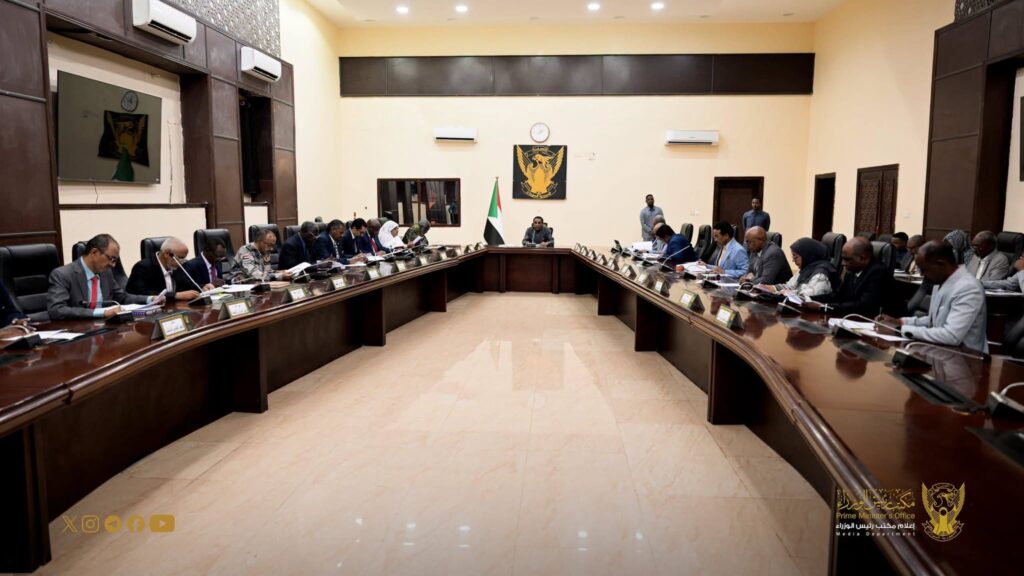
The inaugural meeting brought together ministers from the government’s economic sector, the Governor of the Central Bank of Sudan, the heads of the Customs Authority, Tax Chamber, Sudanese Standards and Metrology Organization, Capital Markets Authority and other government institutions.
According to the state-run Sudan News Agency (SUNA), the committee approved its mandate and operating framework, with Prime Minister Idris stressing the importance of coordinated economic management under the exceptional circumstances facing the country.
The committee will oversee policies covering fiscal and monetary affairs, production, trade, investment, the external sector, employment, energy, food security, digital transformation and structural economic reforms, while serving as an executive mechanism for implementing government economic decisions.
Sudan has faced a deep economic crisis since the outbreak of the conflict between the Sudanese Armed Forces (SAF) and the Rapid Support Forces (RSF) in April 2023, with soaring inflation, currency depreciation, declining exports and widespread disruption to production and trade.
According to SUNA, the committee’s priorities include stabilizing inflation and the exchange rate, boosting domestic production, increasing exports and foreign currency earnings, strengthening investor confidence, supporting private-sector competitiveness and enhancing food security and sustainable economic growth.
Officials at the meeting also agreed to hold regular sessions to coordinate government efforts aimed at managing the national economy. A government spokesperson said the committee would complement, rather than replace, the work of the Cabinet’s existing economic sector.