
VIENNA – Sudan has asked the International Atomic Energy Agency (IAEA) to support the restoration and expansion of radiotherapy services, agricultural projects and food security programmes as the country seeks to rebuild institutions affected by the war.
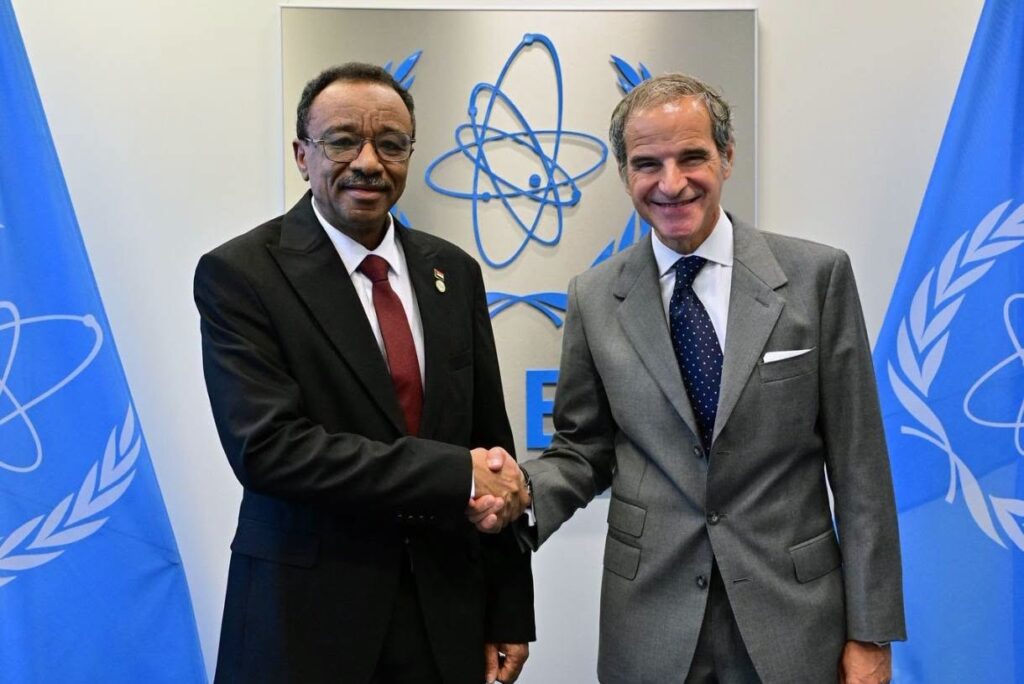
Higher Education and Scientific Research Minister Ahmed Mudawi Musa, who is leading Sudan’s delegation in Vienna, discussed the requests with IAEA Director General Rafael Mariano Grossi on the sidelines of the agency’s 70th General Conference.
Musa said Sudan was seeking IAEA assistance to provide a linear accelerator for the National Cancer Institute at the University of Gezira, as part of efforts to strengthen radiotherapy services.
Sudan also requested support for veterinary laboratories, agricultural and food security projects, as well as a blood irradiation device for the National Public Health Laboratory.
The Sudanese delegation asked the IAEA to send a technical mission to the country to assess the needs of national institutions involved in the peaceful uses of nuclear technology and evaluate damage sustained during the war.
The proposed mission would also help develop plans to rehabilitate the affected institutions and restore their technical and institutional capacity.
Grossi expressed the agency’s readiness to continue supporting Sudan, particularly in restoring radiotherapy services, strengthening agriculture and food security and developing veterinary laboratory capacity, according to the Sudanese account of the meeting.
He also stressed the importance of accelerating the review and adoption of Sudan’s national cancer control strategy, which could allow it to be presented to regional and international partners for support.
The strategy could also enable Sudan to benefit from the IAEA’s Rays of Hope initiative, which focuses on expanding access to cancer diagnosis and treatment, particularly in countries with limited radiotherapy capacity.
Sudan’s delegation is participating in the IAEA General Conference in Vienna as part of efforts to expand technical and scientific cooperation and make greater use of the agency’s programmes in health, agriculture, food security and other peaceful applications of nuclear technology.