
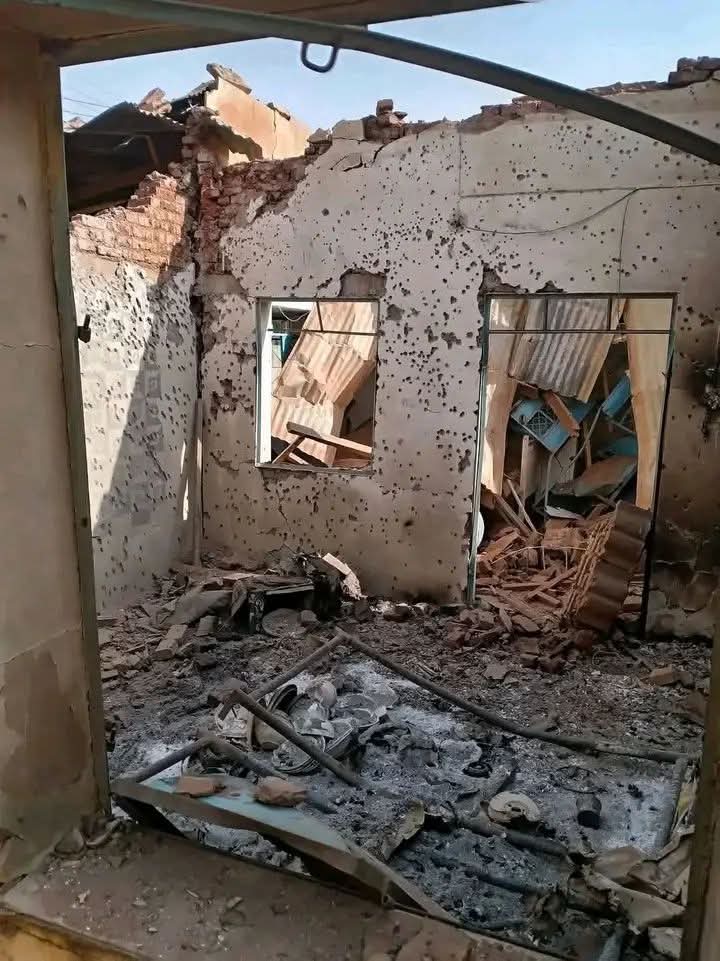
EL OBEID – At least two displaced people were killed and seven others injured in a series of drone attacks in El Obeid, North Kordofan, as fighting and aerial attacks continued across several parts of the state, the U.N. Office for the Coordination of Humanitarian Affairs said.
OCHA said humanitarian partners reported the casualties from drone attacks on Friday in El Obeid, while additional drone strikes and armed clashes were reported between Wednesday and Saturday in Tanna, Al-Kokiti, Al-Jamama, Bara, Sodari and Al-Mazroub.
The U.N. agency did not identify those responsible for the attacks.
The incidents come amid continuing military operations in North Kordofan, where fighting between the Sudanese Armed Forces (SAF) and the Rapid Support Forces (RSF) has intensified in recent weeks.
OCHA again called for the protection of civilians and civilian infrastructure and urged rapid and flexible funding to allow humanitarian organizations to respond to growing needs.
At the same time, humanitarian agencies reported progress in containing Sudan’s cholera outbreak.
The World Health Organization (WHO) said cholera cases had declined sharply in recent weeks after intensified response efforts.
WHO had prepositioned 60 metric tons of cholera supplies across Sudan, enough to support treatment for around 120,000 cases, while strengthening disease surveillance, training front-line health workers and supporting treatment centers and oral rehydration points.
WHO and UNICEF also supported oral cholera vaccination campaigns that reached more than 915,000 people.
The outbreak began in Al-Nuhud locality in West Kordofan in May and has since spread to 20 localities across six states, with nearly 3,000 cases and 250 associated deaths reported.
Humanitarian agencies are also stepping up efforts to protect food security and livelihoods.
The Food and Agriculture Organization (FAO) has launched a nationwide livestock vaccination campaign targeting 9.8 million animals and aiming to support the livelihoods of around 1.2 million livestock-owning households.
The campaign comes amid growing concerns over lower-than-expected rainfall during Sudan’s rainy season and its potential impact on agricultural production and food security.
Humanitarian organizations continue to operate despite insecurity, access constraints and funding shortages, as conflict and displacement increase needs across the country.