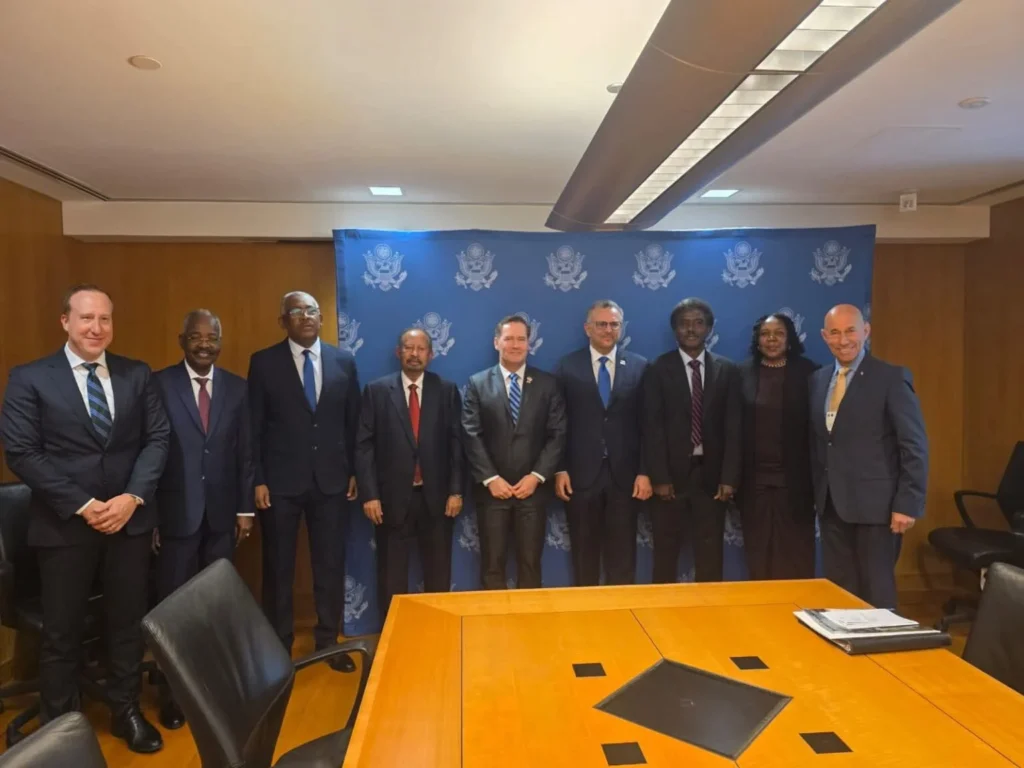
WASHINGTON – A Sudanese civilian delegation led by former Prime Minister Abdalla Hamdok said it discussed efforts to expand the U.N. arms embargo across Sudan and the possible use of additional sanctions during talks with senior U.S. officials in Washington.
The delegation said it met at the U.S. State Department with Frank Garcia, identified in its statement as assistant secretary of state for African affairs, presidential adviser Massad Boulos and U.S. Ambassador to the United Nations Mike Waltz.
According to the delegation’s account of the meeting, Waltz said he was working with members of the U.N. Security Council to secure approval for extending the existing arms embargo beyond Darfur to cover all of Sudan, alongside stronger monitoring and enforcement mechanisms.
The delegation also quoted Waltz as saying President Donald Trump had directed officials to do everything possible to stop the war and civilian killings.
The remarks were reported by the Sudanese delegation and were not announced separately as an outcome of the meeting by the U.S. government.
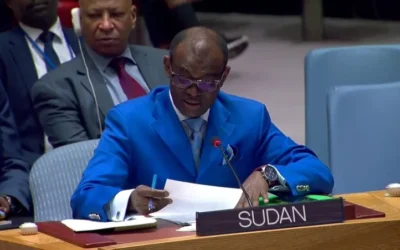
Sudan’s government has opposed extending the Darfur arms embargo nationwide. Foreign Minister Mohieddin Salem, in Sudan’s address to the U.N. General Assembly, argued that such a measure would benefit the Rapid Support Forces (RSF) and instead called for halting weapons and foreign fighters reaching the paramilitary force.
The civilian delegation said Garcia reaffirmed continued U.S. diplomatic efforts with partners involved in mediation and said Washington was prepared to use political tools to help end the war, including broader sanctions if necessary.
The discussions come as Washington increases pressure on both the Sudanese Armed Forces (SAF) and the RSF to accept a humanitarian truce and move toward a civilian political process.
The U.S. State Department said earlier this month that neither side had made serious commitments to an immediate ceasefire and called on both to accept a humanitarian truce without preconditions.
Hamdok’s delegation said it welcomed that position and told U.S. officials that an immediate humanitarian truce should serve as an entry point to ending the fighting and addressing Sudan’s humanitarian crisis.
The delegation also warned that the conflict had become a threat not only to Sudan and its population but to regional peace and security.
According to the delegation, Boulos described the recent joint meeting of the Quad and Quintet on Sudan as positive and said it could strengthen coordination between international and regional actors involved in peace efforts.
The delegation said discussions also referred to broader coordination with partners including the United Kingdom, Norway, Switzerland and Qatar.
The talks come amid competing Sudanese positions over how the war should end. Civilian groups around Hamdok have called for an unconditional humanitarian truce and a civilian-led political process, while Sudan’s government has emphasized ending external support to the RSF, disarming the force and preserving state institutions.
No final agreement, timetable for additional sanctions or date for a Security Council vote on expanding the arms embargo was announced following the meeting.