

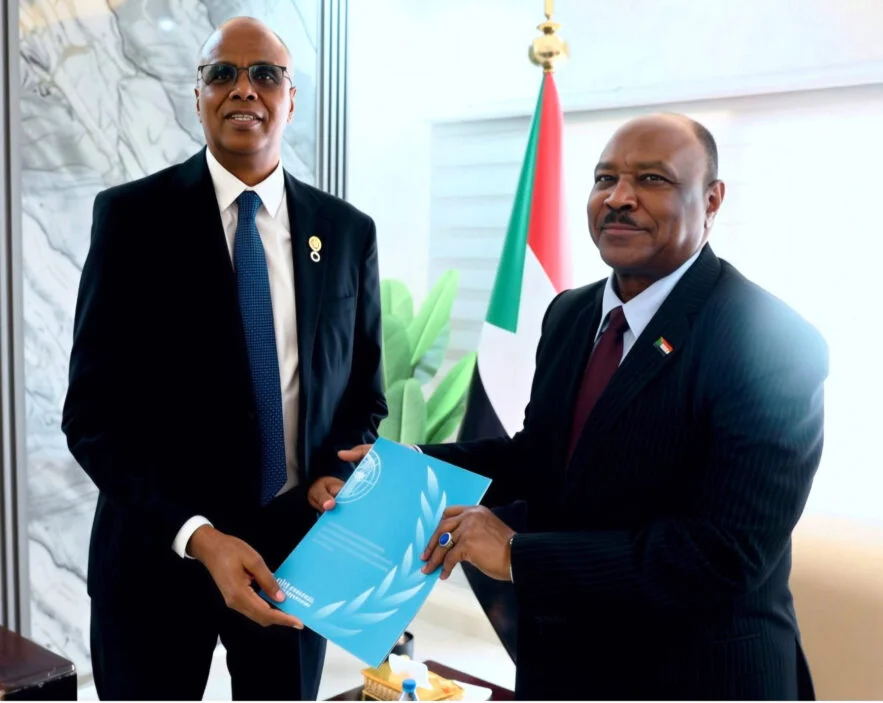
KHARTOUM – The new World Health Organization (WHO) representative in Sudan, Abdel Nasser Abu Bakr, pledged to support the recovery and rebuilding of Sudan’s health system after more than three years of war damaged hospitals, disrupted services and weakened disease surveillance across the country.
Abu Bakr made the remarks after presenting his credentials to Foreign Minister Mohieldin Salem Ahmed in Khartoum, where he reaffirmed WHO’s commitment to working with Sudanese authorities to restore health services and expand emergency response.
Salem welcomed the new representative and praised WHO’s role in saving lives and supporting Sudan’s health sector. He said the government was committed to providing a conducive environment for the organization’s work and improving access to health care for Sudanese people.
Abu Bakr said WHO would continue its partnership with the government and the Federal Ministry of Health, including support for the National Strategic Plan for Health Sector Recovery and Transformation for 2026-2030.
He said WHO’s priorities include strengthening primary health care, expanding universal health coverage, reinforcing the health system and improving preparedness and response to health emergencies.
Sudan’s health sector has been severely affected by the war between the Sudanese Armed Forces (SAF) and the Rapid Support Forces (RSF), which began in April 2023. Hospitals and clinics have been damaged, looted or forced to close in several states, while shortages of medicines, medical supplies and health workers have left millions with limited access to treatment.
Abu Bakr also stressed the need for safe and unimpeded access to all parts of Sudan to allow the delivery of medicines, food, medical supplies and humanitarian assistance to people in need.
The call comes as disease outbreaks and rainy-season health risks continue to place additional pressure on Sudan’s weakened health system, including cholera, dengue fever, malaria, hepatitis and other infectious diseases reported in several states.
Abu Bakr welcomed Prime Minister Kamil Idris’s initiative, “Together Towards a Malaria-Free Sudan,” and reaffirmed WHO’s support for expanding prevention and treatment efforts and integrating malaria vaccines into the routine immunization programme.
He took up his post as WHO representative in Sudan on August 1, 2026, bringing more than 30 years of experience in public health, including health-system strengthening, emergency response, outbreak control and disease surveillance.
Abu Bakr previously served as WHO representative in Lebanon from May 2022 to July 2026. Between 2015 and 2022, he held several technical and managerial roles at WHO’s Regional Office for the Eastern Mediterranean in Cairo, where he helped lead the COVID-19 response and coordinate health work across 22 countries and territories.


