
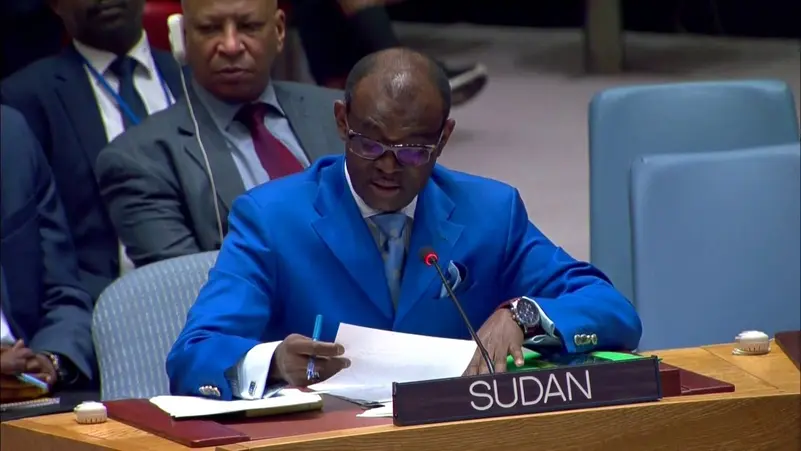
NEW YORK – Sudan’s ambassador to the United Nations Al-Harith Idriss accused the United Arab Emirates and Chad of facilitating support to the Rapid Support Forces, citing international reports as he responded to statements by both countries at the 81st session of the U.N. General Assembly.
Idriss rejected the UAE representative’s reference to Sudan’s authorities as the “Port Sudan government,” arguing that the description was inappropriate at a forum whose charter recognizes the sovereign equality of member states.
He said Sudan could respond with similarly disparaging descriptions of the UAE but would refrain from doing so, accusing Abu Dhabi instead of contributing to Sudan’s humanitarian crisis through what he described as support for the Rapid Support Forces (RSF).
The Sudanese envoy cited findings by international monitoring and fact-finding mechanisms, arguing that external supply networks had helped sustain the conflict.
He accused the UAE of involvement that went beyond weapons supplies, alleging that it supported efforts to undermine Sudanese state institutions and destabilize the region.
Idriss also alleged that foreign mercenaries had been recruited and trained to support the RSF and said companies registered in the UAE had been involved in contracting foreign fighters and facilitating military logistics.
The UAE has rejected Sudanese accusations that it supports the RSF.
Chemical Weapons Allegations Rejected
Idriss also rejected allegations concerning the use of chemical weapons, describing them as unsupported by proper technical or legal procedures.
He questioned whether alleged attack sites had been documented, whether environmental samples had been collected and where alleged victims had been identified.
The ambassador said Sudan remained a member of the Organisation for the Prohibition of Chemical Weapons and argued that any credible determination concerning chemical agents would require testing through recognized procedures and accredited laboratories.
He characterized claims made outside such mechanisms as politically motivated.
Idriss also alleged that RSF members and foreign fighters had received advanced training in drones, artillery and air-defense systems before being deployed inside Sudan.
Sudan Now could not independently verify those allegations.
Sudan Turns to Chad
Addressing Chad’s representative, Idriss cited findings from the latest international fact-finding report on Sudan and accused external actors of contributing to the continuation of the conflict.
He specifically accused Chad of allowing its territory and borders to be used as routes for weapons, military equipment and foreign fighters destined for the RSF.
The Sudanese envoy referred to several sections of the international fact-finding report that examined external support networks and cross-border routes connected to the war.
Chad has previously rejected accusations that it is facilitating military support for the RSF.
The exchange reflects growing diplomatic tensions surrounding the role of external actors in Sudan’s war, as Khartoum presses international bodies to investigate weapons flows, foreign fighters and logistical networks supporting armed groups.
Sudan’s government has repeatedly argued that ending outside military support is essential to stopping the conflict, while countries accused by Khartoum have disputed or denied involvement.


