
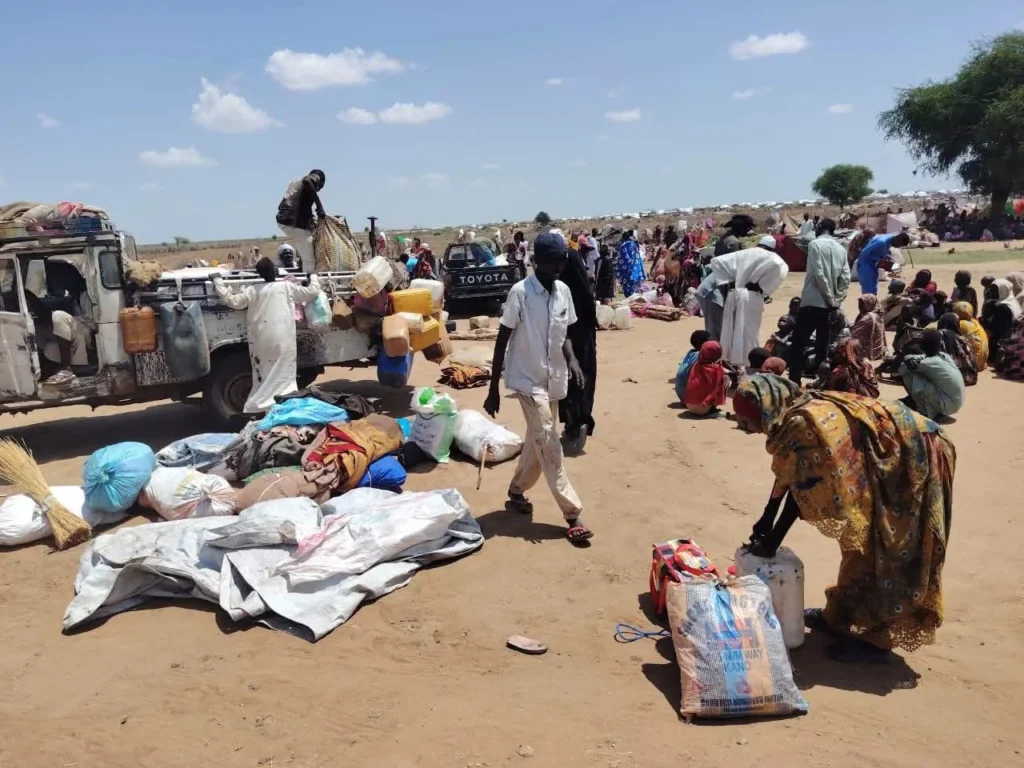
PORT SUDAN – An estimated 8.6 million people remain internally displaced across Sudan, while the number of people who have returned to their areas of origin has risen to more than 5.27 million, according to the latest displacement assessment by the International Organization for Migration (IOM).
The IOM’s Displacement Tracking Matrix recorded 8,585,611 internally displaced people by the end of September, down 26% from a peak of 11.58 million recorded in January 2025.
Despite the overall decline from last year’s peak, new displacement continued in several conflict-affected areas during September, particularly in Blue Nile, North Darfur and the Kordofan region.
Blue Nile recorded the largest relative increase in displacement during the month, with the number of internally displaced people rising 10% from 380,620 to 417,714.
Wad Al-Mahi locality recorded the largest increase nationwide, adding 22,749 displaced people in September, followed by Um Bada and Omdurman in Khartoum State.
The rise in Blue Nile followed renewed insecurity in the state, where IOM teams recorded six displacement-triggering incidents in Al Kurmuk and Geisan localities.
People fleeing those areas moved mainly within Geisan and toward Wad Al-Mahi and Baw, reflecting continuing population movements linked to insecurity in southeastern Sudan.
Across the country, IOM recorded 17 incidents that triggered displacement during September. Six occurred in North Darfur, six in Blue Nile, two in South Kordofan and one each in North Kordofan, Northern and South Darfur.
Sixteen of the 17 incidents were linked to conflict and insecurity, while one was caused by a fire. Together, the incidents displaced about 37,272 people.
North Darfur and South Darfur continue to host the largest displaced populations. South Darfur had about 1.76 million IDPs, followed by North Darfur with 1.67 million and Central Darfur with nearly one million.
Darfur as a whole hosts about 65% of Sudan’s internally displaced population.
More than half of Sudan’s displaced population are children. IOM estimated that 55% of IDPs were under the age of 18, while 49% were female and 51% male.
Most displaced households remain dependent on host communities and temporary accommodation. About 38% were staying with host families, 29% in informal gathering sites and 20% in camps.
Returns Continue to Rise
At the same time, return movements continued to increase, with IOM recording 5,273,334 people who had returned to their areas of origin by the end of September.
About 4.31 million, or 82%, returned from displacement inside Sudan, while 964,398 returned from abroad.
Khartoum accounted for more than half of all recorded returns, with about 2.8 million people returning to the state. Aj Jazirah followed with nearly 1.3 million returnees.
Among people returning from abroad, 51% came from Egypt, 25% from South Sudan, 10% from Libya and 8% from Gulf countries.
IOM said improved security in places of origin was the main reported reason for return, cited by 87% of returning households.
The number of returnees increased by 2% compared with the previous month, even as fresh conflict continued to trigger new displacement in several parts of the country.
Sudan’s displacement crisis dates back well before the current war, with an estimated 3.8 million people already internally displaced before fighting erupted between the Sudanese Armed Forces and Rapid Support Forces in April 2023.
The conflict then drove the displaced population to a record 11.58 million in January 2025 before return movements began reducing the overall total.
IOM said displacement and return patterns remain highly fluid, with communities continuing to move in response to insecurity, changing economic conditions and access to basic services.


