

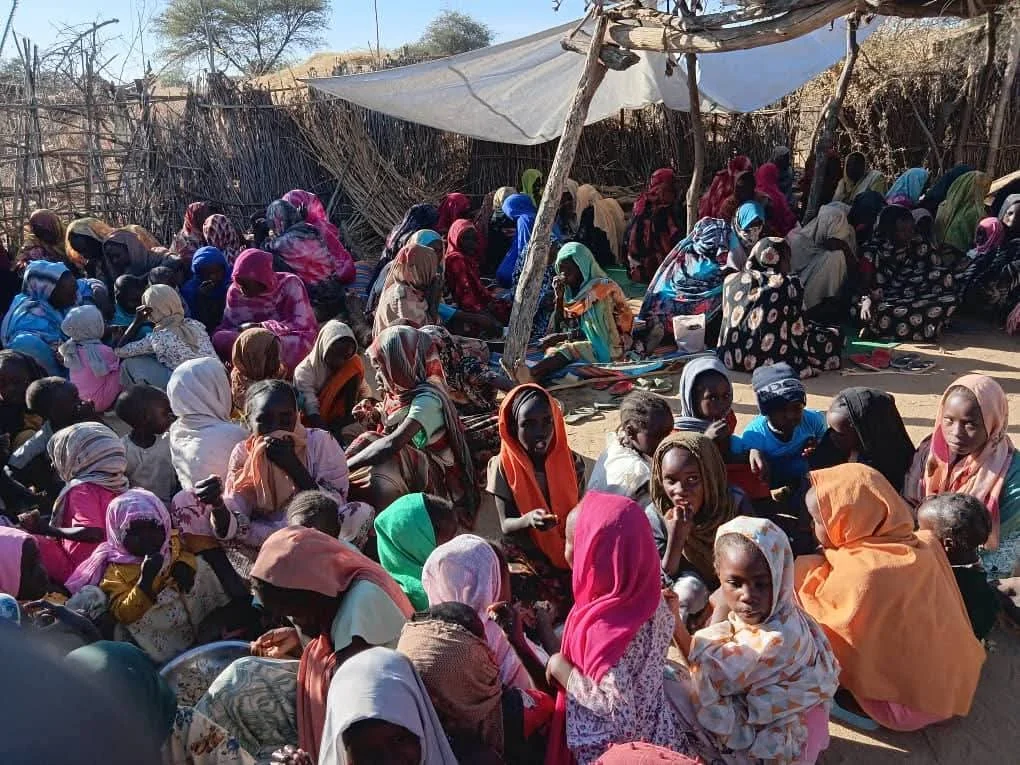
PORT SUDAN – Nearly 474,000 people in Sudan have lost access to health care, nutrition, clean water and protection services after humanitarian funding ended, while the World Food Programme has warned that food stocks and cash-assistance resources could be exhausted by the end of October without urgent donor support.
The funding cuts forced the closure of 36 health facilities, 29 nutrition centres, eight safe spaces for women and girls and six child-focused safe spaces, according to a humanitarian situation analysis covering late September and early October.
The International Rescue Committee said at least 473,700 people were affected by the service closures across conflict-affected areas, including Blue Nile, Khartoum and Darfur.
The losses come as Sudan’s humanitarian crisis remains among the world’s largest, with about 19.5 million people facing acute food insecurity and an estimated 825,000 children under five projected to suffer severe acute malnutrition in 2026.
WFP, which reached a record 4.1 million people in August, said it urgently needed about $431 million to maintain its current highly prioritised assistance over the coming months.
Without additional funding, the agency warned that its food stocks and resources for cash-based assistance could be depleted by the end of October, threatening support to communities already struggling with conflict, displacement and soaring food prices.
Attacks Further Restrict Aid
Funding shortages have coincided with renewed attacks on civilians and humanitarian operations, particularly in Kordofan.
An aerial attack on two WFP-contracted food trucks in South Kordofan in early October killed a driver and damaged food supplies, adding to concerns over the safety of humanitarian routes.
In El Obeid, North Kordofan, drone attacks also struck sites sheltering displaced families. One attack on the Al Mina Al Bari displacement shelter reportedly killed a child and injured 12 others.
Separate reporting from the city said at least five people were killed and 47 injured when a university dormitory being used as a displacement shelter was hit.
The incidents came amid an expanding drone war across Sudan that has increasingly affected civilian neighbourhoods, displacement sites, hospitals, schools, water systems and other infrastructure.
UNICEF has reported that more than 400 children were killed or injured in drone attacks and other aerial incidents across Sudan between January and September 2026.
Millions Remain Displaced
About 8.6 million people remained internally displaced during the reporting period, while millions more had returned to areas of origin as front lines shifted.
New displacement continued despite those returns, particularly in Darfur, Kordofan and Blue Nile.
In Tawila, North Darfur, more than 6,000 newly displaced people arrived during September, placing additional pressure on already overstretched food, water, shelter and health services.
In Karnoi in North Darfur, an estimated 21,000 displaced people were reported to be living in the open without adequate shelter, clean water, sanitation, health care or education.
Displaced families elsewhere are staying in schools, informal settlements and open areas, often with limited protection from violence and disease.
Women and girls face heightened risks during displacement, including sexual violence, exploitation and trafficking, while funding shortages are reducing access to specialised protection and reproductive health services.
Health and Food Systems Under Pressure
Sudan’s health system has been severely weakened by more than three years of war between the Sudanese Armed Forces (SAF) and the Rapid Support Forces (RSF).
An estimated 70% to 80% of health infrastructure in conflict-affected areas has become non-functional, while more than 180 facilities across 13 states were reported operating at reduced capacity.
Disease outbreaks have added to the pressure. Thousands of cholera cases have been recorded during 2026, with Kordofan among the most affected regions, while damaged water systems and weak disease surveillance continue to increase public health risks.
Food production has also deteriorated after delayed and below-average rainfall combined with conflict, displacement, fuel shortages and damage to agricultural infrastructure.
Crop conditions were assessed as poor in several important agricultural areas, including Sennar, Blue Nile and Gedaref, while parts of Darfur reported widespread crop failures.
Rising food and fuel prices and the depreciation of the Sudanese pound have further weakened household purchasing power, leaving many families increasingly dependent on humanitarian assistance at the same time aid agencies are cutting services.
Humanitarian agencies have warned that the combination of conflict, shrinking funding, attacks on aid operations and deteriorating livelihoods risks widening existing gaps in food, health, nutrition and protection services.