
KHARTOUM – An estimated 17.3 million children in Sudan need humanitarian assistance as conflict, displacement, malnutrition and disease continue to deepen the crisis, while UNICEF faces a funding shortfall of more than $610 million for its 2026 response.
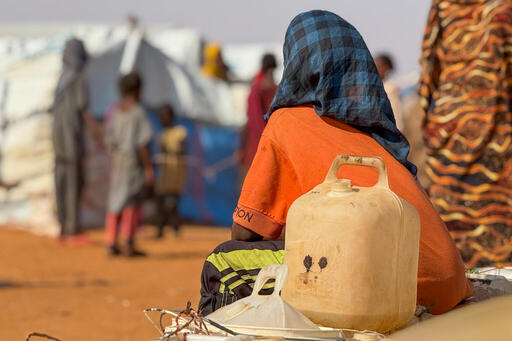
UNICEF said 33.7 million people across Sudan require humanitarian assistance, while more than 8.5 million remain internally displaced despite the return of nearly 5 million people to their areas of origin.
The agency’s latest humanitarian situation report, published on Oct. 28 and covering August, said renewed fighting in Blue Nile, Darfur and Kordofan displaced more than 58,000 people during the month alone.
The new displacement illustrates the volatile nature of Sudan’s crisis, with families returning to some areas while fresh fighting forces others from their homes.
UNICEF said its 2026 Humanitarian Action for Children appeal requires about $963 million.
By the end of August, the agency had mobilized $352.2 million, leaving a $610.7 million funding gap, equivalent to 63% of the total requirement.
The shortages are particularly severe in child protection, where the funding gap stands at 91%, nutrition at 79% and water, sanitation and hygiene at 69%.
UNICEF warned that insufficient funding was restricting the scale and continuity of essential services, particularly in high-risk and hard-to-reach areas.
Malnutrition Worsens in Conflict Areas
Nutrition conditions continued to deteriorate in several parts of Sudan.
UNICEF said nearly half of eight nutrition surveys completed in August recorded global acute malnutrition levels above emergency thresholds.
By the end of the month, 5.8 million children aged between six months and five years had been screened for wasting.
Of those, 348,438 children suffering from severe wasting had been admitted for treatment during 2026, including 51,506 in August alone.
Admissions remained particularly high in Darfur and Kordofan.
UNICEF said improved humanitarian access in parts of West Kordofan had allowed a significant expansion of nutrition services, including in areas previously difficult to reach.
In An Nuhud, more than 4,000 children with severe acute malnutrition were reached, more than eight times the number recorded during the same period in 2025.
Nutrition services also expanded in localities identified as being at risk of famine in West Kordofan and South Darfur.
More Than 58,000 Newly Displaced
Blue Nile accounted for a large share of August’s new displacement.
More than 28,000 people fled Geissan and Kurmuk localities, with many moving toward Damazine, Wad Al-Mahi and Roseires.
UNICEF said Damazine alone was hosting more than 173,000 internally displaced people and returnees.
In North Kordofan, intensified fighting displaced more than 15,000 people, adding pressure on El Obeid, where services were already strained by insecurity and previous displacement.
More than 12,000 people were also displaced from Sirba locality in West Darfur, with many crossing the border into Chad.
Nationally, the number of internally displaced people has fallen from a peak of around 11.5 million to approximately 8.66 million as an estimated 4.9 million people returned home.
But UNICEF warned that returns and new displacement were occurring simultaneously, leaving humanitarian needs highly fluid.
Education Remains Severely Disrupted
The report said around 14,000 of Sudan’s 19,390 schools were operational by August, while at least 236 continued to be used as shelters for displaced families.
Education disruption remained most severe in Darfur, Greater Kordofan and Blue Nile because of insecurity, displacement and damage to school infrastructure.
UNICEF and its partners provided formal or non-formal learning opportunities to 14,600 children during August, bringing the total reached since January to about 1.4 million.
The agency also established 119 new Safe Learning Spaces during the month, enrolling 14,400 children.
A total of 549 such spaces had been established by the end of August, reaching about 67,400 children.
Digital education programmes were also expanded, including accelerated learning programmes for children unable to attend conventional schools.
Disease Outbreaks Add Pressure
Sudan’s health system continues to face multiple disease outbreaks alongside the effects of war.
UNICEF-supported health facilities provided primary healthcare to more than 751,000 children and women during August.
More than 1,000 supported health facilities remained operational with medicines, supplies and incentives for more than 3,200 frontline health workers.
Cholera remained a major concern, particularly in West Kordofan, with additional cases reported in North Kordofan and Kassala.
UNICEF said oral cholera vaccination campaigns had reached more than 10 million people.
A diphtheria vaccination campaign in high-risk areas of Khartoum and Northern states reached nearly 770,000 people aged between five and 20.
Millions Still Lack Basic Services
UNICEF-supported programmes had provided 7.2 million people with access to safe water by the end of August.
But hygiene and sanitation services remained far below overall needs.
Only around 992,000 people had been reached with handwashing behaviour programmes against an annual target of 4.5 million.
UNICEF said funding shortages and access constraints were limiting efforts to prevent cholera and other waterborne diseases.
The agency also warned that Sudan’s broader child protection system was under extreme pressure.
More than 1.2 million children, adolescents and caregivers had received mental health and psychosocial support by August, while around 892,000 women, girls and boys accessed services aimed at preventing or responding to gender-based violence.
UNICEF said children continued to face killing and injury, family separation, unexploded ordnance, sexual violence, child marriage and other forms of exploitation as conflict spreads.
The agency called for safe humanitarian access, greater international funding and protection of civilians, schools, hospitals and other critical infrastructure.
It also urged increased attention to famine risks, severe malnutrition, disease outbreaks and continued displacement, particularly in Darfur and Kordofan.


